Understanding Common Oxidizing and Reducing Agents in Chemical Processes
Understanding Common Oxidizing and Reducing Agents in Chemical Processes
Understanding Common Oxidizing and Reducing Agents
In the realm of chemistry, particularly within industrial processes like dyeing and chemical manufacturing, understanding oxidizing and reducing agents is fundamental. These agents play crucial roles in a vast array of reactions, influencing product quality, reaction rates, and overall process efficiency. This article will explore common oxidizing and reducing agents, their applications, and safety considerations. We will also delve into the impact of these agents on processes relevant to the chemical industry, providing a comprehensive overview for professionals and students alike.

What are Oxidizing and Reducing Agents?
An oxidizing agent is a substance that gains electrons during a chemical reaction, causing another substance to be oxidized. Conversely, a reducing agent donates electrons, causing another substance to be reduced. This electron transfer is the cornerstone of redox (reduction-oxidation) reactions. Identifying these agents is critical for controlling and optimizing chemical processes. The strength of an oxidizing or reducing agent is determined by its reduction potential or oxidation potential, respectively. These values indicate the tendency of the agent to gain or lose electrons.
Key Concept: Redox reactions always occur together. Oxidation cannot happen without reduction, and vice versa. This highlights the interconnected nature of these processes.
Common Oxidizing Agents
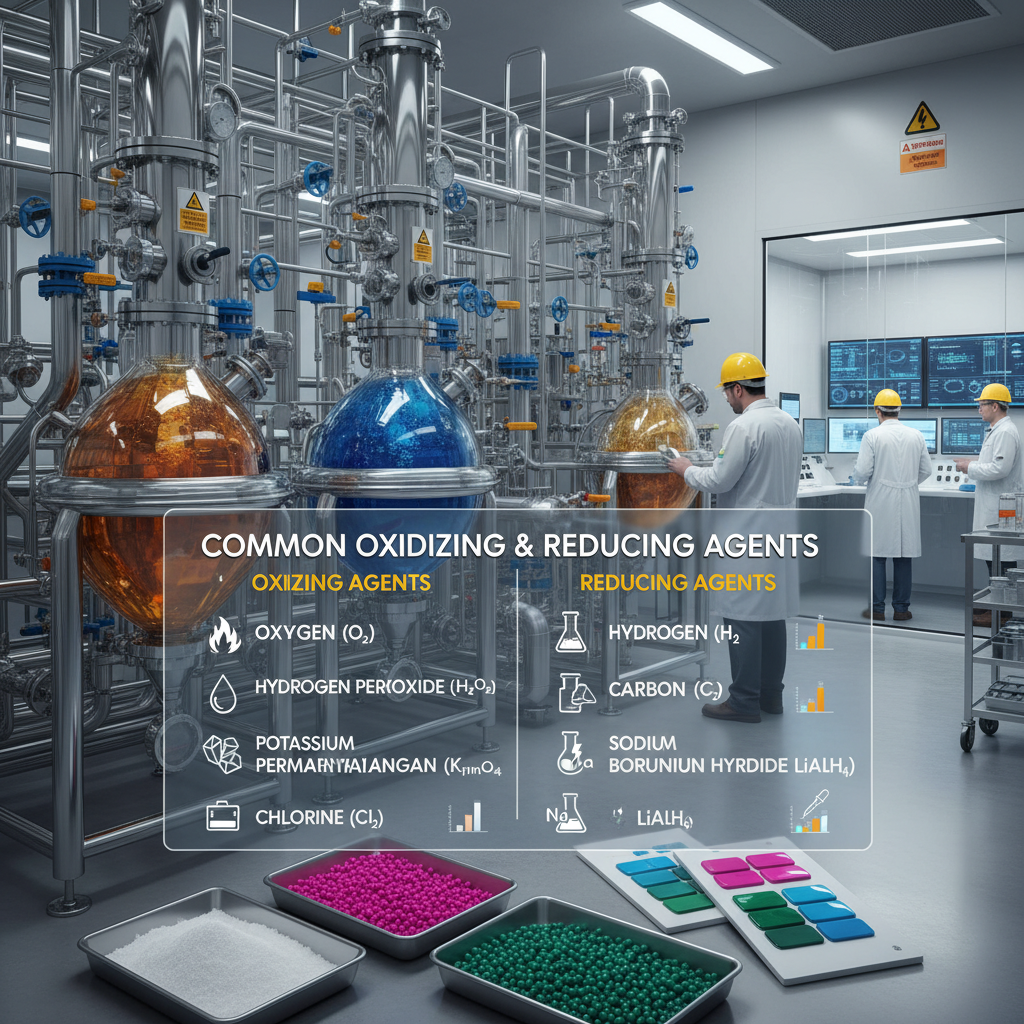
Several compounds serve as commonly used oxidizing agents. These vary in strength and application. Oxygen (O2) is perhaps the most ubiquitous, driving combustion and respiration. Other important oxidizing agents include: chlorine (Cl2), hydrogen peroxide (H2O2), potassium permanganate (KMnO4), and nitric acid (HNO3). They are utilized in a diverse range of applications, from bleaching and disinfection to metal refining and chemical synthesis. Selecting the appropriate oxidizing agent is vital for achieving desired reaction outcomes.
Oxidizing Agent Properties:
• Accepts electrons from other substances.
• Increases the oxidation state of the substance being oxidized.
• Examples include Oxygen, Chlorine, and Hydrogen Peroxide.
Common Reducing Agents and Their Applications
Just as important are reducing agents. Common examples include sodium borohydride (NaBH4), lithium aluminum hydride (LiAlH4), metals like zinc (Zn) and iron (Fe), and carbon (C). These agents are critical in processes like metal refining, organic synthesis (reducing ketones to alcohols, for instance), and wastewater treatment. The choice of reducing agent impacts reaction selectivity, yield, and environmental considerations. Dyeingchem provides various reducing agents for different textile processes.
Safety Considerations When Handling Redox Agents
Handling oxidizing and reducing agents requires stringent safety precautions. Many are corrosive, flammable, or react violently with other substances. Always wear appropriate personal protective equipment (PPE), including gloves, goggles, and lab coats. Ensure proper ventilation, and avoid mixing incompatible agents. Refer to the Safety Data Sheet (SDS) for each chemical before use to understand potential hazards and recommended handling procedures. Proper storage and disposal are also crucial to prevent accidents and environmental contamination.
Conclusion: Mastering Redox Chemistry for Industrial Success
A solid grasp of oxidizing and reducing agents is essential for success in a wide range of chemical industries. From optimizing reaction yields to ensuring safe handling procedures, a thorough understanding of redox chemistry is invaluable. Continued learning and adherence to best practices are key to harnessing the power of these agents effectively and responsibly.
Frequently Asked Questions (FAQs)
What factors influence the strength of an oxidizing or reducing agent?
The strength of an oxidizing agent is determined by its reduction potential, while the strength of a reducing agent is defined by its oxidation potential. These values are influenced by factors such as electron affinity, ionization energy, and the stability of the resulting ions. Higher reduction potentials indicate stronger oxidizing agents, and lower oxidation potentials signify stronger reducing agents. The chemical environment, including pH and temperature, can also impact their effectiveness.
How are oxidizing and reducing agents used in water treatment?
Oxidizing agents like chlorine and ozone are used to disinfect water by killing harmful bacteria and viruses. Reducing agents, such as sulfur dioxide, can be employed to remove excess chlorine and neutralize certain pollutants. These agents contribute to ensuring water safety and quality for various applications. Advanced oxidation processes (AOPs) combine oxidizing agents with UV radiation or catalysts to break down complex organic contaminants.
What is the difference between a strong and weak oxidizing/reducing agent?
Strong oxidizing agents have a high reduction potential and readily accept electrons, causing significant oxidation. Weak oxidizing agents have a lower potential and are less reactive. Similarly, strong reducing agents have a low oxidation potential and easily donate electrons, while weak reducing agents are less effective at electron donation. The strength of an agent dictates its effectiveness and the speed of the redox reaction.
Are there any environmentally friendly alternatives to traditional oxidizing/reducing agents?
Yes, research is ongoing to develop more environmentally friendly alternatives. Hydrogen peroxide is often preferred over chlorine due to its decomposition into water and oxygen. Electrochemical methods, utilizing electricity to drive redox reactions, offer a cleaner alternative with reduced chemical waste. Bio-based reducing agents, derived from renewable resources, are also gaining attention as sustainable options.