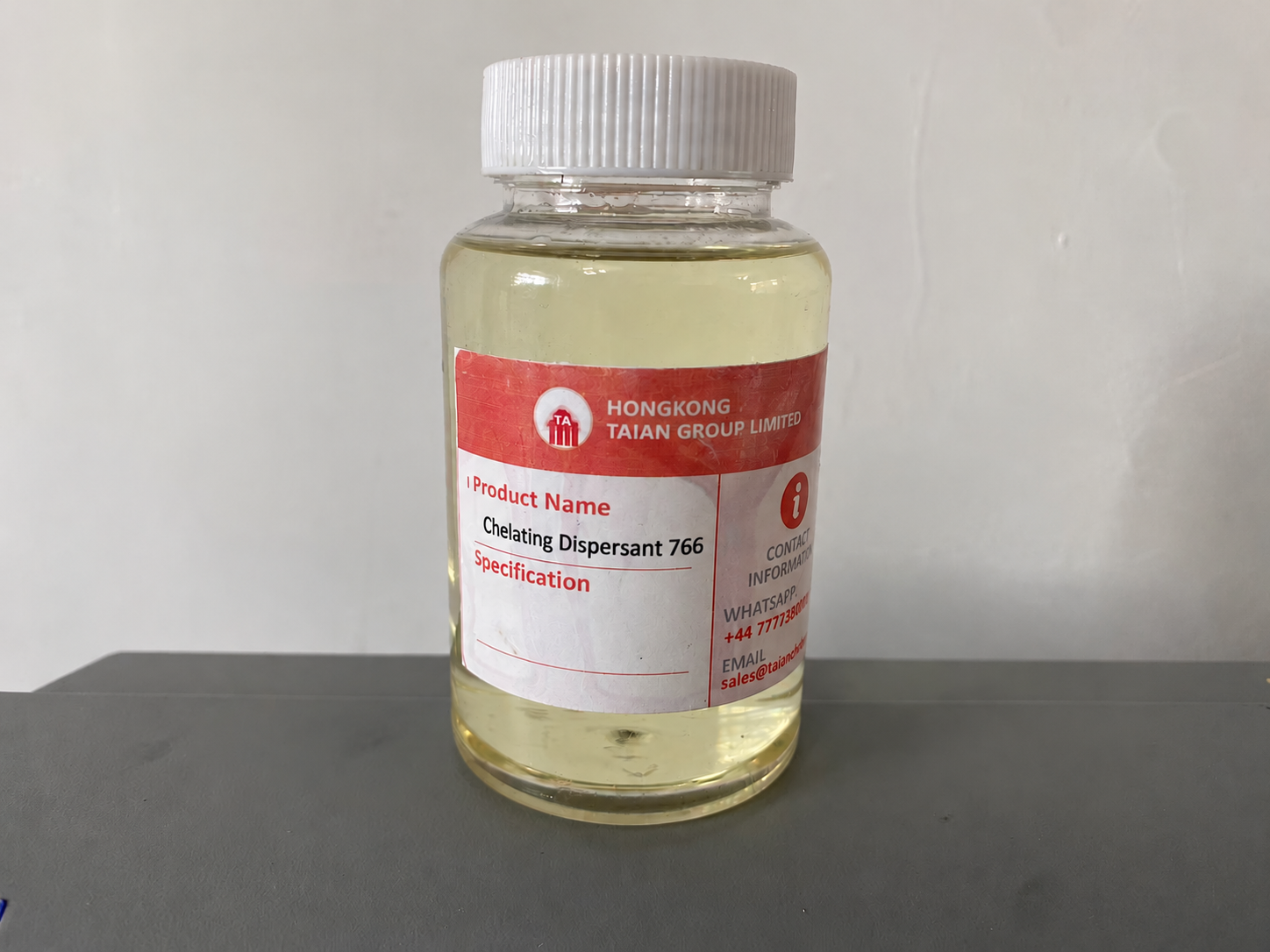

In modern textile wet-processing, the need for stability, precision, and clean treatment results is more important than ever. Among the most critical components in pre-treatment and bleaching stages are Chelating Dispersants and Peroxide Stabilizers. These auxiliaries work together to control impurities, maintain bath stability, and ensure that fabrics achieve the desired brightness, absorbency, and uniformity. Their combined functions support high-efficiency production, reduce processing defects, and help manufacturers meet the stringent demands of both apparel and home-textile markets.
As textile materials become more diverse and global water quality varies widely, controlling metal ions and stabilizing bleaching agents has become essential for achieving consistent, high-quality results. These two auxiliaries are fundamental to modern scouring and bleaching operations, ensuring that each batch performs predictably and reliably.
The Chelating Dispersant is specially engineered to bind and remove metal ions such as calcium, magnesium, iron, and copper—substances that frequently enter the system through hard water, cotton impurities, machinery residues, or processing chemicals. Even at low concentrations, these metal ions can trigger a series of undesirable reactions, including catalytic decomposition of bleaching agents, deposition of insoluble salts, and formation of stains or specks on fabrics.
By forming stable, water-soluble complexes with these ions, the Chelating Dispersant prevents them from participating in harmful reactions. Its dual-function mechanism—chelation coupled with dispersion—ensures that any particulate matter remains suspended in the processing bath rather than redepositing onto the fabric surface.
This action results in:
Cleaner and brighter fabric surfaces with reduced streaking
Lower risk of yellowing, spotting, and uneven whiteness
Improved washing efficiency, as impurities are easily rinsed away
Enhanced machinery cleanliness, protecting pipes, nozzles, and rollers from scale buildup
Because the Chelating Dispersant works effectively in both alkaline and peroxide bleaching conditions, it supports a wide range of pre-treatment operations. Its stable performance ensures that the scouring process removes natural oils, waxes, and impurities thoroughly, creating an optimal base for subsequent bleaching or dyeing.
Hydrogen peroxide is the most common bleaching agent used in the textile industry due to its strong bleaching effect and environmentally friendly decomposition products. However, it is highly reactive in the presence of transition metals such as iron, manganese, and copper. Uncontrolled catalytic decomposition can lead to:
Rapid peroxide breakdown
Excessive heat release
Fabric damage or “tendering”
Patchy or incomplete bleaching
Increased chemical consumption and production cost
The Peroxide Stabilizer addresses these issues by inhibiting metal-catalyzed decomposition reactions, ensuring that the bleaching process proceeds at a controlled, steady rate. It maintains the active concentration of hydrogen peroxide throughout the bleaching cycle, allowing the chemical to perform its function effectively without sudden degradation.
Its benefits include:
Stable bleaching conditions, even in the presence of unavoidable metal traces
Improved whiteness levels, as bleaching power is retained long enough to work uniformly
Better fiber protection, avoiding harsh reactions that weaken cellulose
Reduced peroxide consumption, leading to cost savings and lower environmental load
Safer production, minimizing risks associated with heat spikes or over-bleaching
By ensuring that hydrogen peroxide remains active for the appropriate duration, the stabilizer allows manufacturers to achieve consistent and reproducible results across different production runs.
When used in combination, the Chelating Dispersant and Peroxide Stabilizer create a synergistic effect that significantly enhances the overall efficiency of scouring and bleaching operations. The Chelating Dispersant removes metal ions before they can negatively interact with bleaching chemicals, while the Peroxide Stabilizer ensures that hydrogen peroxide remains stable and effective throughout the process.
Together, they deliver:
Higher whiteness levels with fewer shade variations
Cleaner fabric surfaces free from metal deposits or uneven bleaching
Improved absorbency, essential for dyeing uniformity in later stages
Reduced rework and waste, as fewer defects occur
Extended equipment lifespan, with less scale, corrosion, and buildup
These improvements contribute not only to superior product quality but also to more efficient and environmentally responsible production.
Both auxiliaries are designed for broad compatibility across various natural and regenerated cellulose fibers, including:
Cotton and cotton blends
Viscose and modal
Linen and ramie
Bamboo and regenerated cellulosics
T/C blends where cellulosic content requires controlled bleaching
Their flexibility makes them suitable for both batch processes such as jigger dyeing, winch processing, and overflow systems, as well as continuous processes like pad-steam, pad-roll, and continuous bleaching ranges.
They support manufacturing operations in pre-treatment, bleaching, dyeing preparation, and even post-processing where whiteness or metal control remains essential.
By integrating Chelating Dispersants and Peroxide Stabilizers into textile pre-treatment systems, manufacturers can achieve consistent, high-quality results while improving operational stability and reducing production risks. These auxiliaries form the backbone of modern bleaching technology, ensuring that bleaching is efficient, controlled, and safe for both materials and machinery.