
The Penetrant Series is engineered to support the increasingly demanding requirements of textile pre-treatment, where rapid wetting, deep penetration, and stable chemical activity are critical for consistent and high-quality results. In today’s textile production environment—where fabrics vary widely in density, fiber composition, and finishing needs—pre-treatment auxiliaries must perform reliably across different equipment setups and process conditions.
This series includes specialized penetrants designed for scouring, bleaching, mercerizing, rapid wetting, and high-temperature refining, providing comprehensive solutions that enhance the overall effectiveness of wet-processing operations.
Each penetrant is developed to optimize liquid absorption into fibers, reduce processing time, improve cleaning efficiency, and create a uniform substrate for dyeing and finishing. Their ability to boost chemical accessibility and promote even treatment helps manufacturers achieve cleaner surfaces, deeper color uptake, and more efficient use of energy and chemicals throughout the production line.
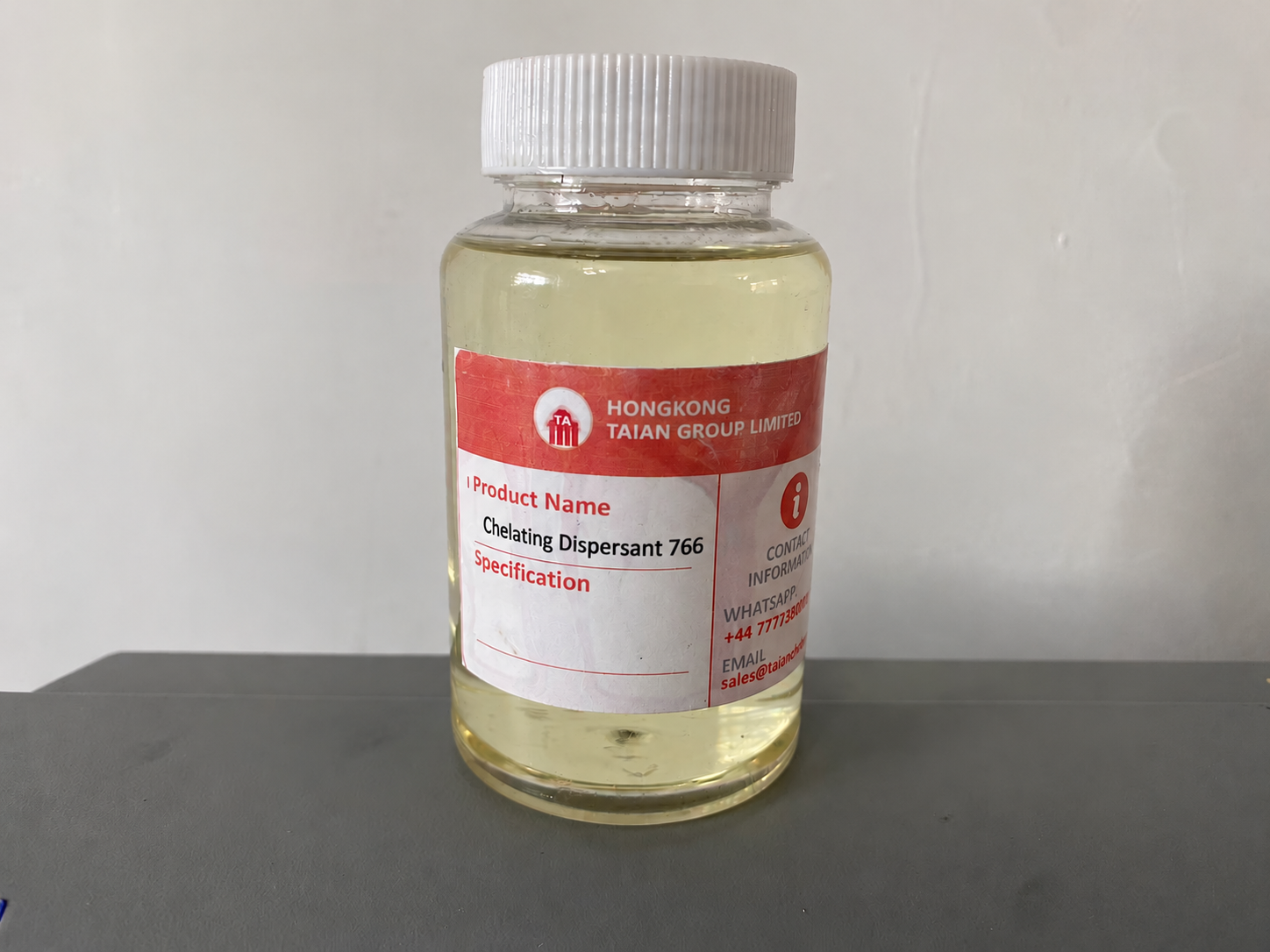
The High-Efficiency Penetrant plays a central role in the early stages of pre-treatment by enabling fast and thorough wetting of fibers. During scouring, refining, or bleaching, the effective removal of natural impurities such as waxes, oils, pectins, and dirt determines how well the fabric will absorb dyes and finishes later in the process. Slow wetting or insufficient penetration can lead to patchy treatment, uneven bleaching, and inconsistent color in dyeing.
This penetrant rapidly reduces surface tension, allowing treatment baths to spread evenly and absorb quickly into the yarns and fabric structure. It is particularly effective on tightly woven, dense, or hydrophobic fabrics, where water resistance can otherwise slow down production.
Key performance advantages include:
Faster bath saturation and reduced processing time
Improved impurity removal for cleaner and brighter fabric surfaces
A more uniform substrate for dyeing and finishing
Enhanced efficiency in both batch and continuous pre-treatment ranges
By supporting more effective scouring and bleaching, the High-Efficiency Penetrant helps improve the quality and reproducibility of downstream processes.
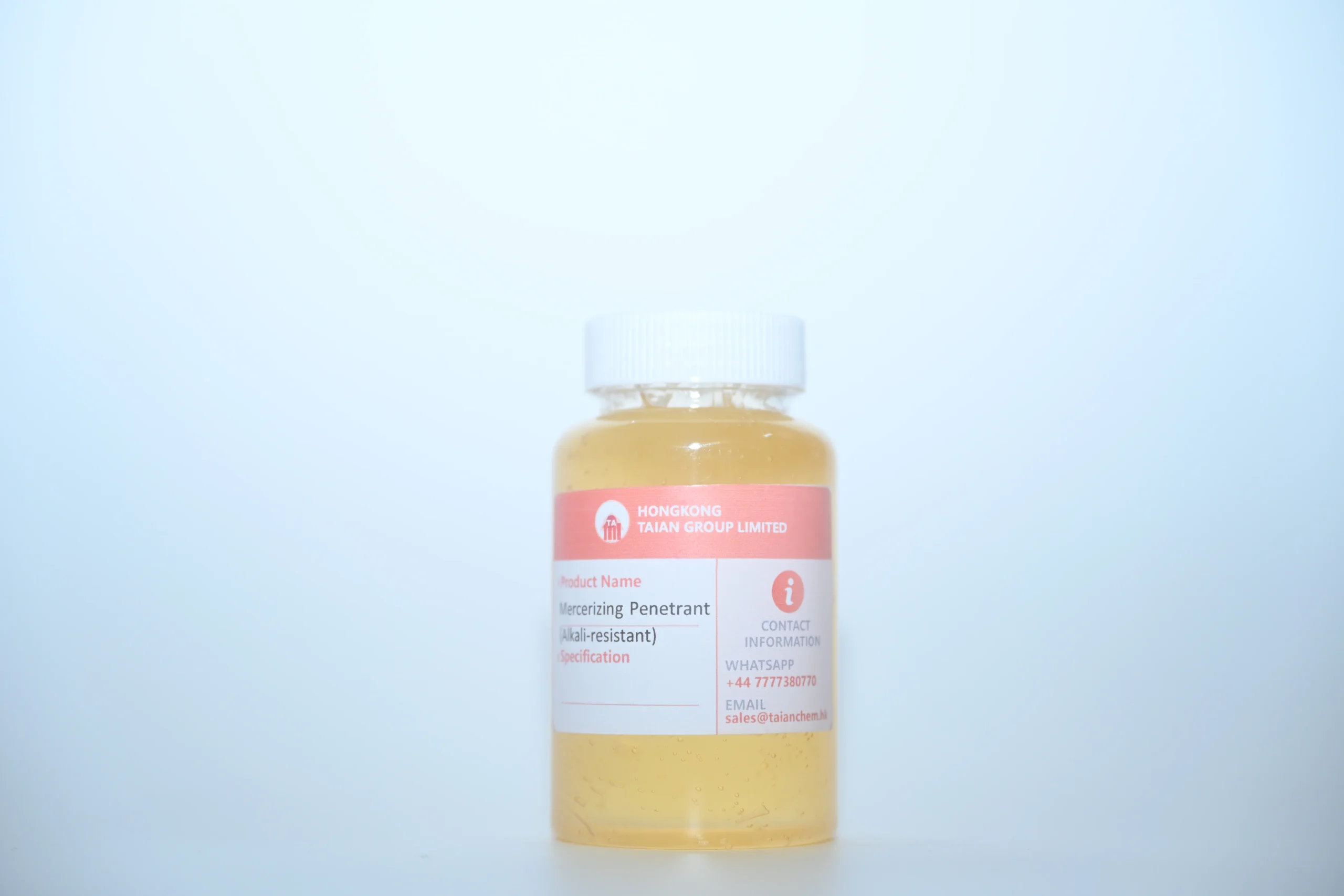
Mercerizing requires strong alkali concentration to swell and restructure cotton fibers, improving luster, dye affinity, strength, and dimensional stability. However, uneven alkali absorption is one of the most common sources of mercerizing defects such as streakiness, lack of uniform shine, and uneven dyeing.
The Alkali-Resistant Mercerizing Penetrant is specifically formulated to withstand high-alkalinity conditions without hydrolysis or loss of effectiveness. It ensures rapid and consistent penetration of caustic soda throughout the fabric, allowing cotton fibers to swell evenly and achieve the characteristic mercerized finish.
Key benefits include:
Improved fiber swelling and smoother fabric appearance
Enhanced brightness and uniform luster
Increased dye uptake and color consistency
Fewer mercerizing defects, including streaks and cloudiness
By maintaining stability in severe alkali environments, this penetrant ensures reliability in both cold and hot mercerizing processes and supports high-speed mercerizing ranges as well as traditional methods.
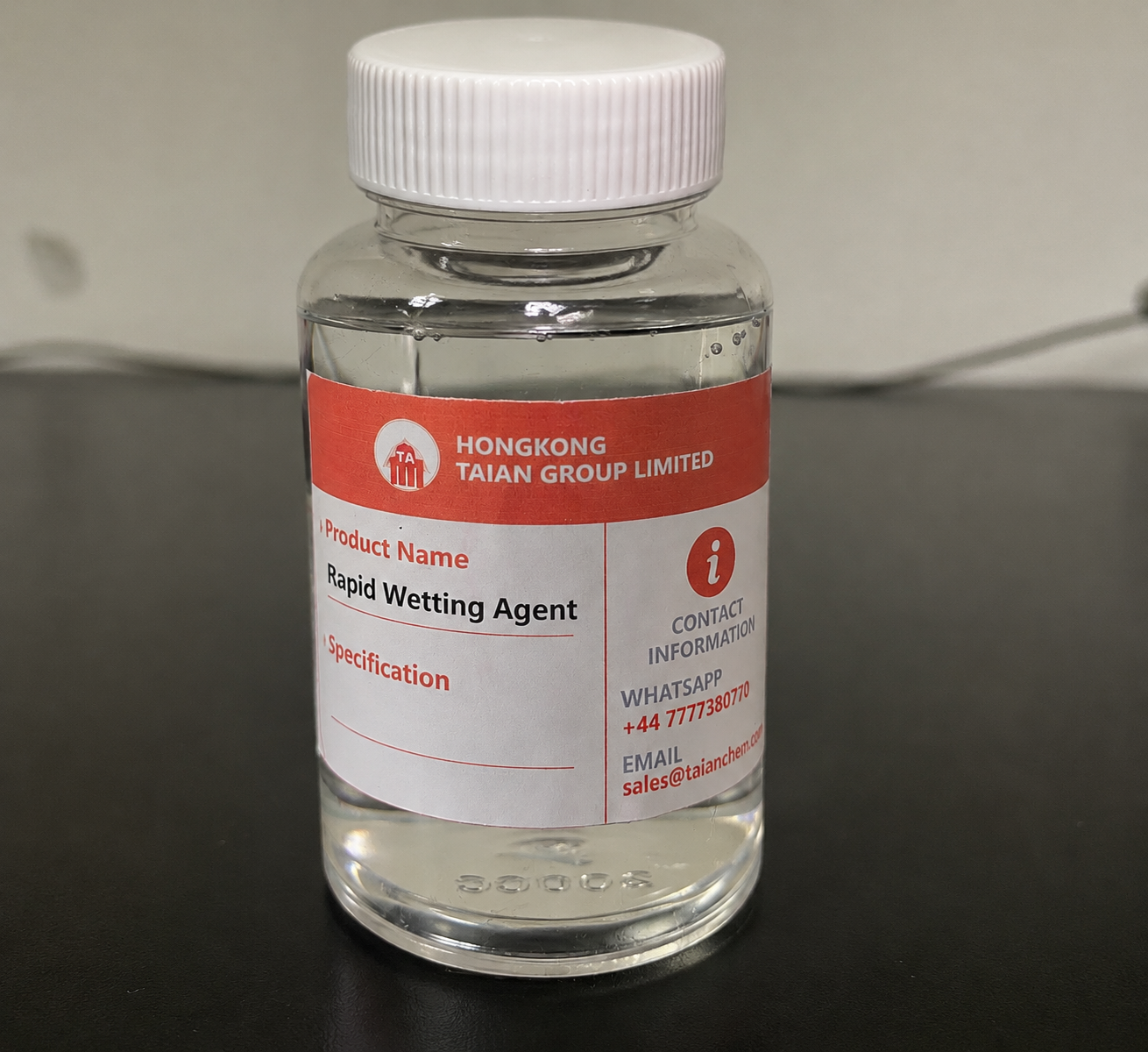
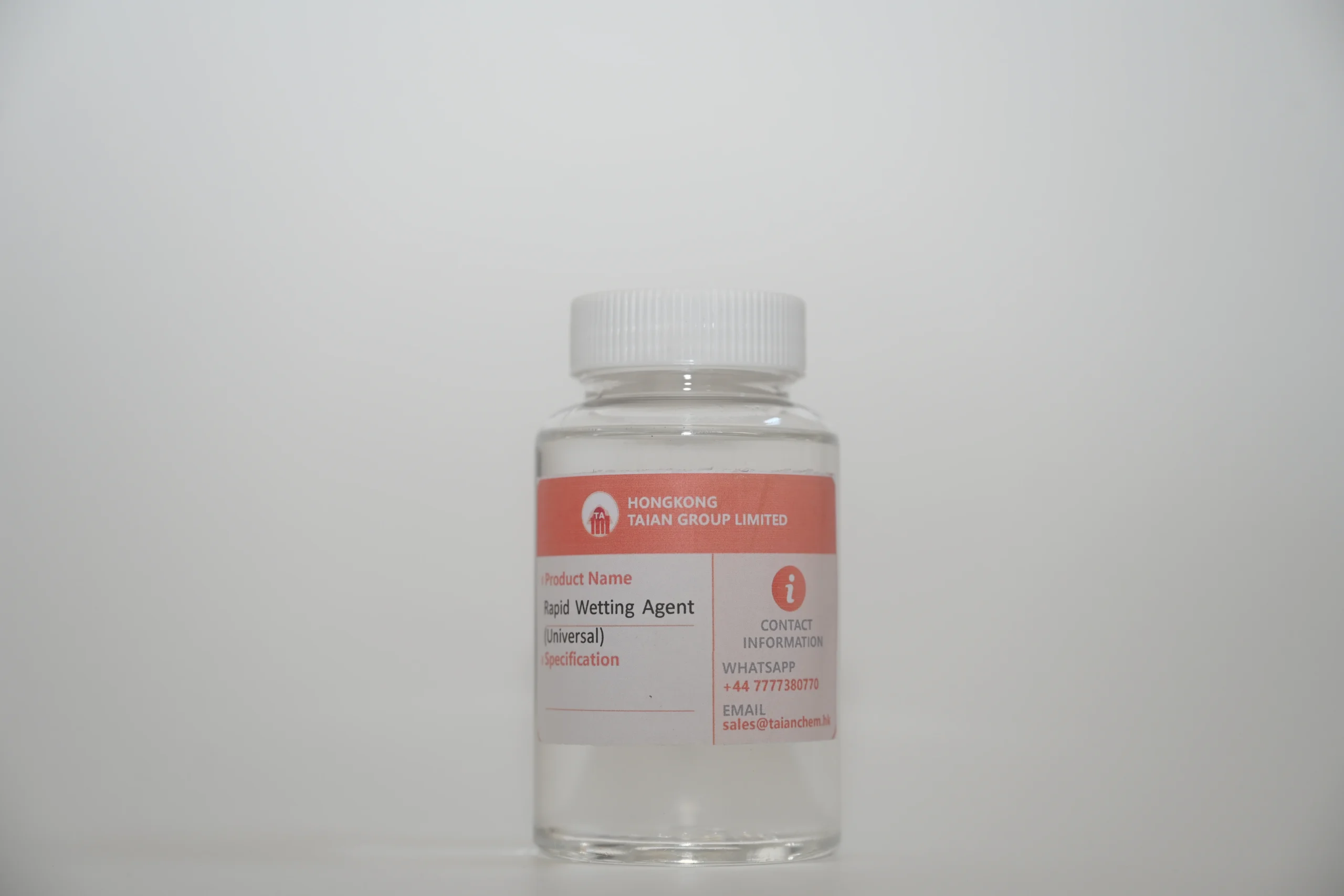
The Universal Rapid Wetting Agent is formulated for extremely fast wetting performance across a broad range of fabrics, from natural fibers to synthetics and blended materials. Its ability to instantly reduce surface tension enables quick spread of water or chemical solutions across the textile, minimizing wetting delays that can cause uneven bleaching, patchy scouring, or irregular dye uptake.
Its versatility makes it suitable for:
Batch dyeing machines (overflow, jet, winch)
Continuous pre-treatment ranges
Open-width and rope processes
Low-temperature and room-temperature wetting operations
The universal wetting agent offers strong compatibility with alkaline, neutral, and acidic systems and does not negatively impact color, shade reproduction, or foam control. It helps ensure that chemical baths interact with fabrics evenly, enhancing both process efficiency and the final product’s visual quality.
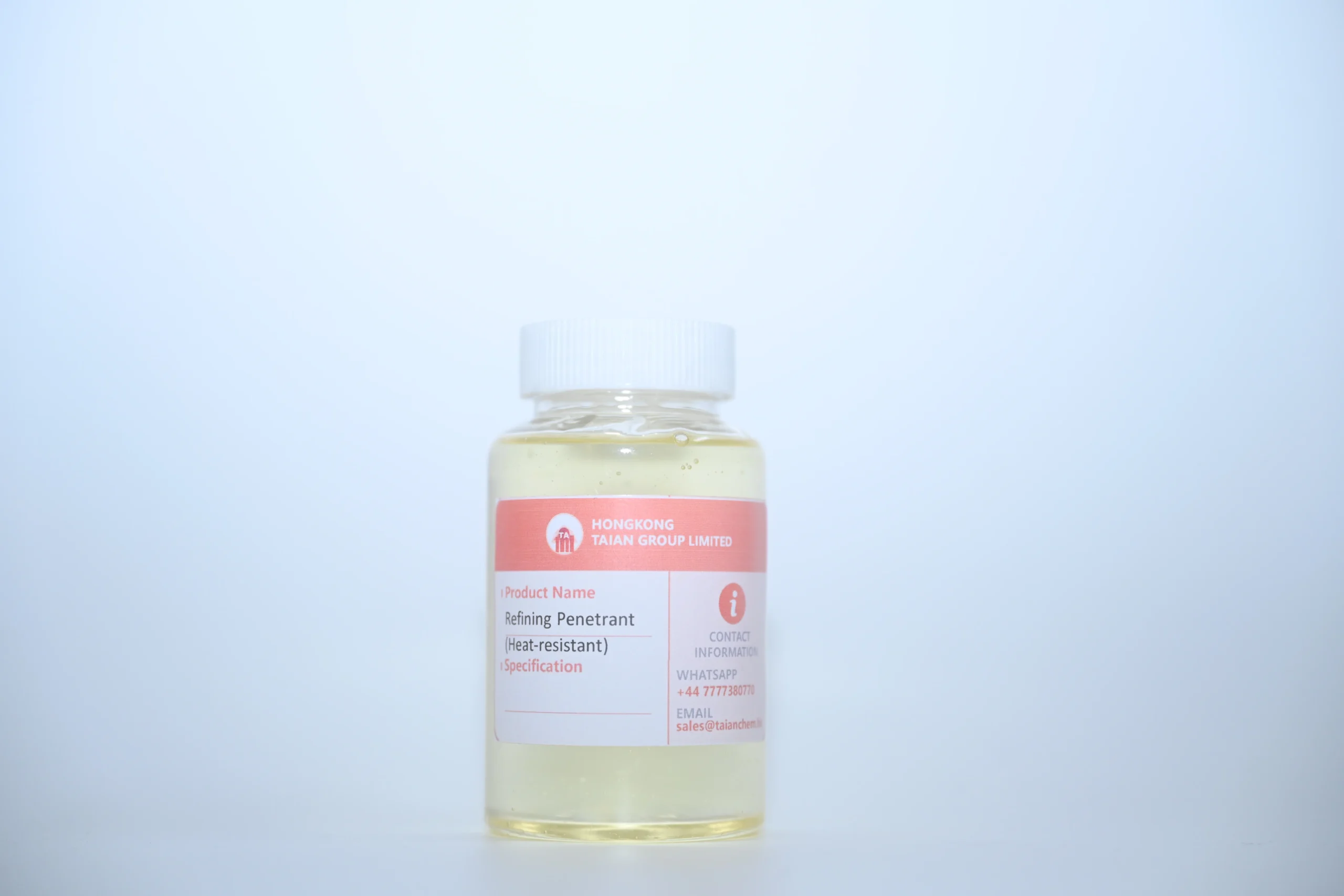
High-temperature refining and boil-off processes require auxiliaries that remain stable despite exposure to elevated temperatures, strong alkali, and mechanical agitation. Many conventional penetrants lose effectiveness under these conditions, resulting in incomplete impurity removal or poor fiber preparation.
The Heat-Resistant Refining Penetrant is engineered to maintain strong wetting and penetrating power throughout high-temperature cycles. Its robust molecular structure resists thermal degradation and provides consistent performance in demanding conditions.
Major advantages include:
Deep penetration of refining chemicals into fiber bundles
More efficient removal of natural and processing impurities
Stable performance in high-temperature scouring, boil-off, or kier operations
Reliable results for heavy fabrics, denim, industrial textiles, and heavily soiled materials
This penetrant ensures clean, uniform, and well-prepared substrates that support superior dyeing and finishing outcomes.
Each penetrant in this series plays a specific role in optimizing textile pre-treatment, but their combined effect is even more powerful. When integrated across different stages—scouring, bleaching, mercerizing, wetting, and refining—they help manufacturers achieve:
Faster processing speeds and reduced production time
Better chemical utilization and lower operational cost
Higher fabric cleanliness and improved absorbency
More uniform dyeing, printing, and finishing results
Reduced defects, rework, and quality variations
Their strong compatibility with various fibers, equipment types, and processing conditions makes them an essential part of modern textile preparation systems.
Together, these high-performance penetrants help producers achieve consistently higher output, cleaner and brighter fabrics, and improved operational stability—supporting the demands of fast, efficient, and environmentally responsible textile manufacturing.