Exploring Enzymes Used in Detergent Industry for Enhanced Cleaning Performance
Exploring Enzymes Used in Detergent Industry for Enhanced Cleaning Performance
Enzymes Used in Detergent Industry: A Comprehensive Guide
The detergent industry relies heavily on enzymes to enhance cleaning performance and address the growing demand for eco-friendly formulations. These biological catalysts break down complex stains, offering effective cleaning at lower temperatures and reducing the need for harsh chemicals. This article delves into the types of enzymes used in detergent industry, their applications, benefits, and future trends. Understanding these enzymes is crucial for optimizing detergent formulations and meeting evolving consumer expectations.
Understanding the Role of Enzymes in Detergents
Enzymes act as biological catalysts, accelerating chemical reactions without being consumed in the process. In detergents, they target specific stain components, breaking them down into smaller, water-soluble molecules that can be easily removed during washing. This targeted approach is significantly more effective than relying solely on surfactants and builders. Enzymes are also biodegradable, contributing to the environmental sustainability of detergent products. The increasing demand for sustainable cleaning solutions is a major driver for the continued growth of enzyme usage in the detergent industry. Dyeingchem provides high-quality enzymes for detergent applications.
Key Benefits: Enhanced stain removal, lower washing temperatures, reduced chemical usage, and biodegradable formulations.
Common Types of Enzymes Used in Detergents
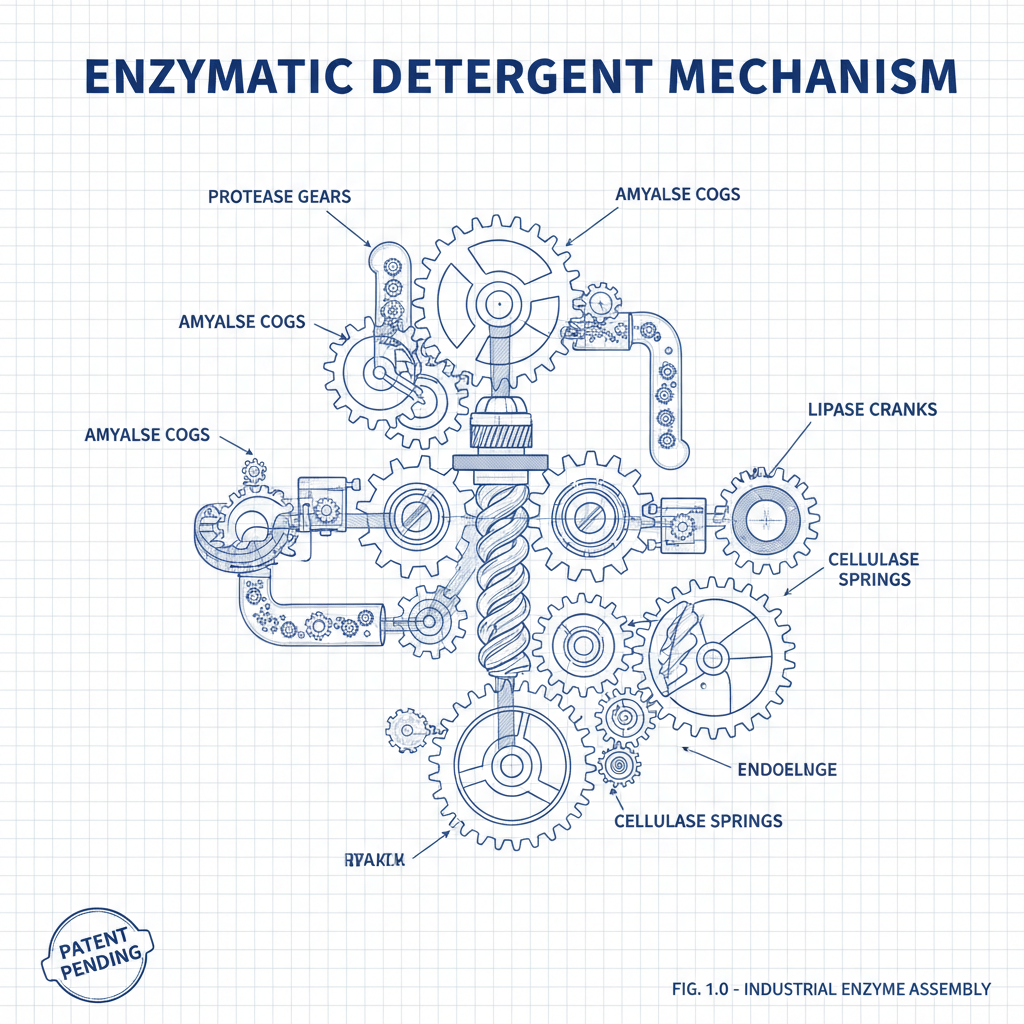
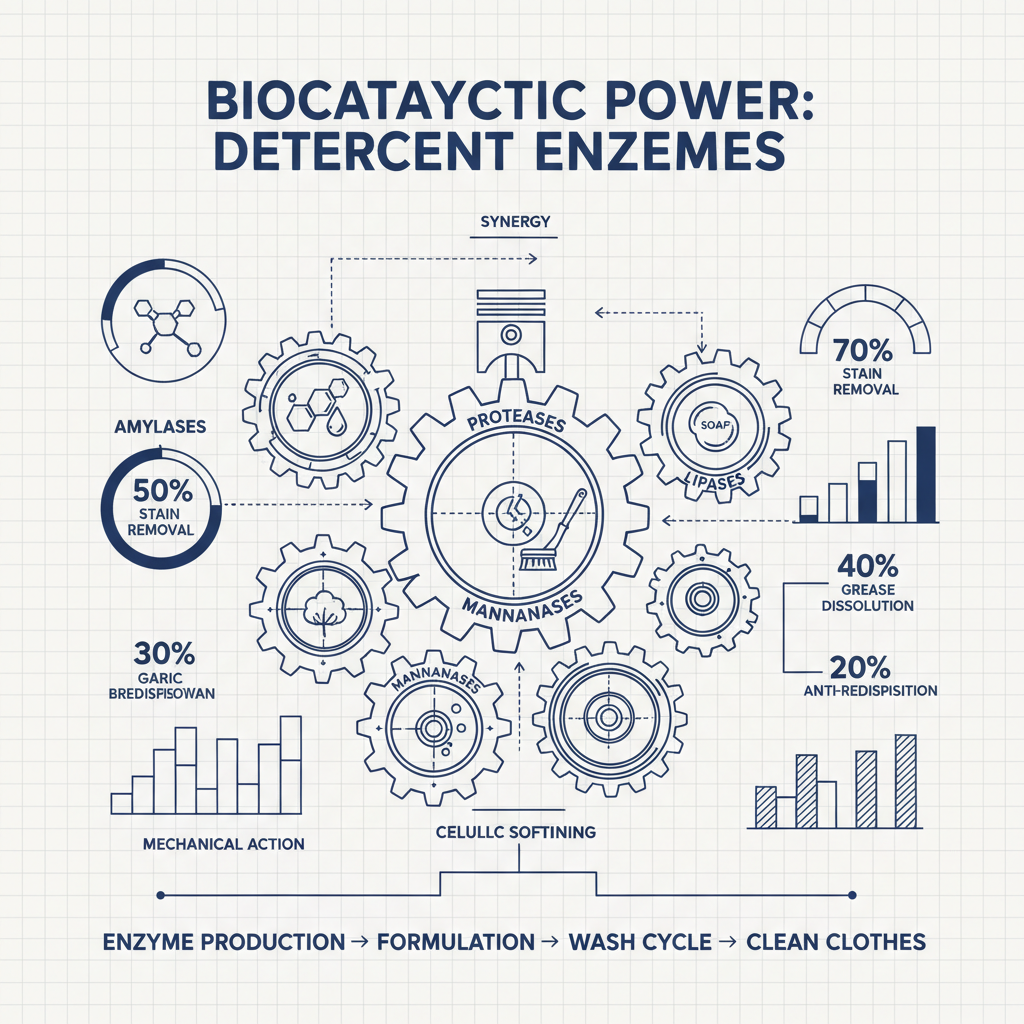
Several types of enzymes are commonly employed in detergent formulations, each targeting different types of stains. These include proteases, amylases, lipases, cellulases, and mannanases. Proteases break down protein-based stains like blood and grass, amylases target starch-based stains from foods like potatoes and pasta, and lipases effectively remove grease and oil. Cellulases work to brighten fabrics by removing fuzz and pills, while mannanases target stains from foods like chocolate and sauces. The specific blend of enzymes in a detergent is tailored to its intended use and target stain profile.
Enzyme Functions:
• Proteases: Break down protein stains
• Amylases: Break down starch stains
• Lipases: Break down fats and oils
• Cellulases: Brighten fabrics and remove fuzz
• Mannanases: Break down mannan-based stains
Enzyme Performance: A Comparative Analysis
The efficiency of enzymes in detergents can vary significantly based on factors such as pH, temperature, and enzyme concentration. Different enzymes exhibit optimal performance within specific ranges of these parameters. For example, some proteases are more effective in alkaline conditions, while others perform better at neutral pH. Understanding these nuances is critical for formulating detergents that deliver maximum cleaning power. Here's a comparison of enzyme activity at different temperatures:
Factors Affecting Enzyme Stability and Activity
Several factors can affect the stability and activity of enzymes in detergent formulations. These include pH, temperature, the presence of metal ions, and the concentration of surfactants. Formulating detergents with appropriate pH buffers and stabilizers can help maintain enzyme activity during storage and use. Encapsulation techniques are also employed to protect enzymes from harsh detergent ingredients and improve their delivery to the stain site. Understanding these factors is crucial for ensuring optimal enzyme performance and extending the shelf life of detergent products.
Future Trends in Enzyme-Based Detergents
The future of enzyme-based detergents is bright, with ongoing research focused on discovering and engineering novel enzymes with improved performance and stability. There's a growing interest in developing enzymes that can effectively target a wider range of stains, including those that are resistant to conventional enzymes. Furthermore, advancements in enzyme production technologies are driving down costs, making enzyme-based detergents more competitive with traditional formulations. The trend towards sustainable cleaning solutions will continue to fuel innovation in this field. Dyeingchem is committed to developing innovative enzyme solutions for the detergent industry.
Conclusion: The Power of Enzymes in Modern Detergents
Enzymes are indispensable components of modern detergent formulations, offering superior cleaning performance, environmental benefits, and versatility. As research continues to unlock new enzymatic capabilities, their role in the detergent industry will only become more significant. Embracing enzyme technology is essential for manufacturers seeking to deliver innovative and sustainable cleaning solutions.
Frequently Asked Questions (FAQs)
What is the optimal pH range for most detergent enzymes?
The optimal pH range varies depending on the specific enzyme. However, most detergent enzymes, such as proteases and amylases, perform best within a slightly alkaline pH range of 8.0 to 10.5. This is because many common stains, like food residues and bodily fluids, are acidic. Alkaline conditions help to enhance enzyme activity and improve stain removal. Detergent formulations typically include pH buffers to maintain the optimal pH level during washing.
How are enzymes stabilized in detergent formulations?
Enzymes can be stabilized in detergent formulations through several methods. These include encapsulation, which protects the enzymes from harsh detergent ingredients like surfactants and builders; the addition of stabilizers like calcium ions and polyols, which maintain enzyme structure and activity; and the use of enzyme-compatible surfactants that minimize denaturation. Proper storage conditions, such as avoiding exposure to high temperatures and moisture, are also crucial for maintaining enzyme stability.
Are enzymes safe for the environment?
Yes, enzymes are generally considered environmentally friendly. They are biodegradable and break down into natural substances after use. Compared to traditional detergent chemicals, enzymes require lower washing temperatures, reducing energy consumption and greenhouse gas emissions. Additionally, enzymes allow for lower concentrations of other potentially harmful chemicals in detergent formulations.
What is the impact of hard water on enzyme performance?
Hard water contains high concentrations of calcium and magnesium ions, which can inhibit enzyme activity. These ions can bind to the enzyme molecules, altering their structure and reducing their catalytic efficiency. Detergent formulations designed for hard water often include water softening agents, such as zeolites or phosphates, to remove these ions and restore enzyme performance.