Understanding Reducing Agents What Is A Strong Reducing Agent And Its Uses
Understanding Reducing Agents What Is A Strong Reducing Agent And Its Uses
What is a Strong Reducing Agent? A Comprehensive Guide
In chemistry, a reducing agent (also known as a reductant) is a substance that donates electrons to another substance in a redox (reduction-oxidation) reaction. But what exactly makes a reducing agent strong? This article will explore the concept of reducing strength, common strong reducing agents, factors influencing their potency, and their applications across various industries. Understanding reducing agents is crucial in diverse fields like chemistry, manufacturing, and even environmental science. You can explore a wide range of chemical products, including reducing agents, at Dyeingchem.com.
Understanding Reducing Strength
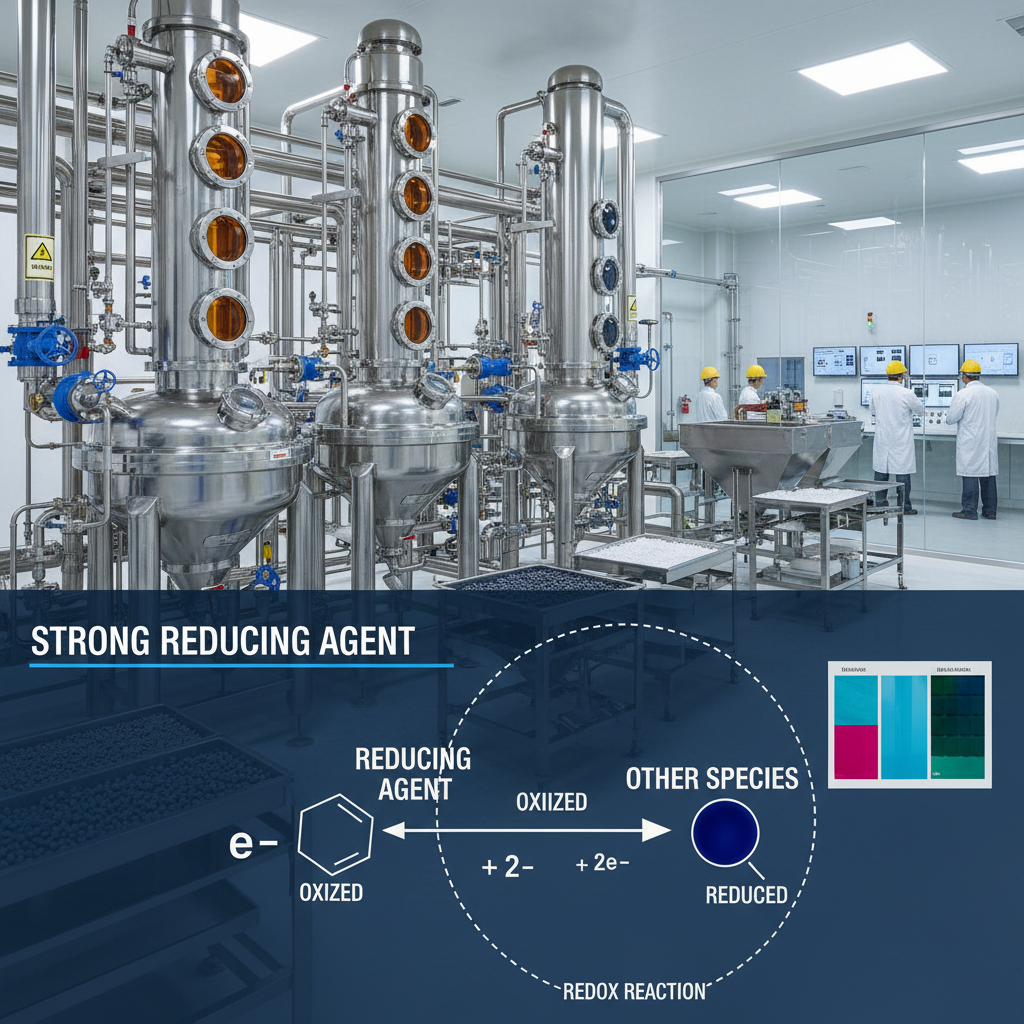
The strength of a reducing agent is determined by its tendency to lose electrons. This is quantified by its reduction potential (E°), a measure of its ability to gain electrons. A strong reducing agent has a negative reduction potential, meaning it readily gives up electrons. The more negative the value, the stronger the reducing agent. Essentially, a strong reducing agent has a high desire to be oxidized (lose electrons) and force another substance to be reduced (gain electrons). It’s important to note that reducing strength is relative; it depends on the specific reaction conditions and the other reactants involved.
Key Takeaway: Stronger reducing agents have more negative reduction potentials and readily donate electrons.
Common Strong Reducing Agents
Several substances are known for their strong reducing capabilities. Here are a few prominent examples:
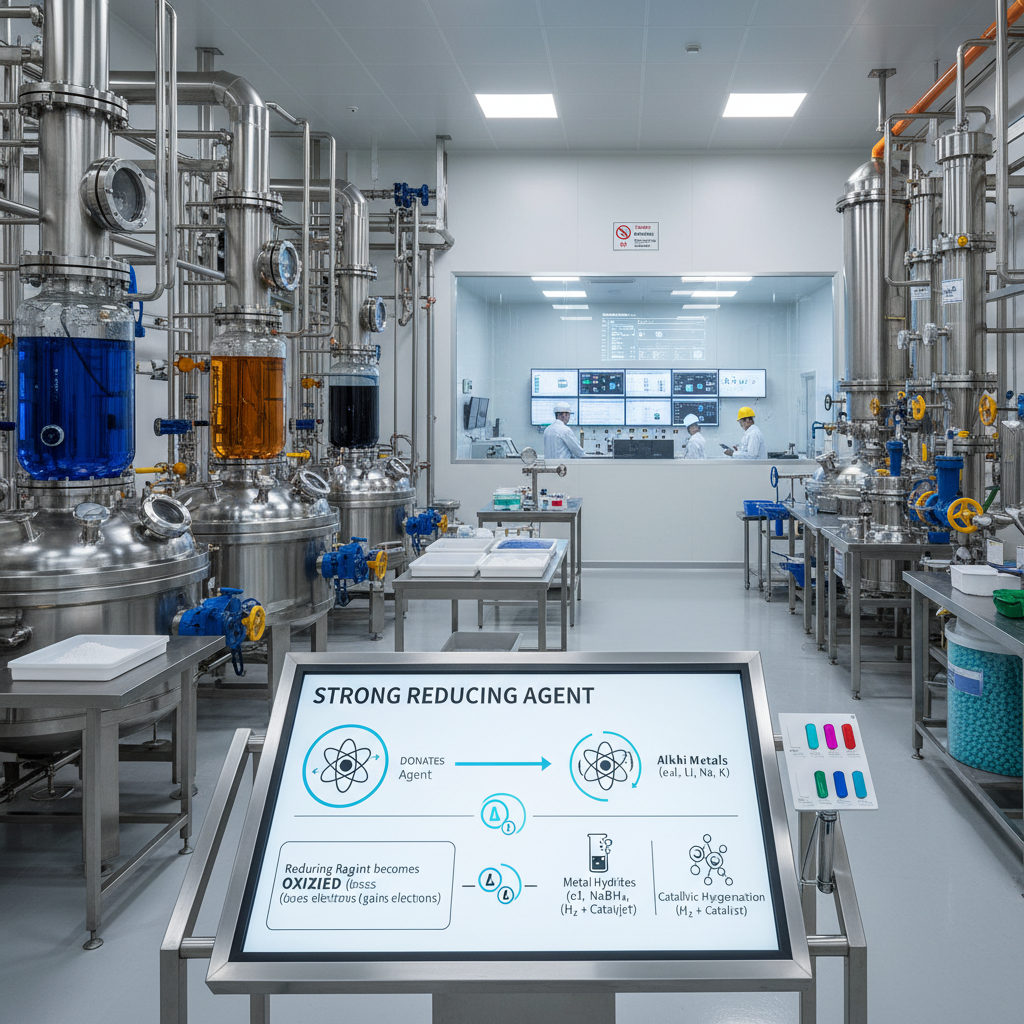
- Lithium (Li): One of the strongest reducing agents, with a highly negative reduction potential.
- Sodium (Na): A powerful reducing agent widely used in organic synthesis.
- Hydride Compounds (e.g., LiAlH₄, NaBH₄): These deliver hydride ions (H⁻), which act as strong reducing agents.
- Zinc (Zn): Often used in reactions requiring electron donation, like galvanization.
- Iron (Fe): A commonly used reducing agent, especially in industrial processes.
- Iodide Ions (I⁻): Effective in reducing certain metal ions.
Factors Influencing Reducing Agent Strength
Several factors can influence how effectively a substance acts as a reducing agent. These include:
- Electronegativity: Elements with low electronegativity readily lose electrons and tend to be strong reducing agents.
- Ionization Energy: Lower ionization energy means it takes less energy to remove an electron, enhancing reducing ability.
- Solvation: The solvent can affect the stability of ions and therefore the reducing power.
- Concentration: Higher concentrations of a reducing agent generally lead to faster reduction rates.
Comparing Common Reducing Agents: A Side-by-Side Look
The following table compares the standard reduction potentials (E°) of some common reducing agents. Note that these values are under standard conditions (25°C, 1 atm, 1 M concentration). Remember that more negative values indicate stronger reducing agents.
Applications of Strong Reducing Agents
Strong reducing agents find widespread use in various applications, including:
- Metallurgy: Extracting metals from their ores.
- Organic Synthesis: Reducing functional groups in organic molecules.
- Industrial Chemistry: In manufacturing processes requiring electron transfer.
- Environmental Remediation: Reducing pollutants to less harmful substances.
- Battery Technology: Key components in rechargeable batteries.
Conclusion
Understanding the principles of reducing agents, their strength, and their applications is fundamental in many scientific and industrial fields. Selecting the appropriate reducing agent is crucial for achieving desired outcomes in various chemical processes. Explore our range of high-quality chemicals and reagents at Dyeingchem.com to find the perfect solution for your needs.
Frequently Asked Questions (FAQs)
What are some safety precautions when working with strong reducing agents?
Strong reducing agents are often highly reactive and can pose safety hazards. Always wear appropriate personal protective equipment (PPE), including gloves, eye protection, and lab coats. Work in a well-ventilated area to avoid inhaling fumes. Some reducing agents react violently with water or air, so handle them under inert atmospheres if necessary. Consult the Material Safety Data Sheet (MSDS) for specific handling instructions and safety information. Proper disposal procedures are also crucial to prevent environmental contamination.
How does a reducing agent differ from an oxidizing agent?
A reducing agent donates electrons, while an oxidizing agent accepts electrons. They operate in tandem in redox reactions. Oxidizing agents have a positive reduction potential, meaning they readily gain electrons. You can think of it this way: one cannot occur without the other. For example, if zinc reduces copper ions to metallic copper, zinc itself is being oxidized. The copper ions are acting as the oxidizing agent.
Can a substance act as both a reducing and oxidizing agent?
Yes, some substances can exhibit both reducing and oxidizing properties, depending on the reaction conditions. These substances are termed as 'disproportionation' or 'auto-redox' agents. A classic example is hydrogen peroxide (H₂O₂). In some reactions, it acts as an oxidizing agent by accepting electrons, while in others, it acts as a reducing agent by donating electrons. The determining factor is the other reactants present and their relative affinities for electrons.
Where can I find a reliable supplier of reducing agents?
Dyeingchem.com is a trusted supplier of high-quality reducing agents and other chemical products. We offer a wide selection, competitive pricing, and reliable delivery. Our team of experts can assist you in choosing the right reducing agent for your specific application and ensuring safe handling and storage.