Understanding Reducing Agents What is an Example of a Reducing Agent and Its Applications
Understanding Reducing Agents What is an Example of a Reducing Agent and Its Applications
What is an Example of a Reducing Agent?
In the fascinating world of chemistry, a reducing agent (also known as a reductant) plays a crucial role in chemical reactions. Essentially, it donates electrons to another chemical species, causing the reduction of that species. Understanding reducing agents is fundamental to grasping concepts in oxidation-reduction (redox) reactions, which are ubiquitous in everyday life and industrial processes. This article will delve into the definition, examples, and applications of reducing agents, providing a clear and accessible explanation for readers of all backgrounds.
Defining Reducing Agents and Redox Reactions
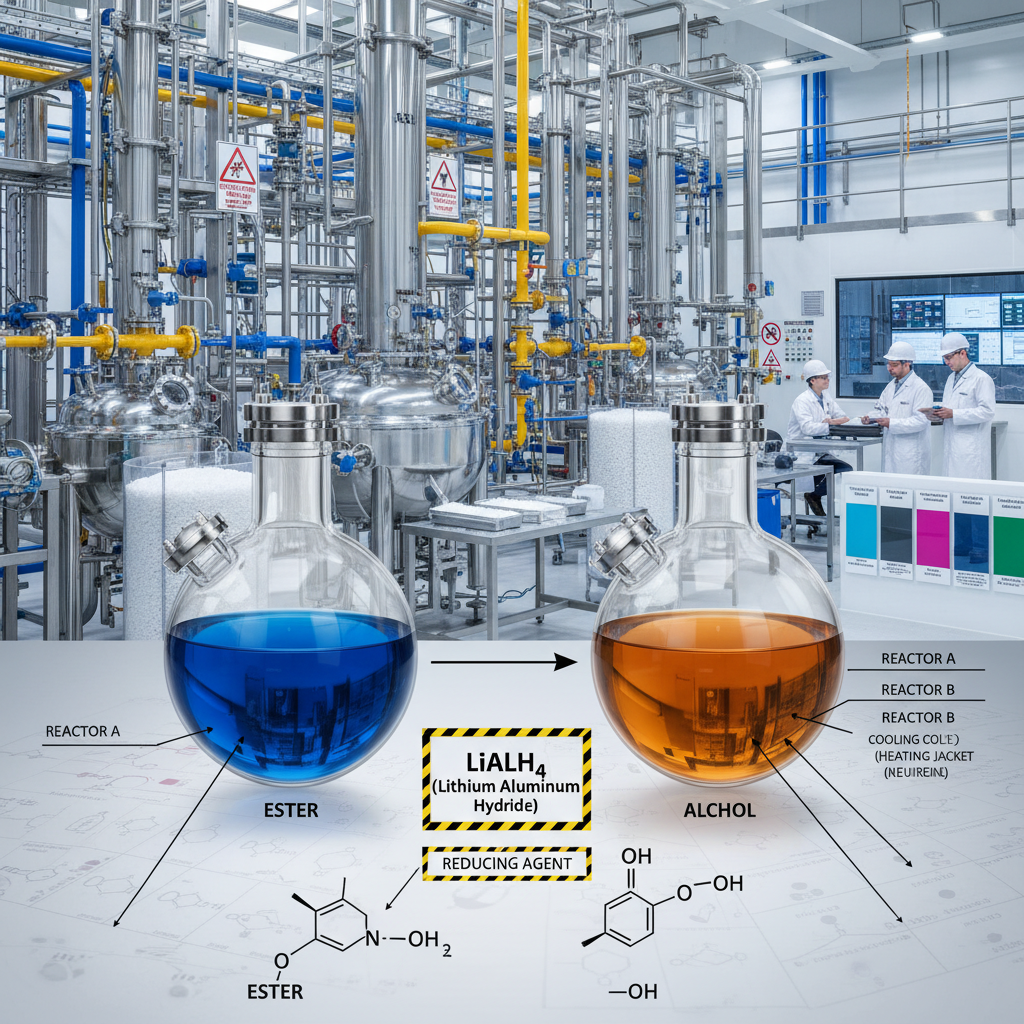
A reducing agent is a substance that loses an electron to another substance in a chemical reaction. This loss of electrons is known as oxidation. Simultaneously, the substance accepting those electrons undergoes reduction. These paired processes, oxidation and reduction, always occur together – hence the term "redox" reaction. To remember this, a helpful mnemonic is "OIL RIG" – Oxidation Is Loss, Reduction Is Gain (of electrons). The strength of a reducing agent is determined by its tendency to lose electrons; a stronger reducing agent readily donates electrons.
Key Takeaway: Reducing agents donate electrons, causing another substance to be reduced. This process is always coupled with oxidation, the loss of electrons by the reducing agent itself.
Common Examples of Reducing Agents
Several substances commonly function as reducing agents. Here are some notable examples:
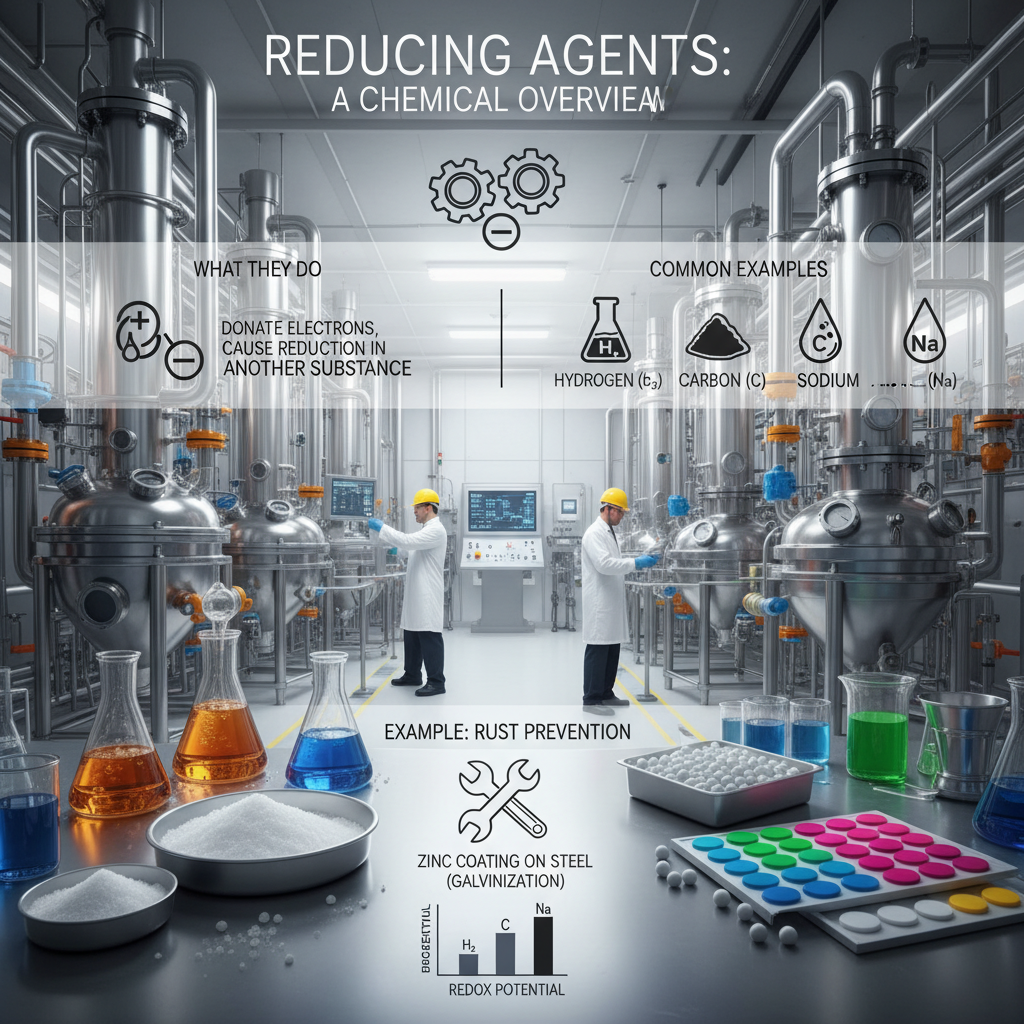
- Sodium (Na): A highly reactive alkali metal, sodium readily loses an electron, making it a strong reducing agent.
- Hydrogen (H2): Often used in hydrogenation reactions, hydrogen donates electrons to reduce unsaturated compounds.
- Carbon Monoxide (CO): Used in various industrial processes, CO acts as a reducing agent by donating electrons to metal oxides.
- Sulfur Dioxide (SO2): Employed in bleaching and other applications, SO2 reduces various compounds.
- Metal Hydrides (e.g., NaBH4, LiAlH4): These compounds are powerful reducing agents widely used in organic chemistry for selective reductions.
A Closer Look: Zinc as a Reducing Agent
Zinc (Zn) is a particularly good example of a reducing agent due to its relatively low ionization energy and ability to easily lose two electrons to form Zn2+ ions. A classic demonstration of zinc's reducing ability is its reaction with hydrochloric acid (HCl):
Zn(s) + 2HCl(aq) → ZnCl2(aq) + H2(g)
In this reaction, zinc is oxidized (loses electrons) and acts as the reducing agent, while hydrogen ions (H+) from the HCl are reduced (gain electrons). This reaction showcases zinc's ability to donate electrons and facilitate the reduction of another substance.
Comparing Reducing Agent Strength
The strength of a reducing agent is quantified by its reduction potential. A more negative reduction potential indicates a stronger reducing agent, meaning it has a greater tendency to lose electrons. Here’s a comparison of some common reducing agents:
Applications of Reducing Agents
Reducing agents are vital across a diverse range of applications:
- Metallurgy: Extracting metals from their ores often involves reducing metal oxides.
- Organic Chemistry: Used in numerous reactions, including the reduction of aldehydes and ketones to alcohols.
- Food Industry: Preventing oxidation and preserving food quality.
- Photography: Developing photographic films relies on reducing agents to convert silver halides into metallic silver.
- Environmental Remediation: Removing pollutants from water and soil.
Conclusion
Understanding reducing agents is fundamental to comprehending redox chemistry and its applications in diverse fields. From industrial processes to everyday life, these substances play a critical role in enabling essential reactions. By donating electrons and facilitating the reduction of other species, reducing agents underpin countless chemical transformations.
Frequently Asked Questions (FAQs)
What's the difference between a reducing agent and an oxidizing agent?
A reducing agent donates electrons and is itself oxidized, while an oxidizing agent accepts electrons and is itself reduced. They always work in tandem. Think of it like a seesaw – one goes up (oxidation), and the other goes down (reduction). An oxidizing agent has a positive reduction potential, and a reducing agent has a negative reduction potential. Understanding this interplay is key to grasping redox reactions.
Are all metals reducing agents?
While many metals can act as reducing agents, it’s not universally true. Whether a metal can act as a reducing agent depends on its reactivity and its tendency to lose electrons. Highly reactive metals like sodium and potassium are strong reducing agents, while less reactive metals like gold and platinum are less likely to act as reducing agents. The metal's position in the electrochemical series dictates its reducing power.
Can organic molecules be reducing agents?
Yes, absolutely! Many organic molecules can function as reducing agents. For example, ethanol, formic acid, and various aldehydes and ketones can donate electrons under appropriate conditions. These organic reducing agents are commonly used in organic synthesis. Their reducing ability stems from the presence of easily oxidized functional groups within their structure.