Penetrating Agent 1073: Avoid Dyeing Rework Losses with High-Alkali Resistant Penetrant
Penetrating Agent 1073: Avoid Dyeing Rework Losses with High-Alkali Resistant Penetrant
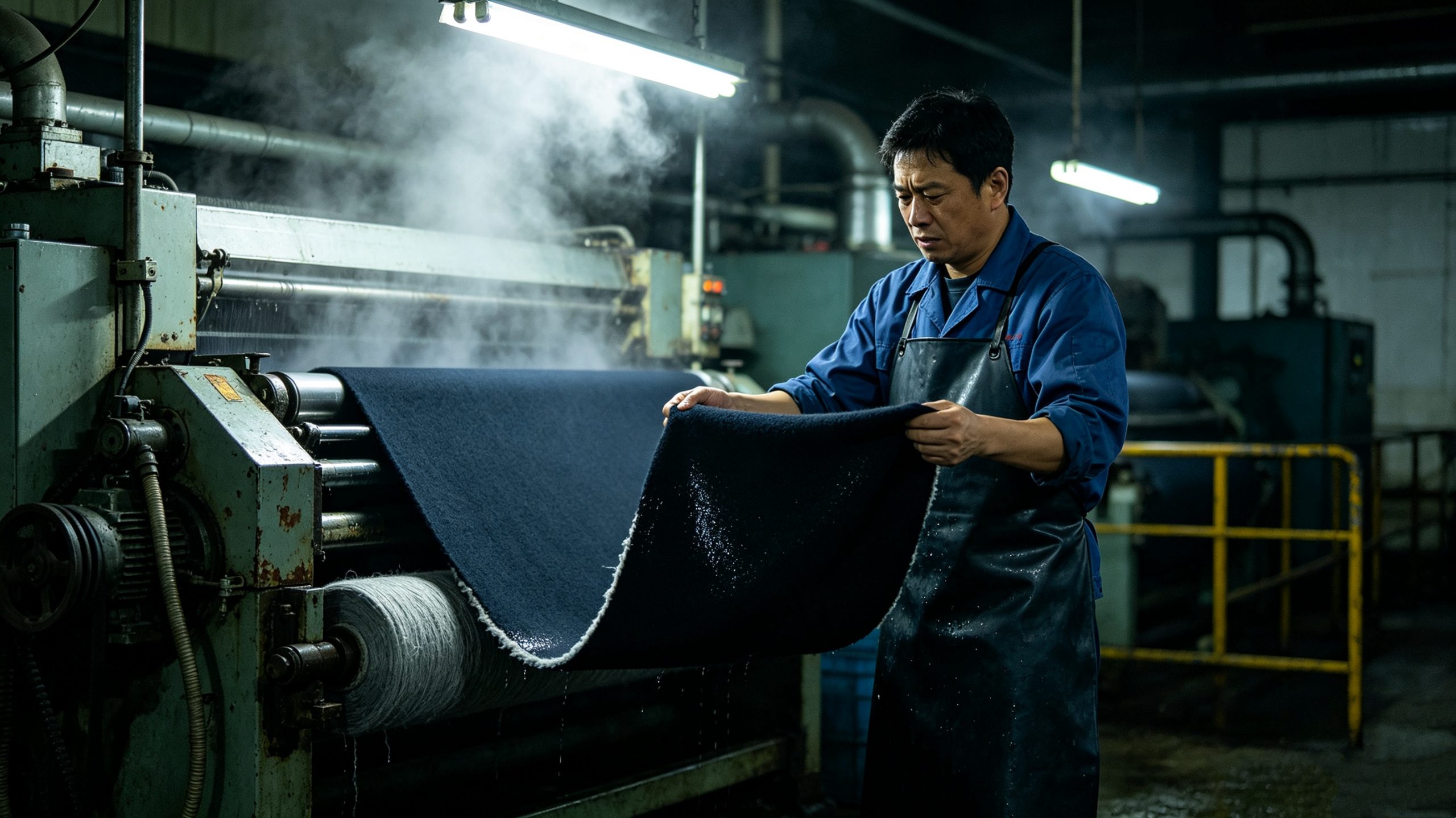
A textile printing and dyeing factory suffered a heavy production loss last month during the night shift. While processing a batch of dark black elastic cotton fabric for European export, workers adopted conventional penetrants based on past operating experience. The fabric appeared fully wetted on the surface after liquor treatment, yet serious core penetration failure occurred after dyeing — the yarn interior failed to absorb alkali and dye liquor thoroughly. The entire batch of fabric was downgraded due to uneven penetration, causing a direct economic loss of nearly $7,000 for a single vat of production.
This kind of production accident is extremely common in textile wet processing workshops. Most on-site technicians confuse surface wetting with deep fiber penetration. Simply making the fabric look moist cannot guarantee effective infiltration of alkali liquor, dye liquor and auxiliary agents into the fiber crystal structure. Once penetration is insufficient, all subsequent color fixing and finishing treatments will fail to deliver qualified results, leading to high rework rates, batch color difference and unnecessary production cost waste. If your factory is troubled by frequent fabric rework, unstable batch quality, or fails ZDHC factory audits, the field-tested data of Penetrating Agent 1073 under 280g/L high caustic conditions will provide practical solutions to avoid workshop operational risks.
Why Deep Penetration Is Indispensable for Textile Processing
Many factory technicians easily confuse surface wetting with effective penetration. A fabric that looks fully wetted on the outside may still have residual size, wax and impurities trapped in the fiber gaps. In the pretreatment stage, incomplete penetration will lead to uneven scouring and inconsistent fabric hydrophilicity, laying hidden dangers for subsequent dyeing and finishing.
Especially in high-alkali mercerization and deep-color denim dyeing processes, the requirement for liquor permeability is extremely strict. Alkali liquor and dye liquor must fully penetrate every layer of the fabric to ensure uniform fiber modification and consistent color fixation. Relying on traditional auxiliaries often results in partial processing failure, increased defective rate and repeated rework, which seriously affects production efficiency and profit margins.
Penetrating Agent 1073 solves this industry pain point fundamentally. It can quickly reduce the surface tension of the working bath, promote the rapid diffusion of liquid medicine into the interior of yarn fibers, and realize full-layer uniform wetting and penetration of fabrics. Different from single-performance auxiliaries, it also has excellent dispersion and emulsification capabilities, which can assist in removing fabric impurities and further optimize the pretreatment and dyeing foundation.
Workshop Lab Test: 1073 vs Ordinary Penetrants Under 280g/L Caustic
Most textile auxiliary suppliers advertise "stable performance" and "high efficiency" without specific test data. For professional textile engineers and factory managers, only quantified field test indicators can verify actual product performance. We completed all contrast tests under standard workshop production conditions, with detailed data as follows:
| Key Test Indicators (Workshop Test Conditions) | Ordinary Commercial Penetrant | Penetrating Agent 1073 | Industry Standard Requirement |
| High-alkali stability (280g/L NaOH, 30min constant temperature) | Stratification, precipitation and performance failure | Uniform and transparent, activity retention ≥95%, no floating oil or sediment | No obvious deterioration within 20min |
| Surface tension reduction value (25℃, 3g/L dosage) | Reduced to 38 mN/m | Reduced to 26.5 mN/m | ≤30 mN/m (Excellent Grade) |
| Canvas settling time (5g/L, normal temperature) | 18 seconds | ≤5 seconds | <10 seconds (Suitable for high-speed dyeing) |
| Bath compatibility | Only applicable to non-ion bath environment | Full compatibility with anionic, cationic and non-ionic auxiliaries | No stratification or flocculation in mixed bath |
| ZDHC MRSL Compliance (APE detection) | Partial APE residue, audit risk exists | NPE/ OPE non-detected, fully compliant | Meet EU textile export standards |
Core Conclusion: The core difference between professional high-performance penetrants and ordinary products is not surface wetting speed, but long-term stability under high-temperature and high-alkali extreme working conditions. Penetrating Agent 1073 maintains stable activity without decomposition or failure in 280g/L high-concentration caustic soda environment for 30 minutes, completely avoiding production shutdown and rework caused by auxiliary failure.
From Pretreatment to Denim Dyeing: Process Parameters for Each Stage
Textile Pretreatment & Scouring Process
As a professional textile pretreatment penetrant, this product is widely used in pre-scouring and desizing of pure cotton and cotton-blend fabrics. For cotton pretreatment, start at 2g/L and 85°C. If the fabric is heavy or tightly woven, increase to 4g/L and extend the holding time to 30 minutes — but always run a settling test first. It effectively assists scouring agents and desizing agents to penetrate deep into fiber gaps, completely remove sizing agents, pectin and grease impurities, and stabilize fabric hydrophilic uniformity, eliminating color difference defects in subsequent dyeing caused by incomplete pretreatment.
High-Alkali Mercerization of Grey Fabric
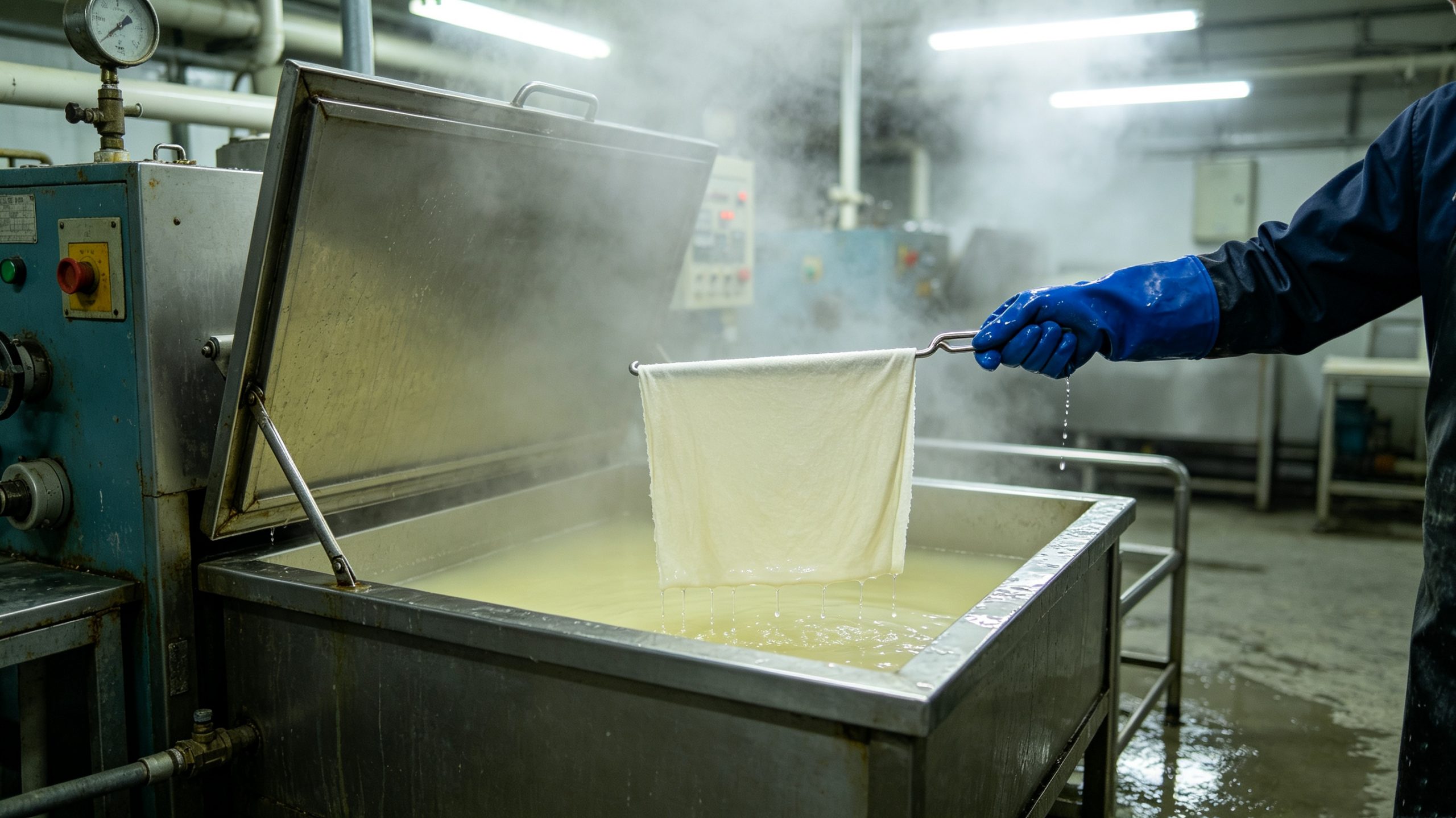
High-alkali mercerization is the key process to improve cotton fabric luster, strength and dyeing affinity, with strict requirements on auxiliary stability. Standard production parameters: original alkali concentration 240-280g/L, penetrant dosage 2-3g/L. Standard feeding sequence: add Penetrating Agent 1073 first, circulate for 5 minutes, then add caustic soda. Reverse feeding will cause salting-out failure of penetrant due to local high alkali concentration. Practical workshop feedback: after using 1073, fabric barium activity value increases from conventional 145 to above 155, and fabric surface gloss color difference (ΔE) is controlled within 0.3, realizing stable batch mercerization effect.
Desizing Enzyme Synergistic Treatment
In the biological enzyme desizing process, insufficient enzyme diffusion easily causes unqualified internal desizing. As an efficient desizing enzyme synergist, Penetrating Agent 1073 is dosed at 1.5-2.5g/L, working temperature 55-65℃, cooperating with desizing enzyme to accelerate diffusion and infiltration inside yarn fibers. It maximizes enzyme activity and ensures uniform desizing across the entire fabric roll, improves desizing uniformity and thoroughness, and avoids fabric texture unevenness and residual size defects.
Denim Indigo Dyeing (Multi-padding Process)
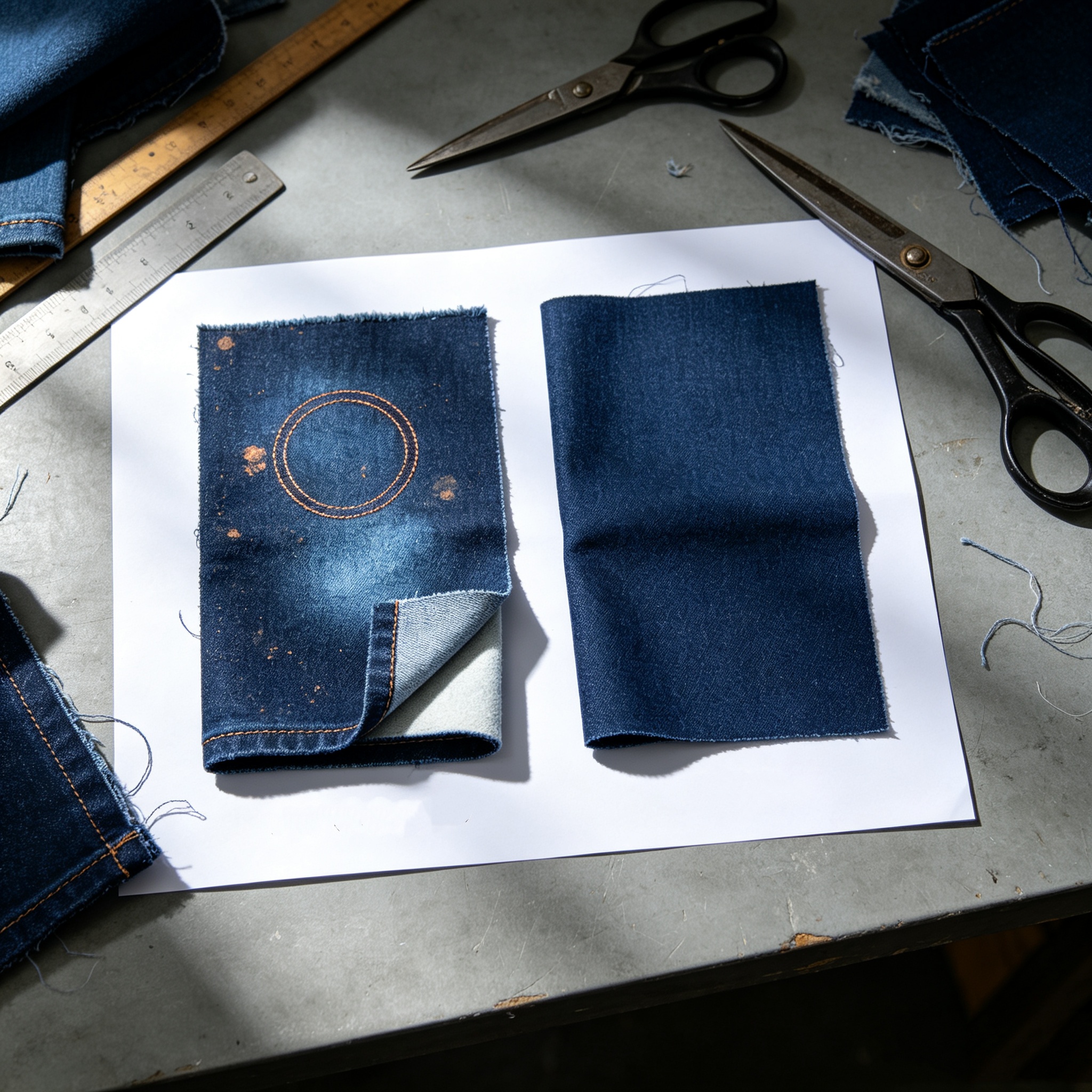
The common pain points of denim indigo dyeing are indigo particle aggregation, fabric white core and copper ring phenomenon, resulting in large color difference between head and tail batches. As a professional denim dyeing penetrant, Penetrating Agent 1073 adopts micro-dosing treatment in the dyeing bottom tank, with standard dosage 1.5-2g/L. Its internal emulsification and dispersion functions control indigo leuco particle size at nanometer level, ensuring consistent dye liquor osmotic pressure. Practical verification from a Jiangsu washing factory: after replacing with 1073, batch color difference ΔE decreased from 1.2 to 0.5, greatly reducing color correction and rework costs.
Industrial Metal Cleaning
Beyond textile processing, this product acts as a high-efficiency metal cleaning wetting agent. Standard cleaning parameters: dosage 3-5g/L, normal temperature to 50℃, cleaning cycle 5-10 minutes. It quickly emulsifies and strips oil stains and dirt on metal surfaces, preventing secondary adhesion of stains, and is widely applicable to daily cleaning and degreasing of various industrial metal parts.
Practical Factory Operation Guidelines
The conventional production dosage of Penetrating Agent 1073 is 1-5g/L. The product can be directly added to the working bath without complex pre-dissolving treatment, which is highly compatible with existing factory production lines and will not increase process complexity.
For new process debugging and fabric trial production, it is recommended to start with a medium dosage of 2g/L, observe the penetration and processing effect, and appropriately adjust the dosage according to fabric thickness, impurity content and process requirements to achieve the best cost-performance ratio.
The biggest advantage of this product is its ultra-wide bath compatibility. It can be stably compounded with anionic, cationic auxiliaries, whitening agents and various dyes in the same bath, which simplifies the production process, reduces the types of auxiliary materials used, and effectively saves production costs and inventory costs for enterprises.
Product Compliance & Storage Specification
With the increasingly strict global textile environmental protection standards, chemical compliance has become the core threshold for export textile enterprises. Penetrating Agent 1073 is a standard ZDHC compliant penetrant, fully complying with the latest 2023 ZDHC MRSL certification standards. NP, OP, NPEO and OPEO indicators are all non-detected via ISO standard testing, with no prohibited ingredients, fully adapting to EU and American textile brand export audit standards, and helping enterprises completely avoid compliance risks.
In terms of storage, the product should be placed in a cool, dry and well-ventilated warehouse, with the container tightly sealed. It is strictly prohibited to contact with strong oxidants and reducing agents. Under standard storage conditions, the product shelf life is 1 year from the production date.
During operation, conventional labor protection measures shall be taken to avoid long-term contact of skin and eyes with the product, ensuring safe production.
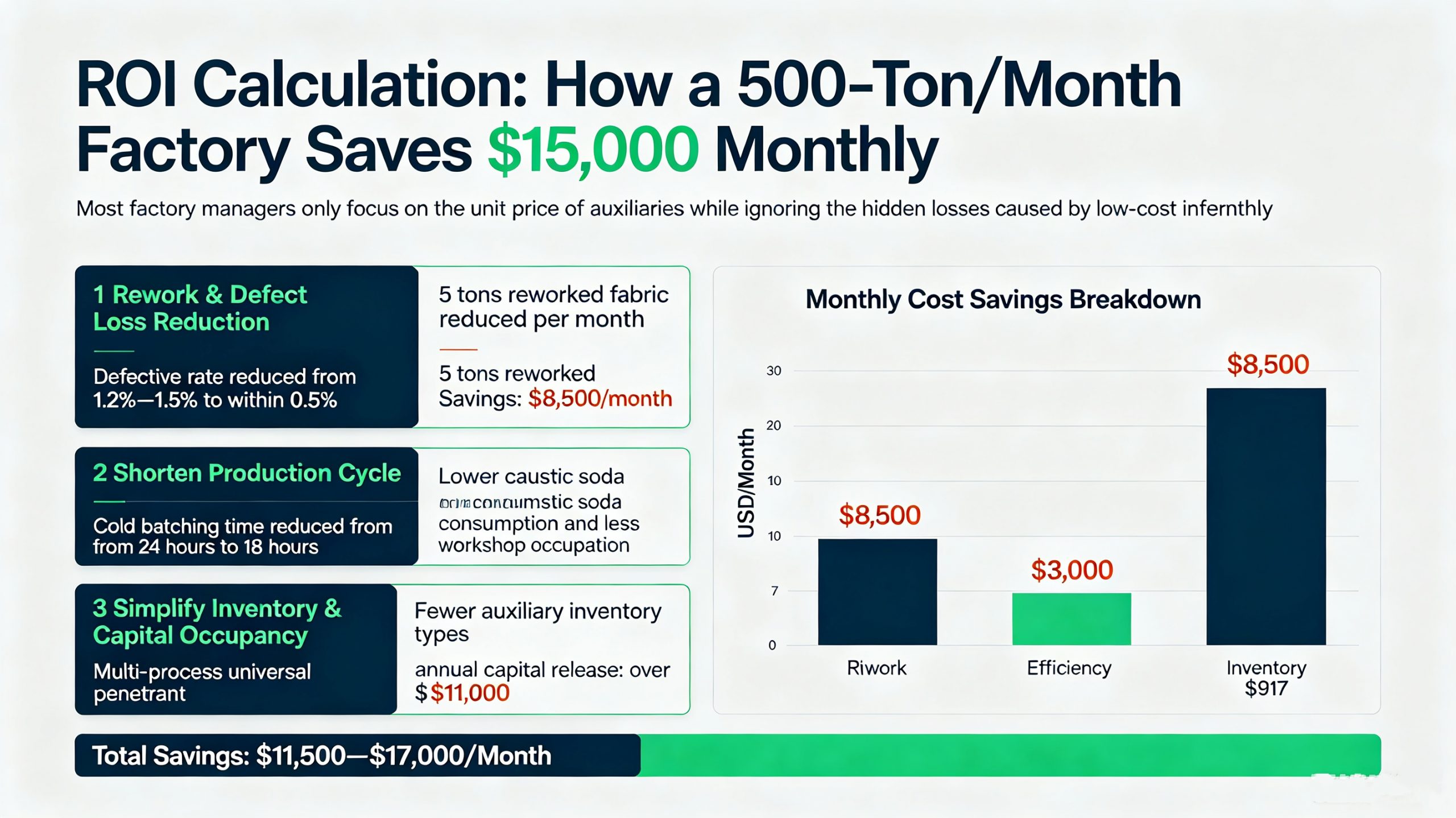
ROI Calculation: How a 500-Ton/Month Factory Saves $15,000 Monthly
Most factory managers only focus on the unit price of auxiliaries while ignoring the hidden losses caused by low-cost inferior penetrants. Taking a medium-sized textile mill with a monthly output of 500 tons of grey fabric as an example, we calculate the real ROI of replacing Penetrating Agent 1073:
Rework & Defect Loss Reduction: The defective rate of ordinary penetrants caused by insufficient penetration is 1.2%-1.5%, while 1073 controls the defective rate within 0.5%. The factory reduces 5 tons of reworked fabric every month, saving water, electricity and steam reprocessing costs of $1,700 per ton, with monthly cost savings of $8,500.
Shorten Production Cycle & Improve Turnover Rate: Efficient penetration performance shortens cold batching time from 24 hours to 18 hours. It reduces caustic soda consumption and workshop site occupation, improving daily fabric processing capacity and bringing additional output benefits.
Simplify Inventory & Capital Occupancy: Factories originally need to purchase three types of penetrants for pretreatment, mercerization and dyeing separately. Penetrating Agent 1073 achieves multi-process universal use, reducing auxiliary inventory types and saving annual capital occupation of over $11,000.
Total Accounting: Although the unit purchase price of 1073 is slightly higher than ordinary products, the comprehensive cost saved by reducing rework, improving efficiency and releasing capital is $11,500-$17,000 per month for a 500-ton monthly output factory, bringing stable net profit optimization for enterprises.
3-Step Workshop Test to Verify Your Current Penetrant (Before You Switch)
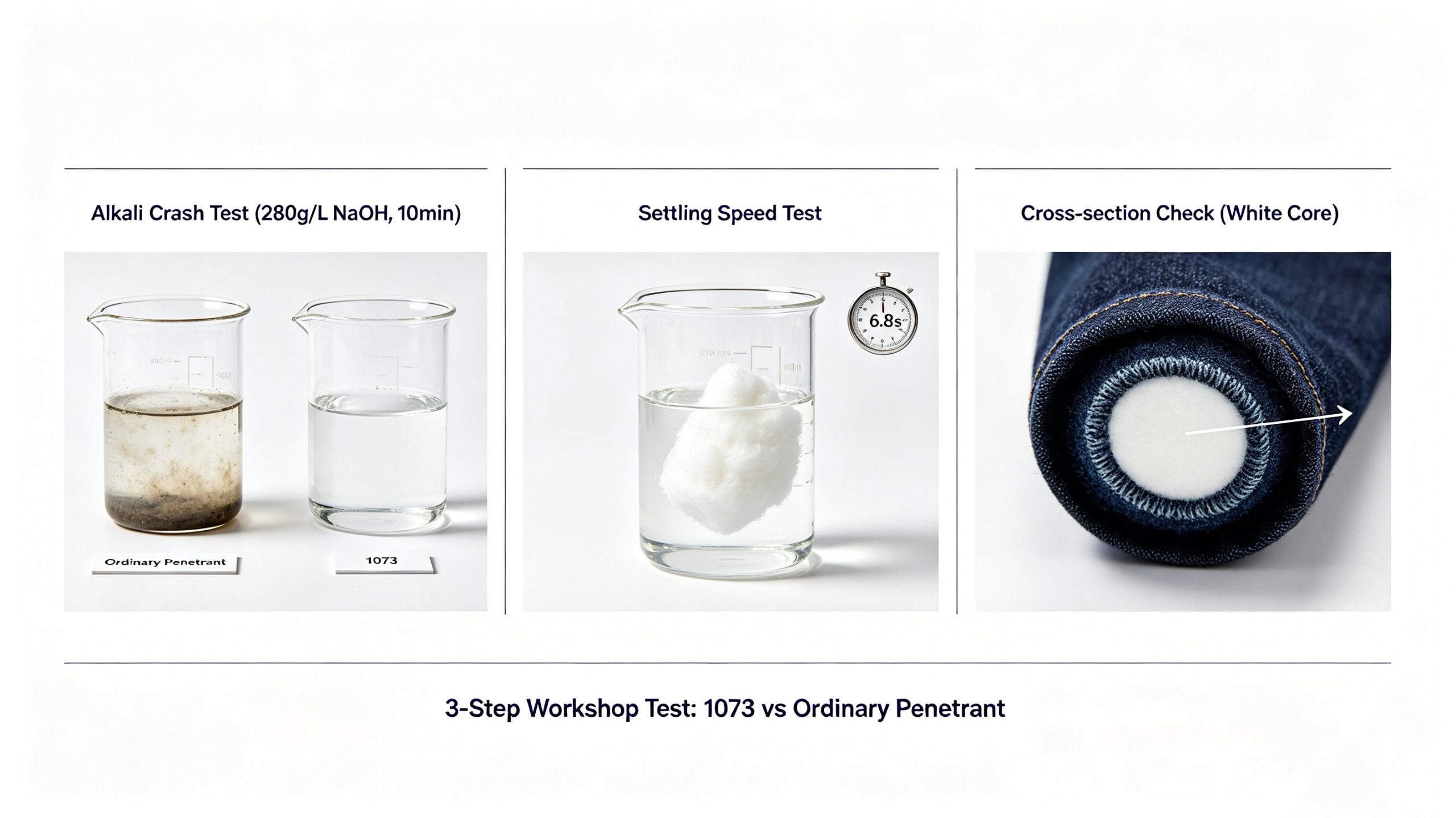
Don't take our word for it. Run these three simple tests on your production floor today with your existing penetrant, then compare with our free sample:
Alkali crash test: Mix your current penetrant with 280g/L NaOH. If it turns cloudy or separates within 10 minutes, it's already failing — you're just not measuring the hidden loss.
Settling speed test: Drop a 5cm×5cm cotton swatch into your working bath. If it takes longer than 10 seconds to sink, your dye liquor isn't penetrating fast enough to keep up with your machine speed. You're wasting alkali and dye.
Cross-section check: Cut a dyed fabric sample and look at the yarn cross-section under a magnifying glass. If the inner fibers are lighter than the surface, your "uniform dyeing" is only skin-deep — and your customers will notice it after washing.
Run these three checks today. Then run them again with 1073. The difference will show up on your defect rate report — not in our marketing brochure.
Advantages Over Ordinary Penetrants
Most penetrants on the market have single functions and narrow application scenarios, which can only adapt to a single process. In contrast, Penetrating Agent 1073 achieves multi-functional integration, covering textile pretreatment, mercerization, dyeing and industrial cleaning. It has strong stability in high-temperature and high-alkali harsh environments, and has unparalleled bath compatibility.
For textile mills, this multi-scene adaptive auxiliary can effectively simplify the production process, reduce the procurement and inventory pressure of chemical materials, reduce defective rates and rework costs, and truly realize double improvement of production efficiency and economic benefits.
Professional FAQ
Q1: Penetrating Agent 1073 is slightly more expensive than ordinary non-ionic penetrants on the market. Why should factories choose it?
A1: The single purchase price cannot represent the actual use cost. Low-cost ordinary penetrants will precipitate and fail under 280g/L high alkali conditions, causing pipeline blockage, requiring 2 hours of shutdown cleaning (labor cost up to $70 per hour), and bringing huge rework losses. 1073 focuses on total cost of use (TCU). It avoids shutdown maintenance and fabric rework losses, and the comprehensive use cost is far lower than low-grade penetrants.
Q2: Will this penetrant cause excessive foaming in high-speed mercerizing machines?
A2: Good question. 1073 is formulated with a low-foam design (defoaming time ≤15 seconds). In high-alkali mercerizing at 280g/L NaOH, the foam layer stays below 2cm throughout the 30-minute cycle — well within the safe operating range for chain mercerizing machines. It won't overflow the tanks or cause fabric creasing.
Q3: Can I get free samples? How to verify the effect without professional testing equipment?
A3: We support free sample delivery for factory testing. For workshops without professional detection instruments, we provide a simple and effective field verification method: prepare the same concentration of alkali liquor with two beakers, add competitor products and 1073 respectively, and put in equal-weight gauze. The product with faster settling speed and tightly attached gauze (no rebound) has far better penetration performance, which can directly verify product quality.
Conclusion
Verifying the quality of a textile penetrant never depends on product brochures and empty propaganda, but on destructive tests under high alkali and high temperature conditions. Only products that remain stable after 30 minutes of soaking in 250g/L caustic soda can adapt to complex and changeable textile workshop production conditions.
We now provide 500ml free samples with free shipping for global textile factories. You can conduct laboratory contrast proofing after receiving the samples. If the test effect is not better than your current penetrants, we support unconditional sample return and bear all freight costs. Leave a message with "1073 Test Run" via the dialog box, our professional textile technical engineers will dock your factory process parameters within 24 hours and provide exclusive on-site machine operation solutions.