Why Your Mercerizing Line Needs a Penetrant That Actually Works
Why Your Mercerizing Line Needs a Penetrant That Actually Works
Here's a scenario we run into pretty often.
A mill calls us up, frustrated. Their mercerizing line has been acting up for weeks. Luster is patchy — some rolls look great, others look dull and lifeless. Dyeing is inconsistent too. Same recipe, same fabric, but one batch comes out deep and vibrant, the next looks washed out. They’ve checked the caustic concentration, adjusted chain tension, even slowed down the line. Nothing seems to fix it.
And then we ask: “What penetrant are you using?”
Half the time, they pause. They are not even sure. It is just whatever the previous supervisor ordered six months ago, still sitting in the same drum in the corner.
That is the thing about mercerization. Everyone obsesses over the big variables — NaOH strength, dwell time, fabric speed. And sure, those matter. But if your penetrant cannot handle the alkalinity, none of that other stuff will save you. The caustic just sits on the fabric surface, never actually getting inside the fiber. You end up with “surface mercerization”, which in plain terms means you are wasting chemicals and production time without getting full-mercerized fabric.

The Quick Beaker Test We Always Recommend
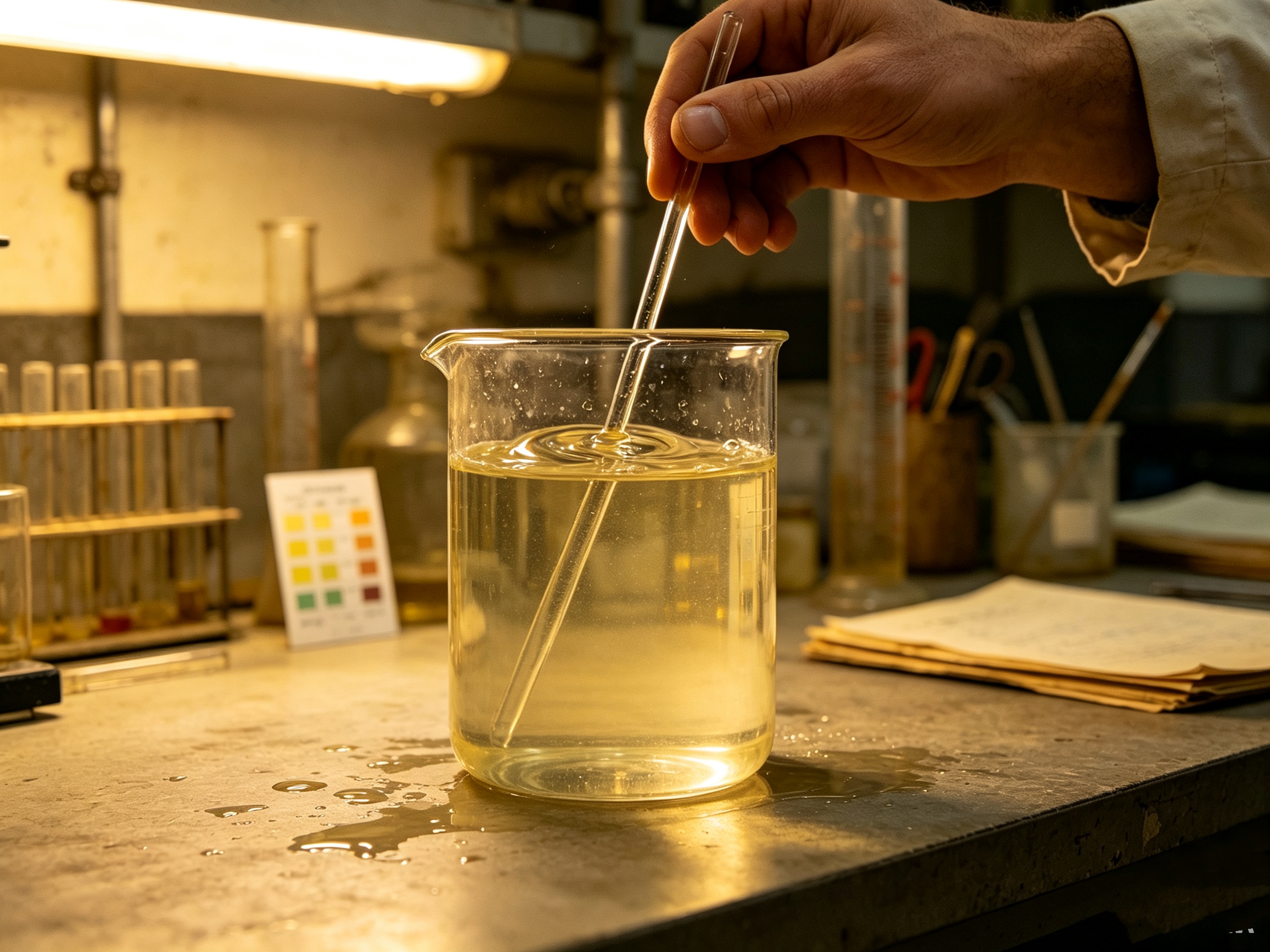
If you doubt whether your existing penetrant performs as expected, run this simple in-plant check. Draw a sample directly from your production mercerizing bath at full working caustic concentration, pour it into a beaker, add your penetrant and stir thoroughly.
Watch closely what happens.
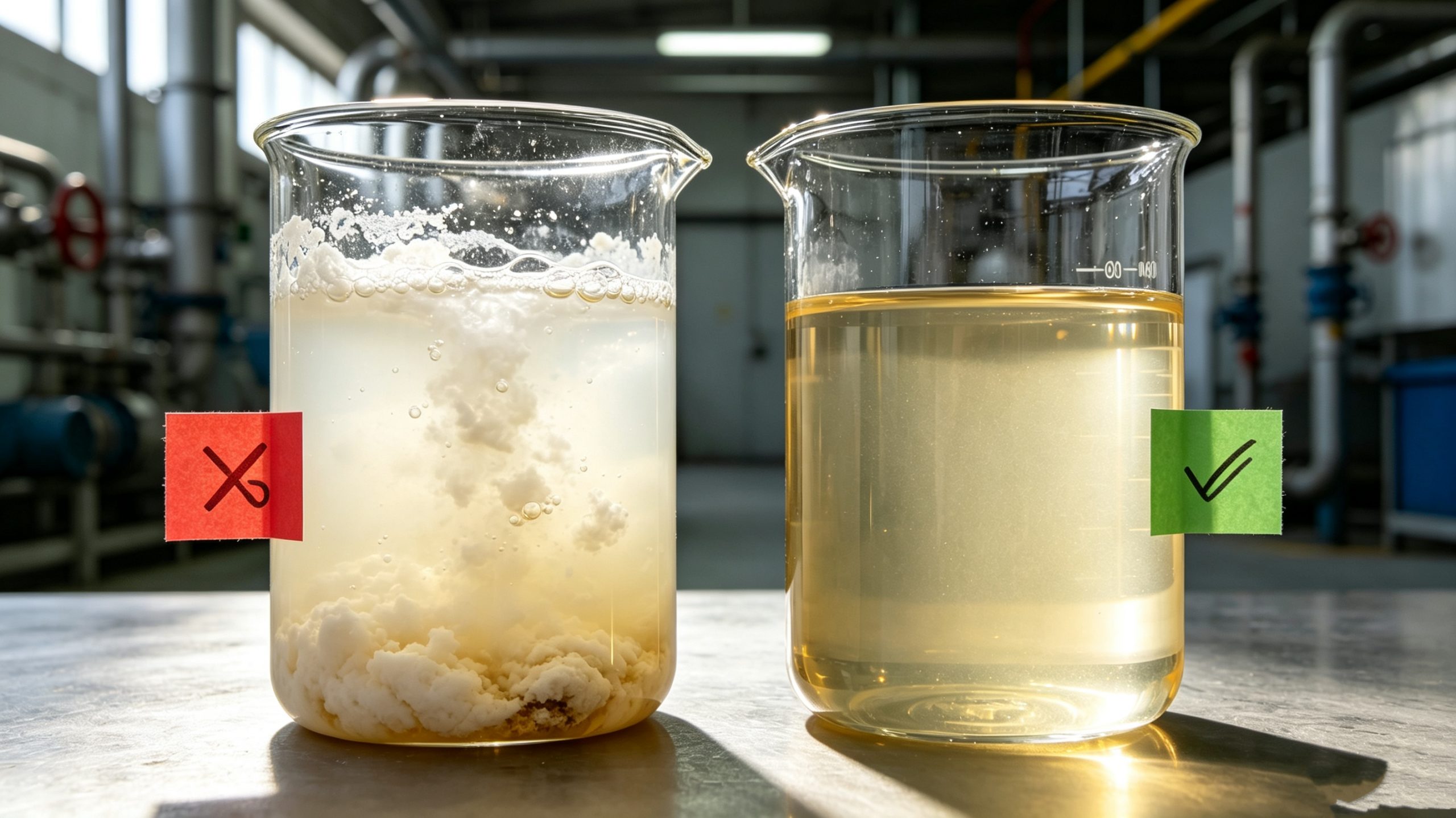
If the liquid turns cloudy, or oil floats on top, your penetrant has failed. It precipitates under high alkali and delivers almost zero wetting effect. Practically speaking, you might as well run with plain caustic solution.
A reliable mercerizing penetrant will keep the solution clear and stable. No cloudiness, no oily layer, just a homogeneous liquor capable of properly wetting textile substrates.
We have seen real-world cases where mills swapped low-grade penetrants for a purpose-built product, and patchy luster issues disappeared immediately. Same fabric, same caustic loading, same existing equipment — only a penetrant stable under 200-300 g/L NaOH made all the difference.
What Makes a Great Mercerizing Penetrant
Most penetrant product specs are full of empty marketing terms. After years of supporting textile mills on-site, we’ve narrowed down the only four practical, make-or-break traits that truly impact your mercerizing results. Cheap alternatives skip these core performances, which is why they cause endless quality issues on production lines.
Uncompromising high alkali resistance — This is the most critical feature that separates professional penetrants from ordinary wetting agents. Common penetrants fail and precipitate in 200–300 g/L NaOH baths, leaving only surface-level fabric treatment. Our fatty alcohol sulfonate salt formula stays crystal clear and fully active under extreme high-alkali conditions, delivering stable penetration for every production batch.
Rapid, uniform wetting speed — Slow wetting is the main culprit for uneven luster and inconsistent dye uptake. Instead of dragging out dwell time and limiting your line throughput, a high-quality penetrant wets fabric in seconds. This ensures alkali penetrates every fiber evenly, eliminating edge-to-edge and front-to-back treatment differences that ruin batch consistency.
True low-foam operational stability — Excessive foam is a frequent and annoying problem on continuous mercerizing lines. Many low-cost penetrants generate heavy foam, causing uneven liquor pickup, unstable padder operation and irreversible fabric foam marks, forcing mills to purchase extra defoamers. Our low-foam formula avoids all these extra troubles and additional costs, keeping your production line running smoothly.
Powerful anti-redeposition dispersing ability — Easily overlooked but extremely vital for fabric quality. High-alkali mercerizing dissolves natural waxes, pectins and fabric impurities. Inferior penetrants cannot suspend these contaminants, leading to redeposition, alkali spots, fabric yellowing and poor whiteness. Our penetrant locks impurities in the bath effectively, letting them wash off completely in subsequent rinsing processes for cleaner, higher-quality finished fabrics.
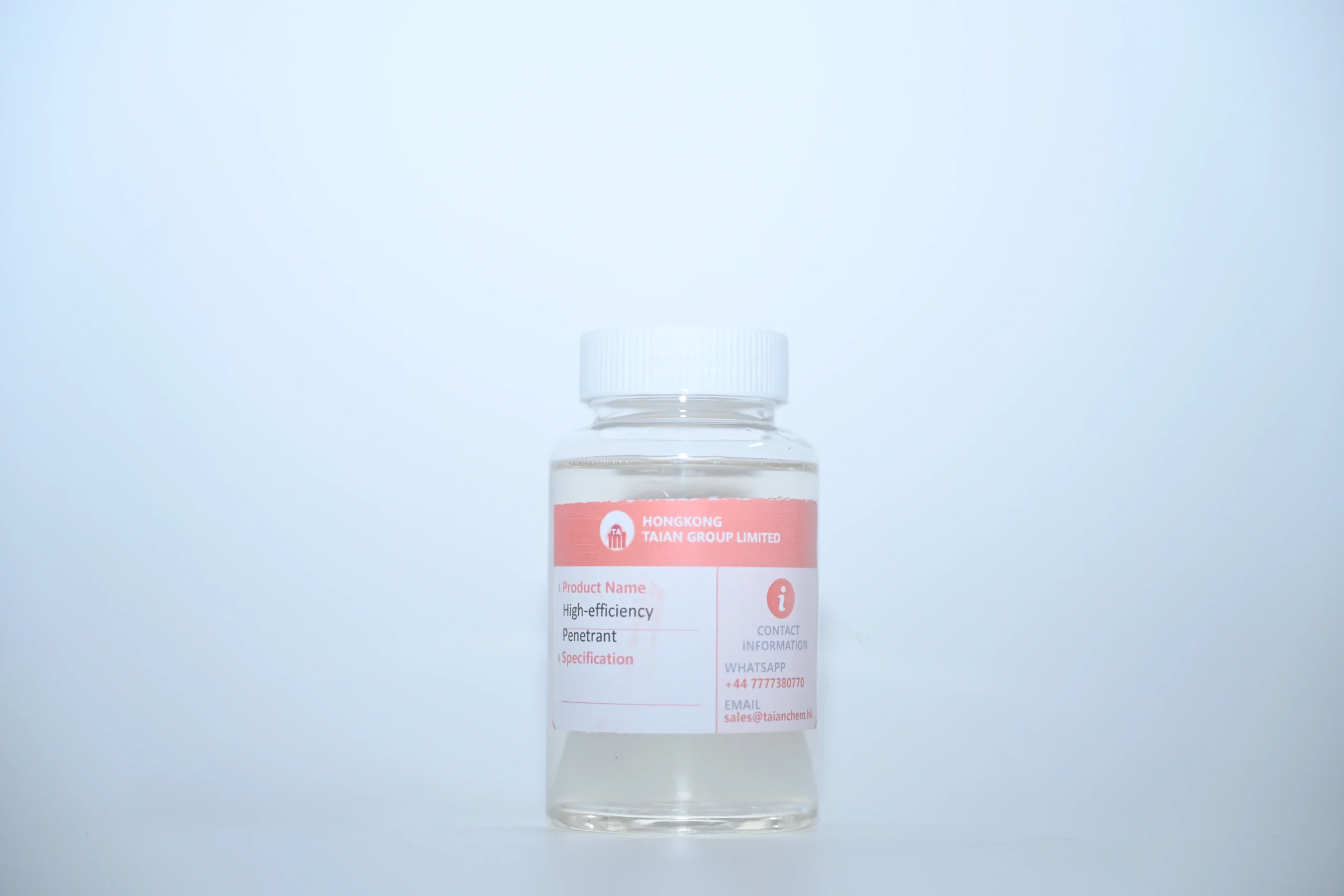
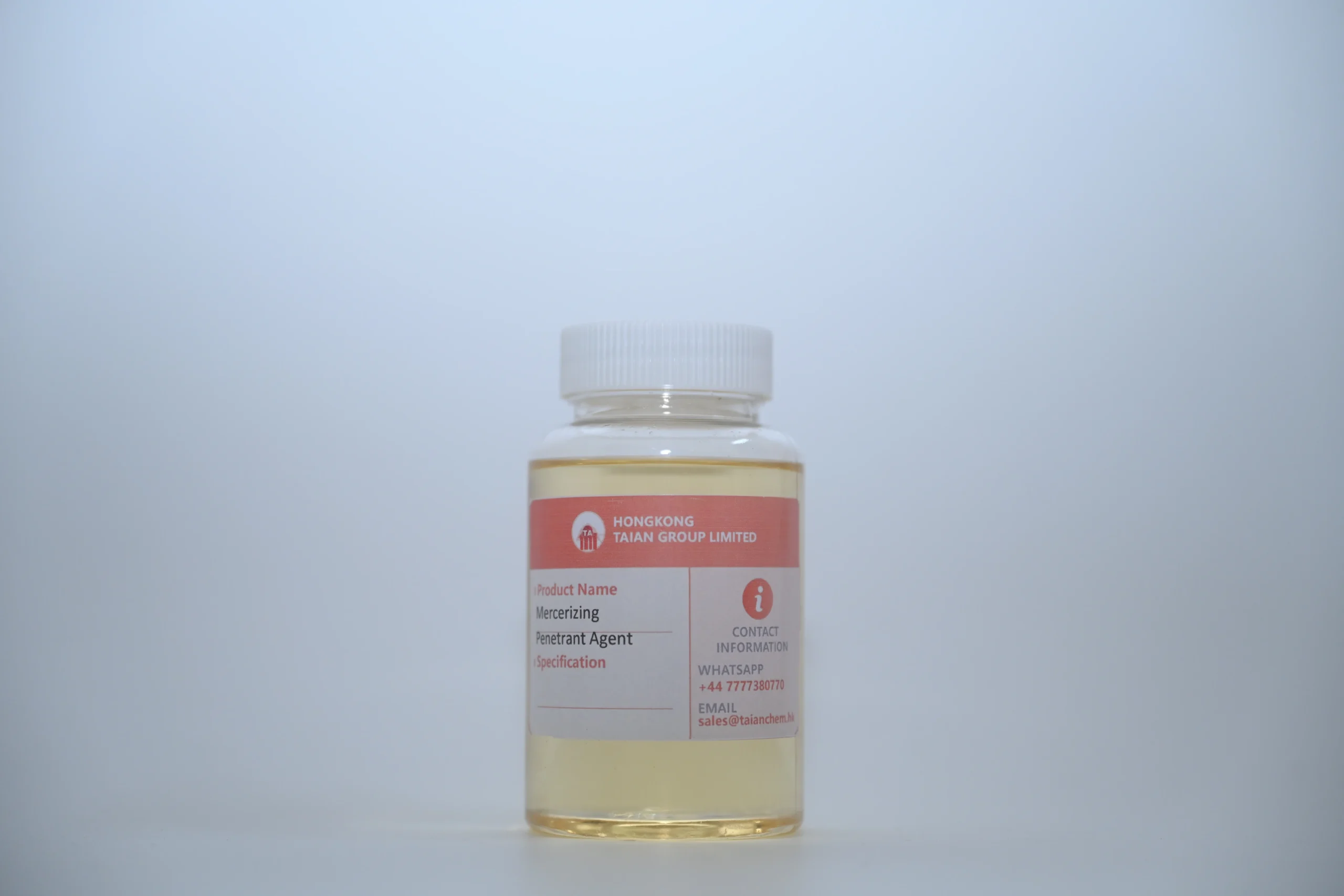
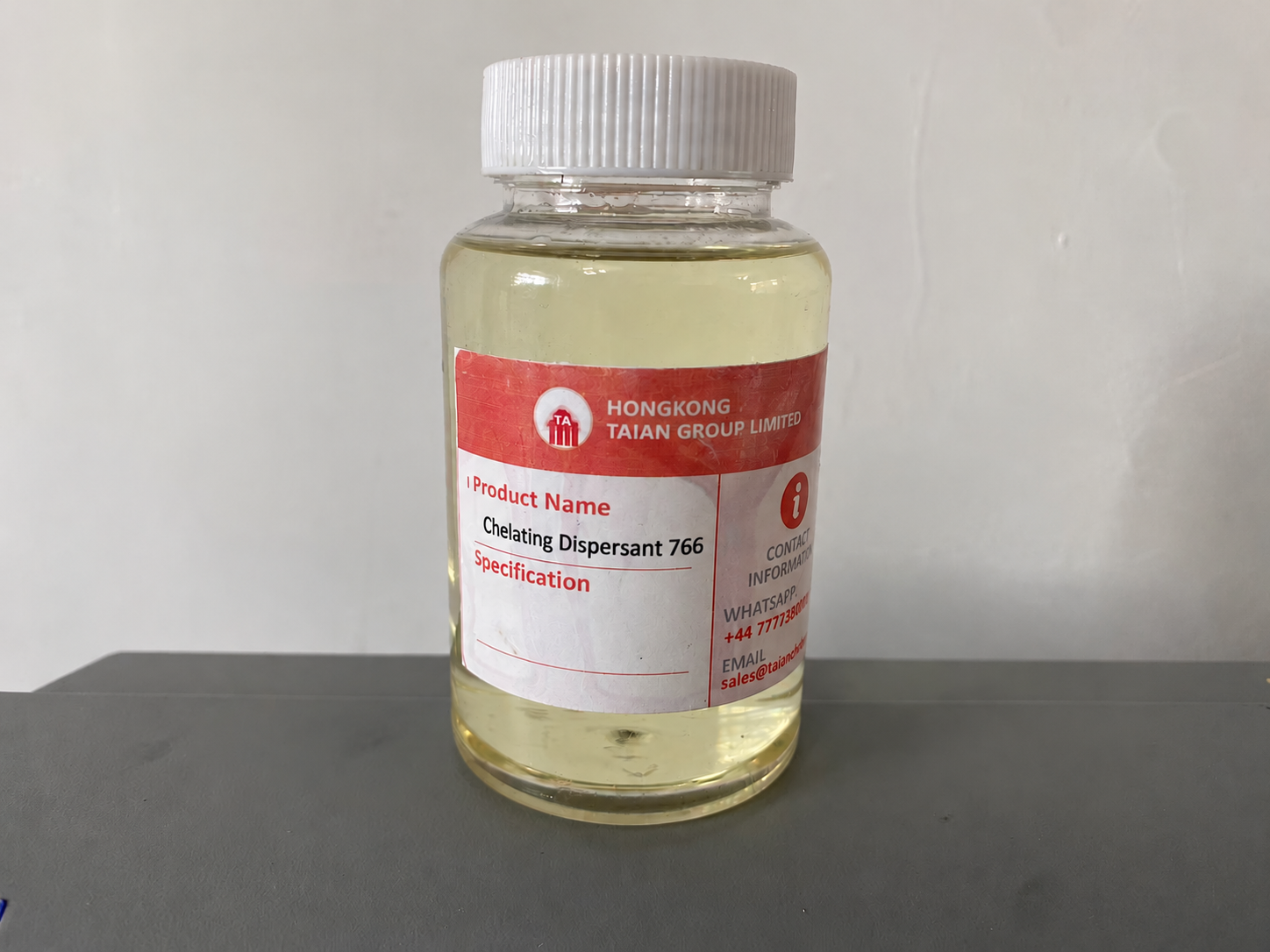
Our mercerizing penetrant satisfies all four requirements. It is a yellow transparent liquid with 60% solids content and dissolves fully in cold water, no pre-heating required.
Real-World Case: Solving Patchy Luster & Uneven Dyeing
Take the mill mentioned above struggling with inconsistent luster and variable dye results. They trialled our penetrant without modifying bath strength, fabric type or production machines.
After initial production trial, they reported obvious improvements. Luster stayed uniform for the complete batch, no cloudy sections appeared. Dye uptake improved roughly 15%, easily observed through deeper, more consistent shade depth. Fabrics obtained that smooth silky sheen buyers are willing to pay premium prices for.
One operator shared a telling comment: “I never understood how critical the penetrant really was. I just assumed we received bad batches of fabric.”
The problem was never the fabric. It was the under-performing penetrant.
Practical Application & Dosage Guidance
You do not need complicated adjustments to integrate this product into existing workflows.
- For standalone mercerizing bath: start at 5-10 g/L. Fine-tune dosage up or down according to fabric weight and production line speed.
- When added to pre-treatment or dyeing baths: 0.2-1% o.w.f. works well to boost wetting and leveling performance.
Since it dissolves readily in cold water, special heating or mixing equipment is unnecessary. Simply add directly into your process bath.
Pro Tip: On continuous production lines, regularly calibrate your dosing pump. Under-dosage caused by mis-calibrated pumps is a common source of complaints that the chemical “does not work”. Double-check pump output to ensure accurate addition rates.
Storage, Shelf-Life & Product Supply
Store in cool, well-ventilated warehouse space. When kept inside sealed original packaging, shelf life reaches 12 months. Once expired, test practical wetting and penetration performance before reuse. If performance drops off, reach out to our technical team for further advice.
Packaging options include 125 kg plastic drums for bulk manufacturing, plus lab-scale sample sizes for preliminary fabric trials before bulk orders.
Ready to Upgrade Your Mercerizing Line’s Consistency?
Most mercerizing quality issues don’t stem from faulty machines or bad fabric batches — they come from an underperforming penetrant that can’t handle high-alkali working conditions. It’s an easy-to-ignore variable that drags down your fabric luster, ruins dye uniformity, and creates repetitive batch defects.
If you’re still struggling with patchy luster, inconsistent dye uptake, or unstable mercerizing results, start with that simple beaker test we shared above. It’s the fastest way to check if your current penetrant is truly working for your production line.
Swap your ordinary penetrant for our high-alkali resistant formula, and achieve uniform mercerizing results, brighter fabric luster, and stable batch quality without extra time or cost investment. We offer free sample trials, professional process evaluation, and tailored technical guidance for your unique mercerizing workflow.
Reach out to our team today to test the difference on your own production line.
FAQ – Quick Answers to Common Mill Questions
Q: Can I use this in both mercerizing and scouring?
Yes. For scouring (at 40–50 g/L NaOH with added H₂O₂), use 0.5–1 g/L. Its emulsifying power handles wax removal equally well, delivering stable wetting and cleaning performance in conventional textile pre-scouring workflows.
Q: Does it affect the handle or stiffness of the finished fabric?
No. Since it is fully washed off in the subsequent rinsing compartments, it leaves no cationic or film-forming residues that could stiffen the hand feel. The original soft, silky texture and natural hand feel of mercerized cotton and blended fabrics are completely preserved.
Q: How quickly can I see improvement on my line?
Most mills report visible luster uniformity within the first batch (2–3 hours) after switching. The beaker test improvement is immediate—you can run it during the shift change and decide to swap baths right then, with no complicated process adjustments or long trial cycles.