Understanding the Roles of Oxidising and Reducing Agents in Organic Chemistry
Understanding the Roles of Oxidising and Reducing Agents in Organic Chemistry
Understanding Oxidising and Reducing Agents in Organic Chemistry
In the fascinating world of organic chemistry, reactions often involve the transfer of electrons. This transfer is facilitated by substances called oxidising and reducing agents. These agents are critical for a vast range of chemical processes, from industrial synthesis to biological reactions. Understanding their roles is fundamental to grasping how organic reactions occur. This article will delve into the definitions, mechanisms, and examples of these agents, equipping you with a solid understanding of their importance in organic chemistry. The concept is essential for anyone working with chemical synthesis, analysis, or material science.
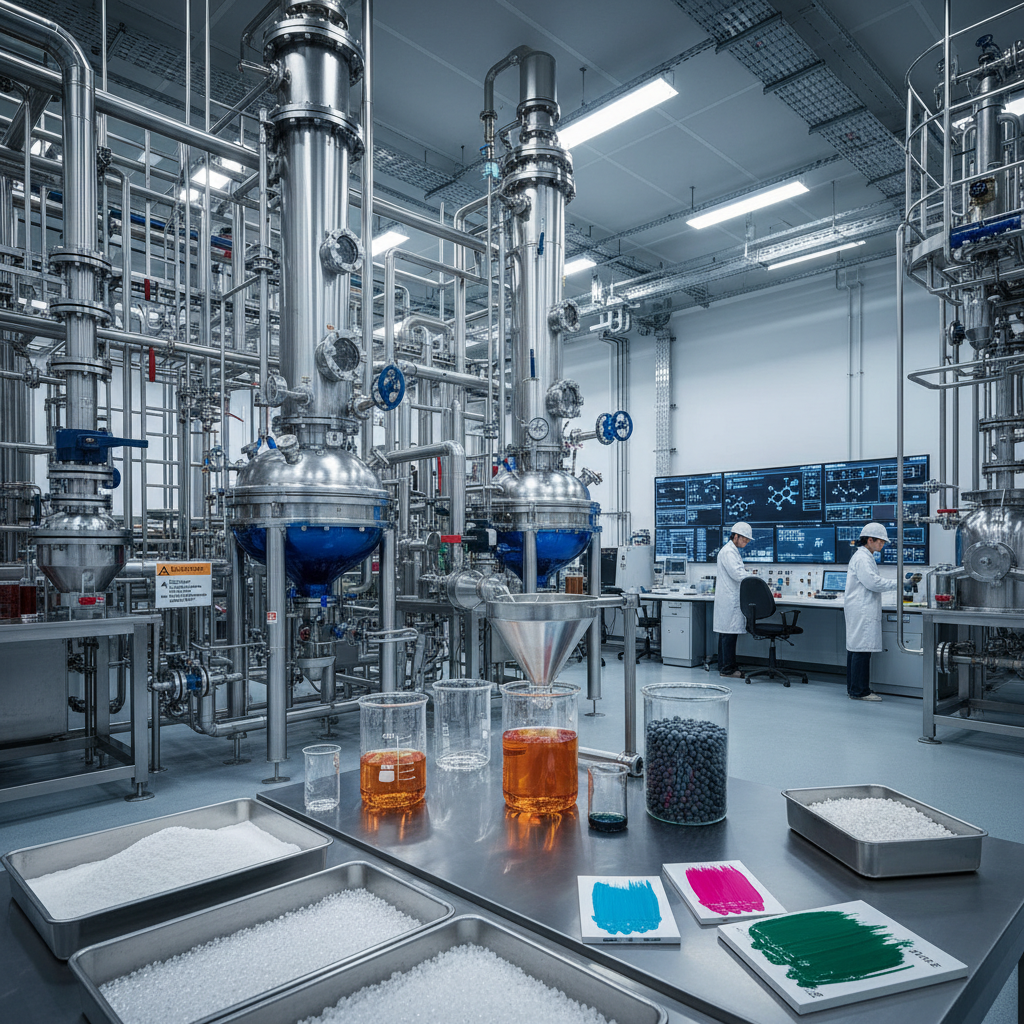
What are Oxidising Agents?
An oxidising agent is a substance that accepts electrons from another substance. This acceptance causes the other substance to be oxidised. In doing so, the oxidising agent itself is reduced. Common oxidising agents include oxygen (O2), potassium permanganate (KMnO4), and chromic acid (H2CrO4). For example, when ethanol is oxidised to ethanal, an oxidising agent is required to accept the electrons released during the process. The strength of an oxidising agent is determined by its electron affinity – how strongly it attracts electrons.
What are Reducing Agents?
Conversely, a reducing agent is a substance that donates electrons to another substance. This donation causes the other substance to be reduced, while the reducing agent itself is oxidised. Common reducing agents include sodium borohydride (NaBH4), lithium aluminium hydride (LiAlH4), and hydrogen gas (H2). For instance, in the reduction of a ketone to an alcohol, a reducing agent provides the necessary electrons. The effectiveness of a reducing agent is related to its ability to lose electrons easily.
Key Difference: Oxidising agents accept electrons (get reduced), while reducing agents donate electrons (get oxidised). Remembering ‘OIL RIG’ – Oxidation Is Loss, Reduction Is Gain – can be incredibly helpful.
Common Oxidising and Reducing Agents in Organic Chemistry
Here’s a table summarizing some frequently used oxidising and reducing agents:
Factors Affecting Oxidising/Reducing Power
Several factors influence how strongly an agent will oxidise or reduce. These include:
- Electronegativity: More electronegative elements have a stronger tendency to accept electrons (oxidising power).
- Ionisation Energy: Lower ionisation energy means an element more readily loses electrons (reducing power).
- Solvent Effects: The solvent can impact the reaction rate and the strength of the agent.
- Reaction Conditions: Temperature and pH can influence the oxidation-reduction process.
Applications in Industrial Chemistry & Dyeing
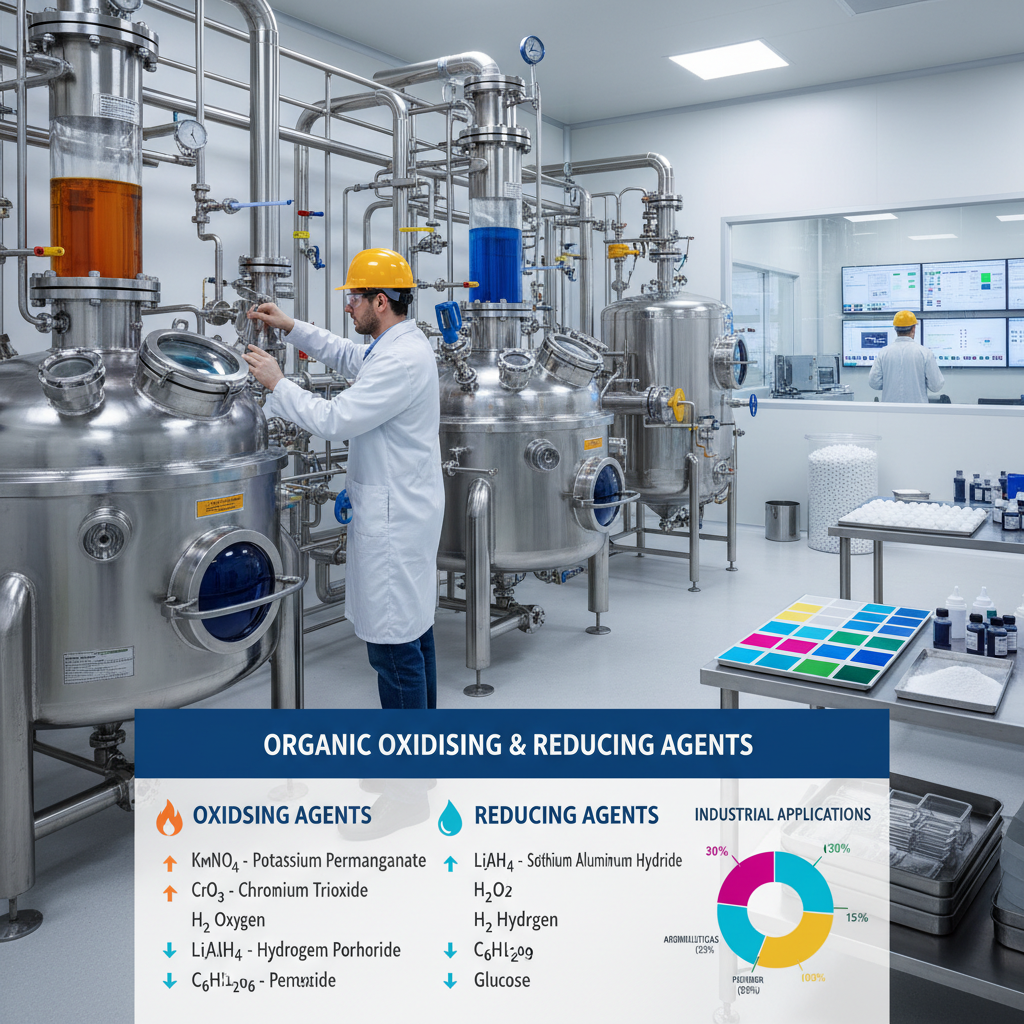
The principles of oxidation and reduction are central to numerous industrial processes. In the dyeing industry, for example, oxidising agents are used to develop certain dyes, while reducing agents are employed in the synthesis of dye intermediates. Furthermore, these reactions are crucial in the production of pharmaceuticals, polymers, and other important chemical products. Understanding these concepts is essential for optimising reaction yields, controlling product purity, and ensuring safe operation.
Conclusion: Mastering Oxidation-Reduction
A strong grasp of oxidising and reducing agents is vital for success in organic chemistry and related fields. By understanding their roles, strengths, and applications, you can better predict and control chemical reactions. From laboratory synthesis to large-scale industrial processes, these agents are essential tools for chemists and chemical engineers.
Frequently Asked Questions (FAQs)
What is the difference between oxidation and reduction?
Oxidation involves the loss of electrons, leading to an increase in oxidation state. Reduction, conversely, involves the gain of electrons, resulting in a decrease in oxidation state. They always occur together – one substance must be oxidized for another to be reduced. Think of it as a transfer; electrons don’t simply disappear, they move from one species to another. For instance, when iron rusts (oxidises), it’s reacting with oxygen, which is being reduced. Understanding this electron transfer is central to understanding redox chemistry.
How do I identify an oxidising agent in a reaction?
An oxidising agent is the substance that causes oxidation in another reactant. It will itself be reduced in the process. Look for substances that are gaining electrons or that have an increase in their oxidation number. Common clues include the presence of elements in high oxidation states that can be reduced, such as Mn+7 in permanganate (KMnO4) or Cr+6 in chromic acid (H2CrO4).
Are there any safety precautions to take when handling strong oxidising or reducing agents?
Absolutely! Strong oxidising and reducing agents can be highly reactive and potentially dangerous. Always wear appropriate personal protective equipment (PPE), including gloves, safety goggles, and a lab coat. Handle these agents in a well-ventilated area, and avoid contact with combustible materials. Many of these agents are corrosive and can cause severe burns. Follow established laboratory safety protocols and consult the Safety Data Sheet (SDS) for specific handling instructions.