Understanding the Crucial Role of the Reducing Agent in Chemical Transformations
Understanding the Crucial Role of the Reducing Agent in Chemical Transformations
Understanding the Role of the Reducing Agent in Chemical Processes
In the vast landscape of chemical reactions, reducing agents play a critical, yet often understated, role. They are the backbone of numerous industrial processes, from metal extraction to pharmaceutical synthesis. This article delves into the world of reducing agents, exploring their definition, mechanisms, common types, and crucial applications. Understanding these compounds is fundamental for anyone involved in chemistry or related fields. We at DyeingChem provide high-quality chemicals, including crucial reducing agents, to industries worldwide.
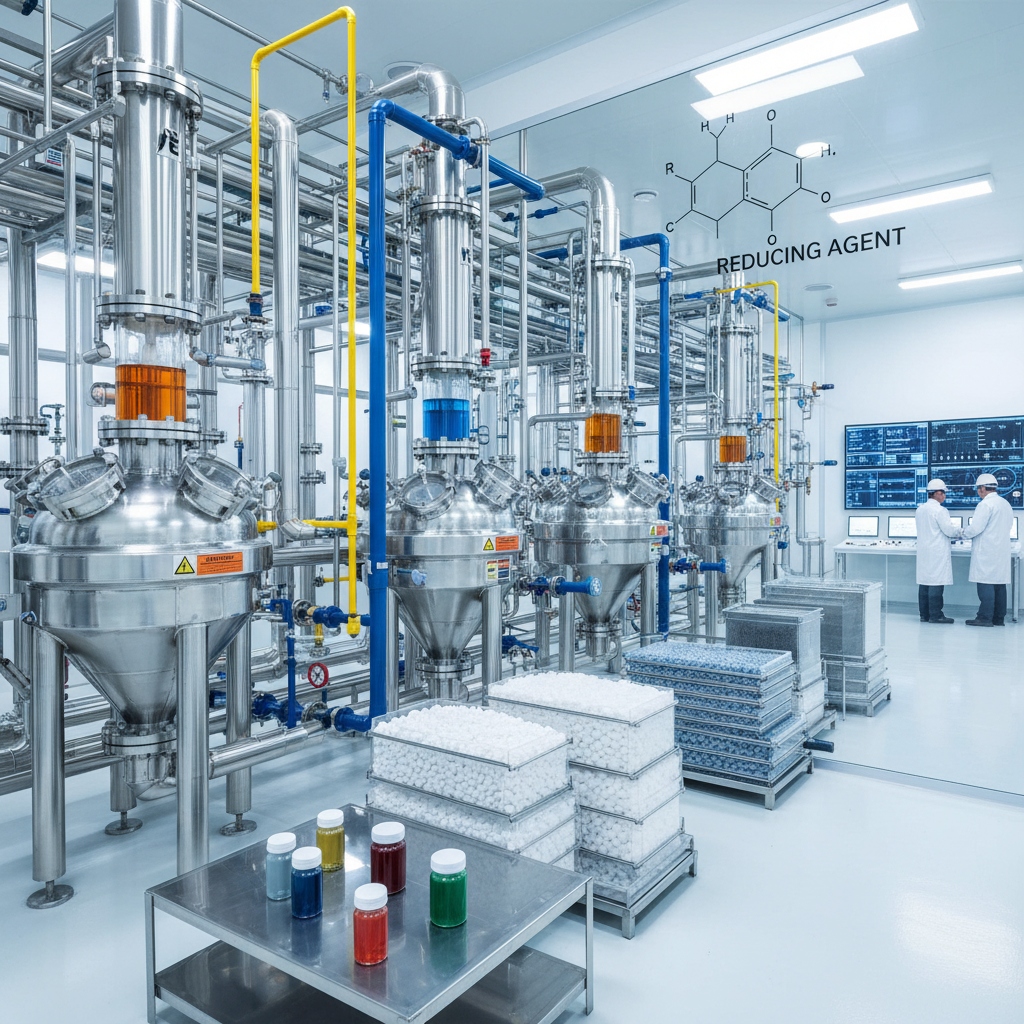
What is a Reducing Agent? A Chemical Definition
Simply put, a reducing agent, also known as a reductant, is a substance that donates electrons to another substance in a redox (reduction-oxidation) reaction. This donation causes the other substance to be reduced – meaning it gains electrons. In the process, the reducing agent itself gets oxidized, losing electrons. The strength of a reducing agent is often measured by its reduction potential; a more negative reduction potential indicates a stronger reducing agent. These agents are essential for transforming substances and initiating chemical changes. Without them, many essential chemical processes wouldn't be possible.
Key Takeaway: Reducing agents donate electrons, causing another substance to gain electrons (reduction) while becoming oxidized themselves.
Common Types of Reducing Agents and Their Mechanisms
Various compounds function as reducing agents, each with unique characteristics and applications. Some common examples include:
- Sodium Borohydride (NaBH4): A versatile agent often used in organic chemistry for selective reduction of carbonyl compounds.
- Lithium Aluminum Hydride (LiAlH4): A powerful reducing agent capable of reducing a wider range of functional groups than NaBH4.
- Hydrogen Gas (H2): Used in catalytic hydrogenation reactions, often requiring a metal catalyst like platinum or palladium.
- Carbon Monoxide (CO): Plays a role in metal carbonyl formation and certain industrial processes.
- Metals (e.g., Zinc, Iron): Often used in displacement reactions to reduce metal ions in solution.
The mechanism of reduction varies depending on the agent. Some transfer hydride ions (H-), others donate electrons directly, and still others involve complex coordination with the substance being reduced.
Comparing the Strength of Different Reducing Agents
Understanding the relative strengths of different reducing agents is crucial for selecting the appropriate one for a specific reaction. Reduction potential is a key indicator, but other factors like reaction conditions and selectivity also play a role. The following table provides a comparative overview:
Applications of Reducing Agents Across Industries
The applications of reducing agents are diverse and widespread. They are essential in:
- Metal Extraction: Reducing metal oxides to obtain pure metals.
- Pharmaceutical Synthesis: Creating complex organic molecules for drug development.
- Food Processing: Preserving food and controlling oxidation reactions.
- Photography: Developing photographic films.
- Environmental Remediation: Removing pollutants from water and soil.
- Dyeing and Textile Industry: Used in various dyeing processes to achieve specific color shades and fastness. DyeingChem provides specialized reducing agents for optimal results in textile applications.
Safety Considerations When Handling Reducing Agents
Handling reducing agents requires careful attention to safety. Many are reactive and can pose hazards such as flammability, corrosivity, and toxicity. Always wear appropriate personal protective equipment (PPE), including gloves, safety goggles, and a lab coat. Work in a well-ventilated area and follow proper storage procedures. Refer to the Safety Data Sheet (SDS) for specific handling instructions and emergency procedures for each chemical.

Conclusion: The Vital Role of Reducing Agents
Reducing agents are indispensable components in a vast array of chemical processes. Their ability to donate electrons drives countless reactions that underpin modern industries. Understanding their properties, mechanisms, and safety considerations is paramount for anyone working in chemistry or related fields. DyeingChem is your trusted partner for high-quality reducing agents and other essential chemicals.
Frequently Asked Questions (FAQs)
What's the difference between a reducing agent and an antioxidant?
While both reducing agents and antioxidants donate electrons, their primary functions differ. A reducing agent is a broader term, describing any substance that donates electrons in a redox reaction. An antioxidant specifically prevents oxidation damage, often by scavenging free radicals. Many antioxidants are reducing agents, but not all reducing agents are antioxidants. Antioxidants typically function in biological systems to protect cells from oxidative stress, whereas reducing agents are used more widely in chemical processes.
Can a substance act as both a reducing and oxidizing agent?
Yes, in certain situations, a substance can act as both a reducing and oxidizing agent. This is often seen in disproportionation reactions, where a single element or compound undergoes both reduction and oxidation simultaneously. For example, hydrogen peroxide (H2O2) can act as an oxidizing agent in one reaction and a reducing agent in another, depending on the other reactants involved.
How do I choose the right reducing agent for a specific reaction?
Choosing the right reducing agent depends on several factors: the functional group you want to reduce, the desired selectivity, the reaction conditions, and the cost. Stronger reducing agents like LiAlH4 are used for challenging reductions, while milder agents like NaBH4 are preferred for selective reductions. Consider the reactivity of the reducing agent with other functional groups present in the molecule. Consult chemical literature and reaction databases to find established protocols for similar transformations.
What are some environmentally friendly alternatives to traditional reducing agents?
Researchers are actively developing more environmentally friendly reducing agents. These include using catalytic hydrogenation with renewable hydrogen sources, employing biocatalytic reductions using enzymes, and exploring alternative reducing agents derived from biomass. Electrochemical reduction is another promising “green” approach that utilizes electricity to drive reduction reactions, minimizing waste. DyeingChem is committed to offering sustainable chemical solutions whenever possible.