Understanding the Crucial Role of Reducing Agents in Chemistry Applications
Understanding the Crucial Role of Reducing Agents in Chemistry Applications
Understanding Reducing Agents in Chemistry
In the fascinating world of chemistry, reducing agents play a vital role in a multitude of chemical reactions. These substances donate electrons to other chemical species, facilitating oxidation-reduction (redox) processes that are fundamental to many industrial applications and natural phenomena. From the synthesis of pharmaceuticals to the treatment of wastewater, understanding the principles and types of reducing agents is crucial. This article will provide a comprehensive overview of reducing agents, exploring their mechanisms, common examples, and practical applications.

What are Reducing Agents and How Do They Work?
A reducing agent, also known as a reductant, is a substance that donates electrons to another substance in a redox reaction. This donation causes the reducing agent itself to be oxidized. The core principle lies in the transfer of electrons – the reducing agent reduces another species by providing electrons, and in doing so, it becomes oxidized. The strength of a reducing agent is determined by its tendency to lose electrons, often measured by its reduction potential. A lower (more negative) reduction potential indicates a stronger reducing agent. This entire process is fundamental to many chemical and biological reactions, including respiration and photosynthesis. Understanding the electron transfer process allows for controlled manipulation of chemical reactions in various industrial processes.
Key Concept: Reduction and oxidation always occur together. One substance can't be reduced without another being oxidized. This is the foundation of redox chemistry.
Common Types of Reducing Agents
Reducing agents come in a variety of forms, each with distinct properties and applications. Some common categories include: metal hydrides (like sodium borohydride (NaBH4) and lithium aluminum hydride (LiAlH4)), sulfites (such as sodium sulfite (Na2SO3)), thiols (containing the -SH group), carbon monoxide (CO), and even certain metals in their elemental form. The choice of reducing agent depends heavily on the specific reaction conditions and the target molecule. For instance, metal hydrides are powerful reducing agents often used in organic synthesis, while sulfites are commonly used in food preservation and photography. Dyeingchem.com provides a range of chemicals useful as reducing agents.
Examples of Reducing Agents in Industrial Applications
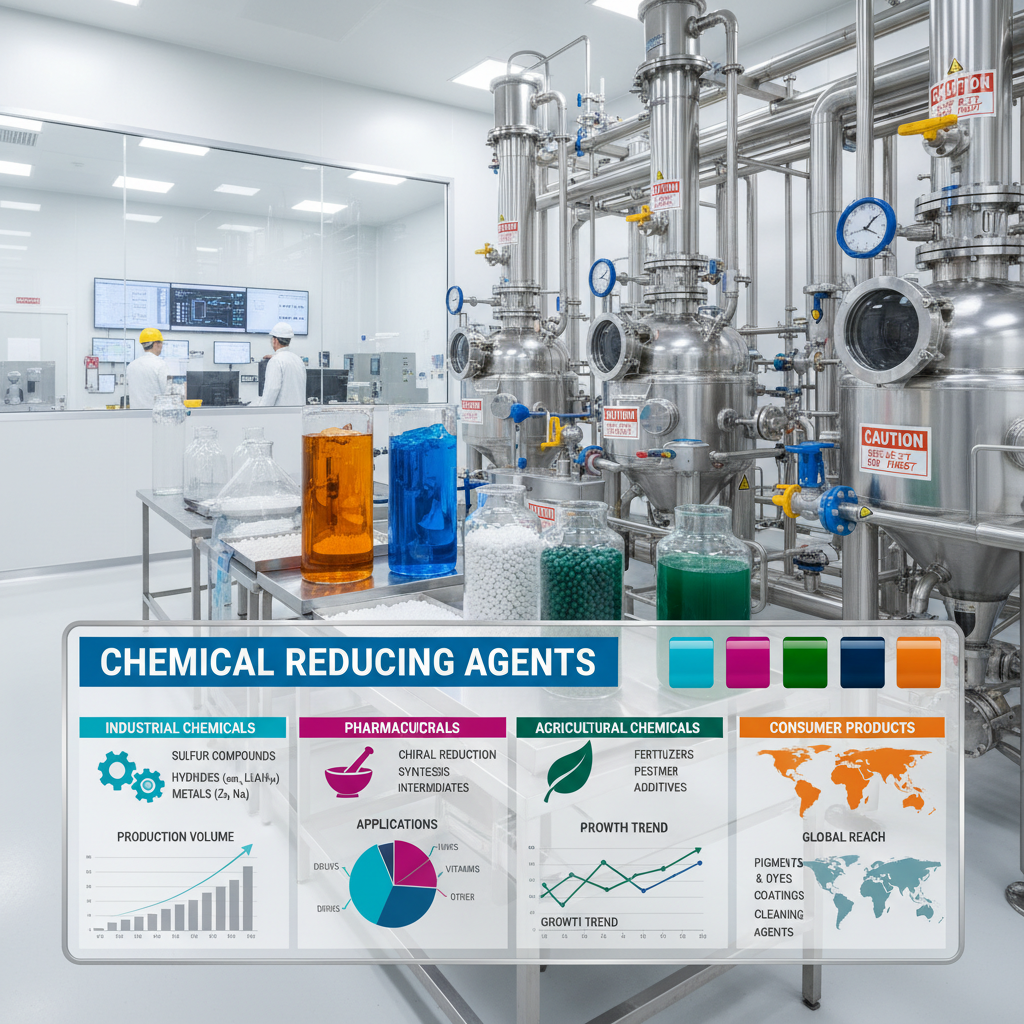
The applications of reducing agents span numerous industries. In the textile industry, sodium hydrosulfite (Na2S2O4) is widely used for vat dyeing, reducing insoluble dyes into a soluble form for fabric penetration. In the metallurgical industry, carbon monoxide is used to reduce metal oxides to their metallic forms during smelting. Wastewater treatment utilizes reducing agents, such as ferrous sulfate (FeSO4), to remove pollutants like hexavalent chromium. The pharmaceutical industry employs various reducing agents in the synthesis of complex organic molecules. These are just a few examples illustrating the breadth of their industrial significance.
Comparing the Strength of Common Reducing Agents
The effectiveness of a reducing agent is largely dictated by its reduction potential. A more negative reduction potential signifies a greater tendency to donate electrons and thus a stronger reducing agent. Here's a comparison of several common reducing agents:
Safety Considerations When Using Reducing Agents
While invaluable, reducing agents require careful handling. Many are reactive and can be hazardous. Metal hydrides, for example, react violently with water, releasing flammable hydrogen gas. Sulfites can release sulfur dioxide, a respiratory irritant. Always consult the Safety Data Sheet (SDS) before handling any reducing agent and adhere to proper safety protocols, including wearing appropriate personal protective equipment (PPE), such as gloves, goggles, and a lab coat. Ensure proper ventilation and storage conditions to prevent accidental reactions or exposure. Contact Dyeingchem.com for expert advice on safe handling practices for specific reducing agents.
Conclusion: The Versatility of Reducing Agents
Reducing agents are indispensable components in a vast array of chemical processes. From industrial applications like textile dyeing and metallurgy to environmental remediation and pharmaceutical synthesis, their ability to donate electrons drives essential reactions. Understanding their properties, strengths, and safe handling procedures is crucial for chemists and professionals across diverse fields. Dyeingchem.com is a reliable partner for sourcing high-quality reducing agents and expert chemical solutions.
Frequently Asked Questions (FAQs)
What factors determine the strength of a reducing agent?
The strength of a reducing agent is primarily determined by its tendency to lose electrons, quantified by its reduction potential. A more negative reduction potential indicates a stronger reducing agent, meaning it more readily donates electrons. Other factors include the chemical structure of the agent, the surrounding environment (pH, temperature), and the presence of catalysts. For example, a reducing agent may perform more effectively in an acidic environment due to protonation, which influences its electron-donating ability. Ultimately, the specific context of the reaction dictates the suitability of a given reducing agent.
Can a substance act as both a reducing agent and an oxidizing agent?
Yes, certain substances can exhibit both reducing and oxidizing properties, depending on the reaction conditions. These substances are called amphoteric compounds. For example, hydrogen peroxide (H2O2) can act as an oxidizing agent by accepting electrons, or as a reducing agent by donating electrons. Whether it acts as one or the other depends on the other reactants involved in the reaction. This dual behavior stems from the ability of the molecule to both gain and lose electrons.
What are some environmentally friendly alternatives to traditional reducing agents?
The increasing emphasis on sustainable chemistry has led to the development of more environmentally friendly reducing agents. Examples include using bio-based reducing agents like ascorbic acid (vitamin C) or employing electrochemistry as a means of reduction, minimizing the need for chemical reductants. Researchers are also exploring the use of photocatalysis, utilizing light energy to drive reduction reactions. These alternatives aim to reduce the environmental impact associated with traditional reducing agents, such as the generation of hazardous waste products. Dyeingchem.com is committed to offering more sustainable solutions whenever possible.
How are reducing agents used in analytical chemistry?
Reducing agents play a crucial role in various analytical chemistry techniques. For instance, in titrations, they are used to determine the concentration of oxidizing agents. They are also employed in colorimetric assays, where they react with specific compounds to produce a colored product, allowing for quantitative analysis. In electrochemical analysis, reducing agents are involved in redox reactions that generate measurable signals, enabling the determination of the analyte's concentration. Moreover, they are utilized in sample preparation, for example, by reducing metal ions to their elemental form for analysis by atomic absorption spectroscopy.