Stop Wasting Protein in Feed & Leather: 3 Ways Our 20,000 U/g Neutral Protease Saves You Money
Stop Wasting Protein in Feed & Leather: 3 Ways Our 20,000 U/g Neutral Protease Saves You Money
Let’s be real—if you’re running a tannery or a feed mill, you don’t buy enzymes for their fancy names. You buy them to solve a specific headache.
Maybe it’s the sky-high cost of wastewater treatment from your traditional lime-sulfide dehairing process. Maybe it’s the frustrating feed conLet’s be real—if you’re running a tannery or a feed mill, you don’t buy enzymes for their fancy names. You buy them to solve a specific headache.
Maybe it’s the sky-high cost of wastewater treatment from your traditional lime-sulfide dehairing process. Maybe it’s the frustrating feed conversion ratio (FCR) because your livestock and piglets struggle to fully digest soybean meal and other feed proteins.
Our Neutral protease 20000U/g, professionally fermented from high-purity Bacillus subtilis, is far more than a common enzyme powder. As a high-activity industrial neutral protease enzyme, it acts as a critical bridge between your raw material utilization and maximum production profitability. That’s why more and more industrial processing plants are switching to this green enzymatic solution for neutral protease for leather processing and neutral protease for animal feed additive applications over the last few years.version ratio (FCR) because your livestock and piglets struggle to fully digest soybean meal and other feed proteins.
Our Neutral protease 20000U/g, professionally fermented from high-purity Bacillus subtilis, is far more than a common enzyme powder. As a high-activity industrial neutral protease enzyme, it acts as a critical bridge between your raw material utilization and maximum production profitability. That’s why more and more industrial processing plants are switching to this green enzymatic solution for neutral protease for leather processing and neutral protease for animal feed additive applications over the last few years.
The Real-World pH & Temperature Sweet Spot (No Textbook Theory)
Most suppliers only provide fixed theoretical pH and temperature parameters without considering actual workshop operating conditions. But we understand industrial production environments are never as stable as laboratory settings.
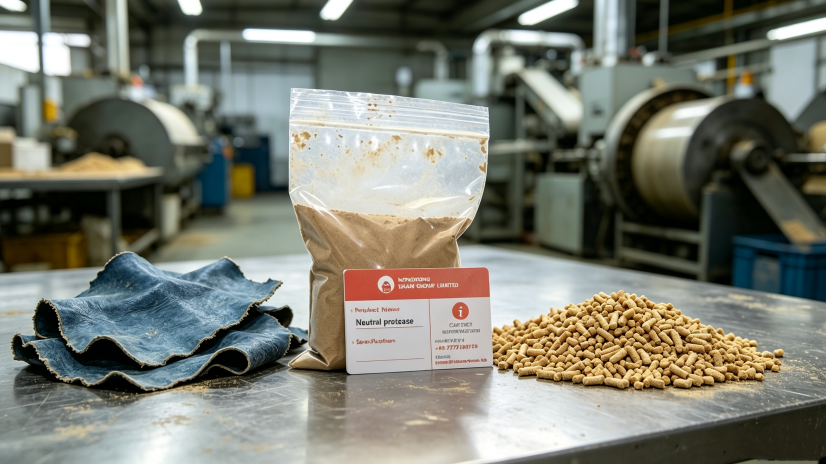
This high activity neutral protease 20000U/g powder features a standard optimal pH range of 6.0–7.0 and a working temperature range of 40°C–55°C. To help you achieve stable hydrolysis effects, we’ve sorted out practical production guidelines based on real workshop scenarios, covering the neutral protease optimal pH and temperature for feed and leather processing:
Hot Summer Days (Leather Processing): Keep processing temperatures at 36°C–40°C. Excessively high ambient heat will cause enzyme deactivation and weaken dehairing and softening effects.
Cold Winter Mornings (Leather Processing): Adjust the temperature to 40°C–42°C to maintain stable enzymatic reaction speed and offset low-temperature activity attenuation.
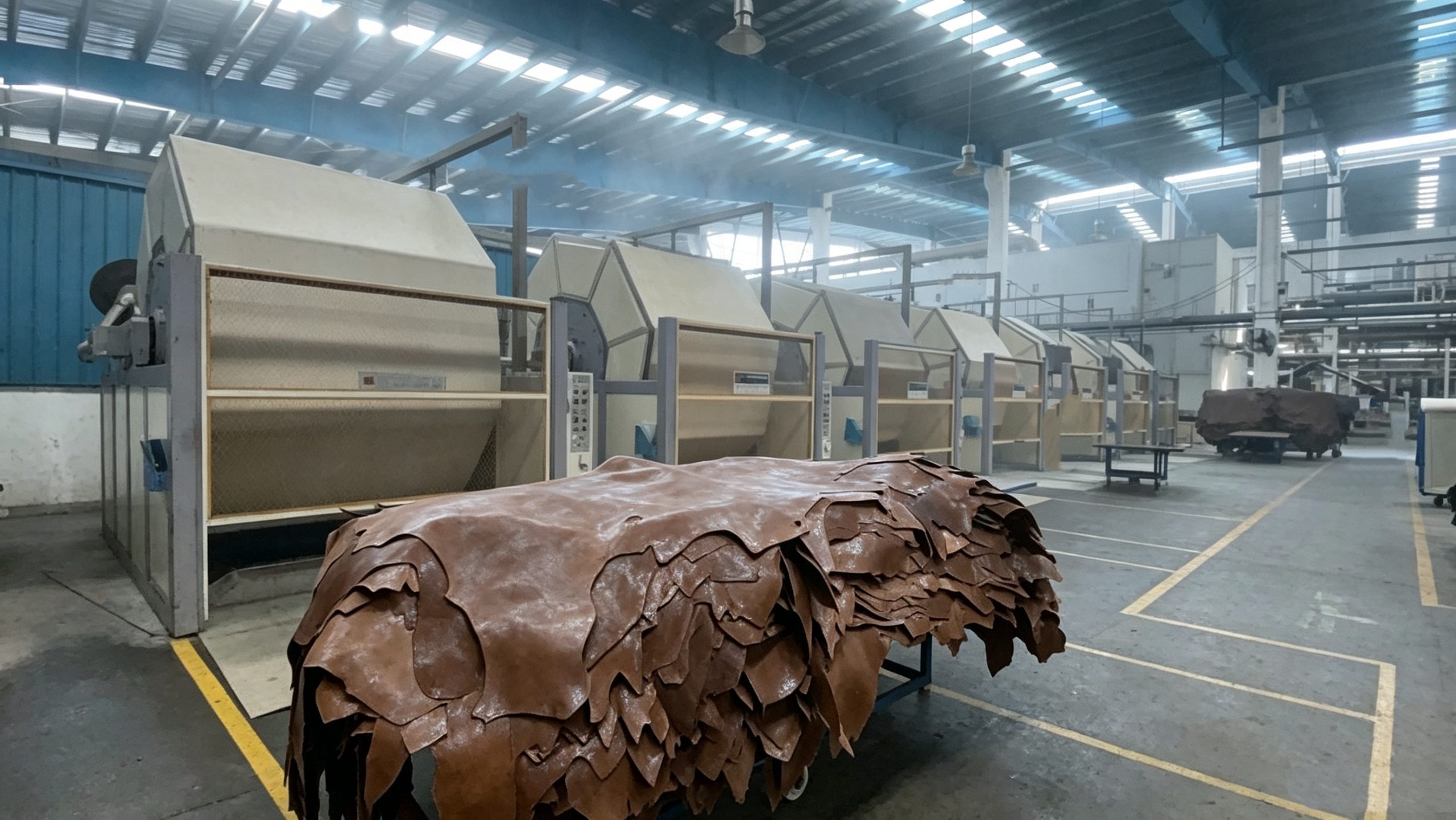
Feed Mill Production: This enzyme adapts to conventional feed mixing and pelleting processes. As long as the conditioning temperature does not exceed 60°C, it can maintain stable activity for protein decomposition.
Complete Technical Specifications
| Parameter | Specification |
| Appearance | Yellowish-brown fine powder |
| Enzyme Activity | ≥20,000 U/g |
| Effective pH Range | 6.0–7.0 |
| Working Temperature Range | 10°C–60°C (Optimal: 40°C–55°C) |
3 Practical Industrial Applications That Boost Production Efficiency
-
Neutral Protease for Animal Feed Production (Lower FCR & Less Waste)
Many feed mill operators fail to maximize enzyme value by using neutral protease alone. The best feeding and hydrolysis results come from a scientific compound system paired with alpha-amylase and acid protease.
This compound enzyme formula effectively breaks down the cell wall structure of corn, soybean and other feed raw materials, decomposing indigestible macromolecular proteins into easily absorbable small peptides and free amino acids. It perfectly solves the problem of low protein utilization in conventional feed formulas, significantly improving the digestibility of poultry, livestock and aquatic animals.
Recommended Dosage: 0.1%–1.0% of total feed weight based on your custom formula
Core Benefits: Reduces feed waste, cuts nitrogen emissions, optimizes feed conversion ratio, and promotes stable daily weight gain for animals
-
Neutral Protease for Leather Processing (Green Dehairing & Softening)
Traditional leather processing relies heavily on lime and sodium sulfide, causing severe pollution, high wastewater treatment costs, and easy damage to the leather grain layer. As a professional green enzymatic leather processing enzyme, our neutral protease completely changes this outdated production mode.
It achieves efficient, clean dehairing and gentle softening without destroying leather collagen. The finished leather features uniform pores, smooth and bright grain surfaces, and soft, flexible texture. We’ve summarized preciseneutral protease leather dehairing and softening dosage for industrial mass production:
Dehairing Dosage: 150–300 U/g of raw hide material
Softening Dosage: 8–15 U/g of raw hide material
Professional Pro Tip: Control the workshop pH value at 7.1–7.5 during processing to further enhance leather surface finish and quality. Always run small-batch trials before full-scale production, as raw material differences will affect the final processing effect.
-
Food Grade Neutral Protease for Protein Hydrolysis, Baking & Brewing
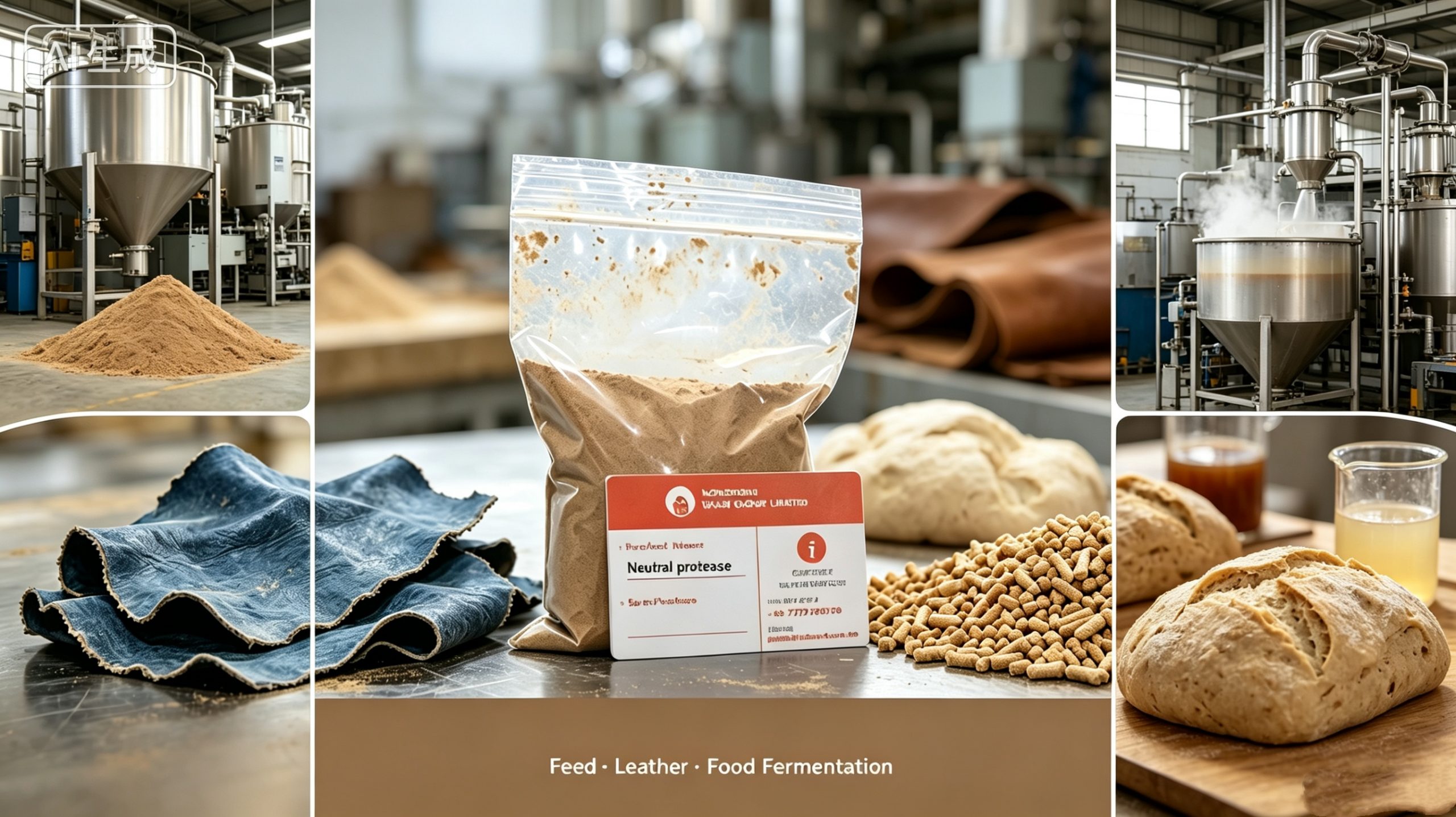
This dual food and industrial grade protease is widely used in food grade neutral protease for protein hydrolysis, as well as neutral protease for baking and brewing fermentation. It delivers stable quality optimization for multiple food fermentation scenarios.
Baking Industry: Restructures dough gluten networks, improves dough ductility and flexibility, and produces softer, more textured baked finished products.
Brewing & Winemaking: Effectively eliminates protein-induced liquor turbidity, clarifies fermentation broth, removes miscellaneous bitter tastes, and improves product purity.
Soy Sauce & Fermentation Production: Accelerates protein hydrolysis efficiency, increases amino acid nitrogen content, and enriches the rich umami flavor of fermented condiments.
Critical Storage & Shelf Life Rules for Industrial Use
Enzyme activity is extremely sensitive to high temperature, moisture and heavy metal contamination, making standardized storage the key to stable product performance. Mastering neutral protease storage shelf life industrial use specifications can effectively avoid enzyme inactivation and production losses.
Storage Conditions: Store in a cool, dry, ventilated environment with ambient temperature below 50°C, avoiding direct sunlight and humid conditions.
Shelf Life: 6 months under standard storage conditions
Important Reminders: Long-term high-temperature storage will accelerate enzyme inactivation. If the product exceeds the shelf life or is stored in high-heat environments for a long time, test the residual enzyme activity before formal use. Keep the product away from heavy metal ions and oxidizing agents to prevent activity inhibition.
Frequently Asked Practical Questions
Q: Can I use this neutral protease alone in pig feed production?
A: Technically feasible, but not recommended for optimal benefits. Single-enzyme use cannot fully decompose feed starch and protein, just like playing a piano with one finger. Compound use with alpha-amylase and acid protease forms a synergistic enzyme system to maximize nutrient utilization and improve FCR.
Q: Will slight pH fluctuations in the workshop cause complete enzyme deactivation?
A: No. Its effective pH range covers 6.0–8.0. Even if it exceeds the optimal 6.5–7.5 range, the enzyme will only have a slightly slower reaction speed rather than complete failure. You can appropriately extend the reaction time by 20–30 minutes or adjust the dosage slightly to compensate.
Q: Is this food-grade neutral protease safe for food and feed processing?
A: Absolutely. Produced via natural microbial fermentation of Bacillus subtilis, the product contains no toxic residues or harmful additives and complies with international food and industrial safety standards. Please note that it is only applicable to feed, leather and food fermentation industries, without medical and pharmaceutical certification, so it cannot be used for drug manufacturing or medical scenarios.
Q: Do you support sample testing and bulk supply?
A: Yes. We provide 200g independent sample packs for laboratory small-batch testing and formula verification. We also support stable bulk neutral protease supply China with 25kg industrial packaging for large-scale factory production.
Final Conclusion & Custom Service Support
The global manufacturing industry is accelerating the shift from traditional chemical processing to green enzymatic production. Clean-label food production, eco-friendly leather processing and efficient feed utilization have become the core trends of industrial upgrading.
According to industry market research, the global food-grade neutral protease market is valued at approximately $2.26 billion in 2025 and is projected to reach $3.46 billion by 2032, reflecting a compound annual growth rate (CAGR) of 6.2%. The industry currently maintains a healthy gross profit margin of 32%–45%, with demand well-distributed across condiment fermentation (40%), plant protein and meat processing (30%), and baked food production (15%)—signaling stable and promising long-term market prospects. This growth is driven by three core forces: the global clean-label movement pushing manufacturers to replace chemical additives with bio-enzymes, the rapid expansion of plant-based protein industries creating huge demand for protein hydrolysis, and the ongoing technological upgrade from low-efficiency traditional enzymes to high-activity, heat-resistant solutions like ours. These trends confirm that high-activity neutral protease has become a cost-effective and high-efficiency solution for major processing plants to reduce costs and improve quality.
Whether you need formula optimization, precise dosage adjustment, long-term bulk supply, or professional technical guidance, our team provides one-stop customized services. We support free sample testing, complete SDS document provision, and tailored production solutions for different raw materials and processing equipment.
Ready to start your production trial? Contact us now to get bulk pricing and professional technical support for your project.