Penetrant Wetting Agent: The Key to Even, Efficient Dyeing
Penetrant Wetting Agent: The Key to Even, Efficient Dyeing
Achieving uniform, vibrant color on fabric isn't just about the dye; it's about how well the dye reaches every fiber. The secret to this is often a small but mighty additive: the penetrant wetting agent. Today, we're explaining the role of this essential textile wetting agent and its critical function as a wetting agent in dyeing. Let's explore how it unlocks better quality and efficiency in your textile processing.
The Foundation of Penetration: Understanding the Penetrant Wetting Agent
In textile processing, especially in pre-treatment and dyeing, fabrics and fibers are naturally hydrophobic (water-repelling) or have air trapped in their structure. This creates a barrier. A penetrant wetting agent is a specialized surfactant designed to overcome this barrier. Its job is twofold: Wetting: It drastically reduces the surface tension of water, allowing the aqueous processing bath (containing bleach, dye, or chemicals) to spread evenly and quickly over the fabric surface instead of beading up. Penetration: More importantly, it helps the liquid to rapidly wick into and through the tight spaces between yarns and fibers, displacing air and ensuring the treatment solution reaches the core of the material. A high-quality penetrant wetting agent is typically non-ionic, meaning it works effectively across a wide pH range and is compatible with most other textile chemicals. Without an effective penetrant wetting agent, processes are uneven, slow, and inefficient, leading to patchy dyeing, incomplete bleaching, and increased water and energy use. It is the unsung hero that ensures your primary chemicals can do their job properly.
The Textile Workhorse: The Role of a Textile Wetting Agent
The term textile wetting agent covers a broad category of surfactants used throughout fabric manufacturing. Its core function is to make water "wetter" so it can intimately contact the textile substrate. A textile wetting agent is used in multiple stages: Preparation (Desizing, Scouring, Bleaching): Here, it helps caustic soda, hydrogen peroxide, and other chemicals penetrate the fabric to remove impurities like oils, waxes, and natural pigments uniformly. Dyeing: As a wetting agent in dyeing, it ensures the dye solution quickly and evenly saturates the fabric, which is the first step towards level dyeing. Finishing: It can help functional finishes (like softeners, water repellents) apply evenly. A good textile wetting agent is low-foaming (to avoid problems in jet dyeing machines), stable in harsh chemical environments (high alkali, acid, or electrolytes), and readily biodegradable for environmental compliance. Choosing the right textile wetting agent for each specific process is a key part of optimizing quality and cost in a mill.
For Perfect Color: The Critical Job of a Wetting Agent in Dyeing
The moment of dyeing is where the wetting agent in dyeing proves its worth. When dye molecules are in the bath, they need to contact every fiber simultaneously and uniformly to prevent unlevel dyeing (stripes, blotches). A wetting agent in dyeing facilitates this in several ways. First, it promotes instantaneous and even absorption of the dye bath by the fabric, preventing the dye from exhausting too quickly onto the first surfaces it touches. This is crucial for "leveling" – allowing dye molecules time to migrate evenly. Second, by ensuring full penetration, it prevents "ring dyeing," where only the outer surface of a yarn is colored, leaving a white core. This leads to poorer rub fastness and a shallower appearance of color. Third, an effective wetting agent in dyeing can improve the efficiency of the process, allowing for shorter dyeing times or lower dye concentrations to achieve the same shade depth, saving both time, dye, and energy. In continuous dyeing ranges, its role in ensuring rapid saturati on of the fabric as it passes through the dye pad is indispensable. No dyer aiming for consistent, high-quality results can overlook the selection of the right wetting agent in dyeing.
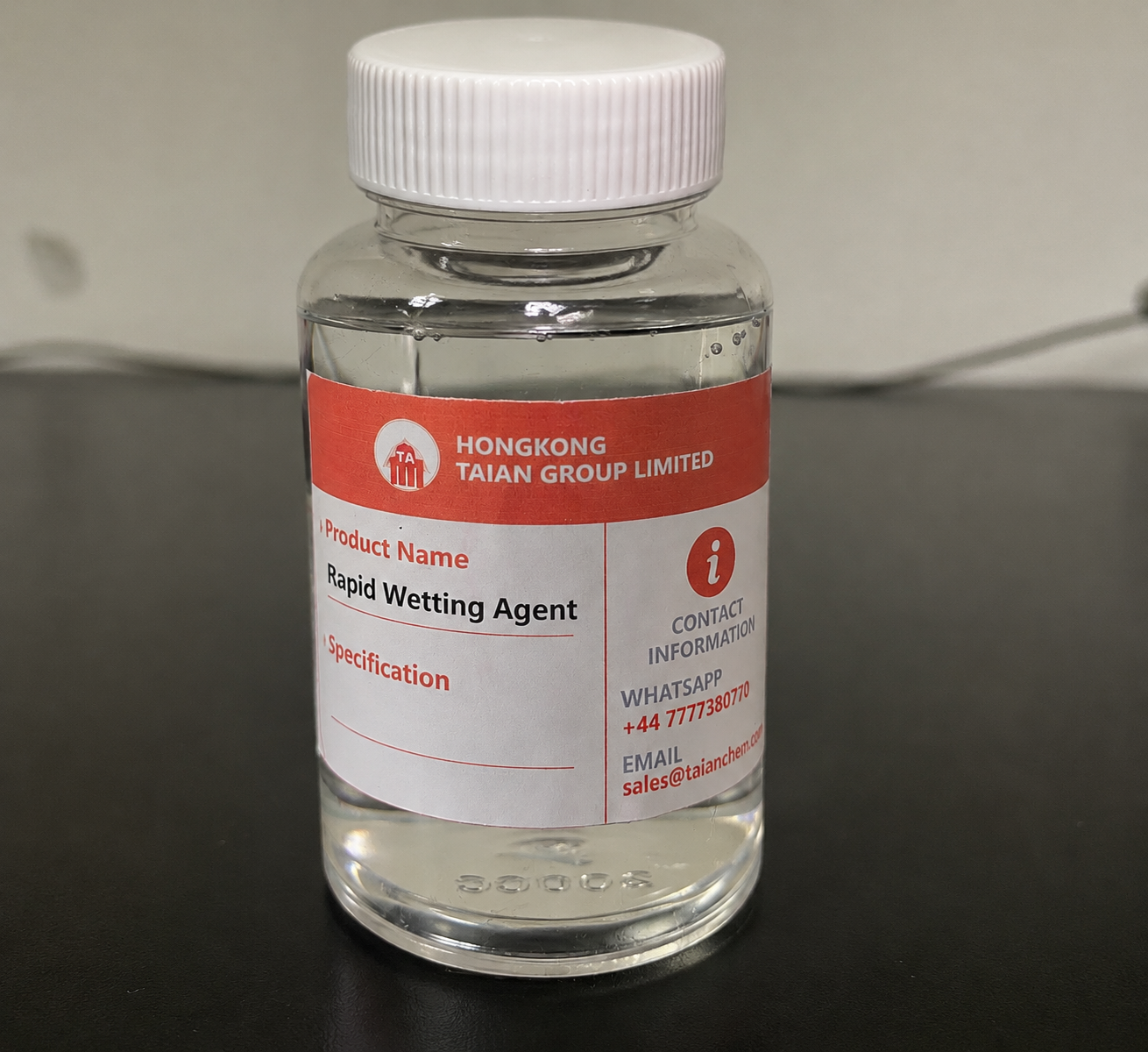
Sourcing the right specialty chemicals is fundamental to a mill's success. We specialize in formulating and supplying high-performance auxiliaries for the textile industry. Our flagship product is a professional nonionic penetrant wetting agent engineered for excellence. It is specifically designed for comprehensive textile processing, including dyeing pretreatment and coloration, where it functions as a superior textile wetting agent and a critical wetting agent in dyeing. Our advanced formulation delivers exceptional wetting and penetrating power, outstanding emulsification, and dispersion characteristics. It is stable across a wide pH range, making it incredibly versatile and reliable in various harsh process conditions, from alkaline scouring to acidic dyeing. It enhances process efficiency by ensuring rapid, uniform penetration of chemicals and dyes, leading to better quality, fewer re-dyes, and resource savings. Whether you're running a batch of cotton knits or a continuous line for polyester wovens, our penetrant wetting agent provides the performance foundation for consistent, high-quality results.
Ready to eliminate uneven dyeing, improve your first-time-right percentage, and optimize your chemical consumption? The right wetting agent makes all the difference. Discover the power of our professional-grade penetrant wetting agent. Visit our website to download the full technical data sheet for our textile wetting agent, including recommended dosage charts for various applications. Contact our technical sales team to request a free sample. Test it in your facility as a wetting agent in dyeing or in your pretreatment line and see the improvement in levelness and penetration for yourself. We'll provide a customized quote and expert application advice tailored to your specific fabric and machine type. Don't let poor wetting be the hidden cause of your quality issues. Invest in the auxiliary that ensures everything else works perfectly. Click to connect with us and upgrade your process with our high-performance penetrant wetting agent.
Penetrant Wetting Agent FAQs
What is the main difference between a wetting agent, a detergent, and a penetrant?
All are surfactants, but with primary functions. A wetting agent primarily reduces surface tension to help liquids spread and soak in. A detergent is designed to remove soil and oils (has emulsifying and suspending power). A penetrant is a type of wetting agent specifically formulated to drive liquids into dense, tight substrates very quickly. Our penetrant wetting agent combines rapid wetting with deep penetration power.
Can I use the same textile wetting agent in both bleaching and dyeing?
It depends on the product's stability. Our penetrant wetting agent is a nonionic, versatile product designed for stability across a wide pH range (from acidic dyeing to alkaline peroxide bleaching). Therefore, yes, it can be effectively used in both stages, simplifying chemical inventory. Always check the supplier's specifications for chemical compatibility in extreme conditions.
How do I determine the correct dosage for a wetting agent in dyeing?
Dosage depends on fabric construction (dense fabrics need more), dyeing method (exhaust vs. continuous), and water quality (hard water may require more). A general starting point is 0.5-2.0 g/L. Begin with the manufacturer's recommended dose (e.g., 1.0 g/L), run a lab dip, and assess penetration and levelness. Adjust up if wetting is slow, or down if excessive foam occurs. The goal is to use the minimum amount needed for perfect wetting.
Does a penetrant wetting agent create a lot of foam?
A high-quality penetrant wetting agent for textile dyeing should be specifically formulated to be low-foaming or defoaming. Excessive foam can cause serious problems in circulation dyeing machines (like jets), leading to unlevel dyeing and pump cavitation. Our product is engineered for effective wetting with minimal foam generation in high-turbulence conditions.
Why is a nonionic penetrant wetting agent preferred in dyeing?
Nonionic wetting agents are generally preferred as a wetting agent in dyeing because they are compatible with all types of dyes (ionic, nonionic, cationic) and other auxiliaries without causing precipitation. They are also less sensitive to water hardness and electrolytes in the dye bath. Their performance is consistent across a broader pH range, offering greater versatility and reliability in complex dyeing formulations.