Comprehensive Guide to Textile Dyeing Chemicals List and Applications
Comprehensive Guide to Textile Dyeing Chemicals List and Applications
Textile Dyeing Chemicals List: A Comprehensive Guide
The textile industry relies heavily on a diverse range of textile dyeing chemicals to achieve desired colors, fastness properties, and fabric finishes. Selecting the right chemicals is crucial for ensuring high-quality dyeing results, cost-effectiveness, and environmental responsibility. This article provides a comprehensive overview of commonly used textile dyeing chemicals, their applications, and key considerations for choosing the best options for your specific needs. Understanding the intricacies of these chemicals can significantly improve your dyeing processes and final product quality.
Understanding the Core Categories of Textile Dyeing Chemicals
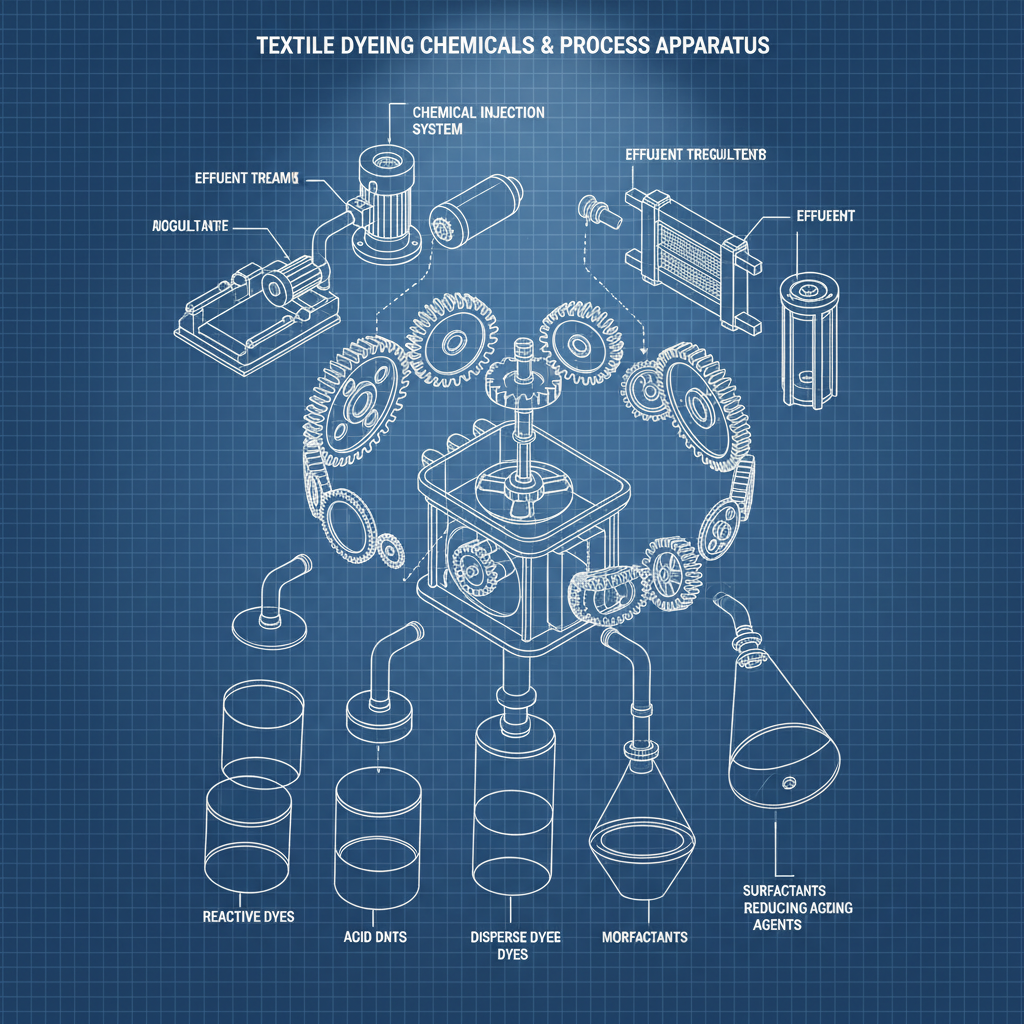
Textile dyeing chemicals can be broadly categorized into several key groups, each serving a specific function during the dyeing process. These include dyes themselves (reactive, direct, acid, disperse, vat, etc.), auxiliaries (wetting agents, leveling agents, dispersing agents, etc.), and finishing agents (softeners, fixatives, water repellents, etc.). Dyes provide the color, auxiliaries assist in the dyeing process to improve dye uptake and evenness, and finishing agents enhance the final fabric properties. A thorough understanding of these categories is essential for formulating effective dyeing recipes and achieving desired outcomes. Dyeingchem.com offers a wide variety of these crucial components.
Key Chemical Categories: Dyes, Auxiliaries, Finishing Agents. Each play a vital role in the dyeing process, from imparting color to enhancing fabric properties.
Commonly Used Textile Dyeing Chemicals: A Detailed List
Here's a breakdown of some of the most commonly used textile dyeing chemicals, categorized by their function. This list is not exhaustive, but it covers the essential chemicals used in most textile dyeing applications.
Reactive vs. Disperse Dyes: A Comparative Analysis
Choosing between reactive and disperse dyes depends on the fabric type and desired properties. Reactive dyes are ideal for cellulosic fibers, offering excellent wash fastness, while disperse dyes are best suited for synthetic fibers like polyester. Here’s a quick comparison:

Environmental Considerations & Sustainable Dyeing
The textile industry has historically been a significant contributor to environmental pollution. Choosing eco-friendly dyeing chemicals and implementing sustainable dyeing practices is therefore crucial. Look for chemicals that are free from harmful substances like APEOs (alkylphenol ethoxylates) and heavy metals. Furthermore, optimizing dyeing processes to reduce water and energy consumption is essential. Dyeingchem.com is committed to offering a range of sustainable and environmentally responsible dyeing chemicals.
Factors to Consider When Selecting Textile Dyeing Chemicals
Several factors should influence your selection of textile dyeing chemicals: fabric type, desired color and fastness properties, dyeing method (exhaust, continuous, etc.), cost, and environmental impact. Always consult the technical data sheets provided by the chemical supplier and conduct thorough testing to ensure compatibility and optimal results. Proper storage and handling of chemicals are also essential for maintaining their quality and safety.
Conclusion: Optimizing Your Dyeing Processes with the Right Chemicals
Selecting the right textile dyeing chemicals is paramount for achieving high-quality, cost-effective, and sustainable dyeing results. By understanding the different categories of chemicals, their applications, and key considerations for selection, you can optimize your dyeing processes and enhance the value of your textile products.
Frequently Asked Questions (FAQs)
What are APEOs and why are they a concern in textile dyeing?
APEOs (alkylphenol ethoxylates) are non-ionic surfactants commonly used as wetting agents and detergents in textile dyeing. However, they break down into alkylphenols, which are endocrine disruptors and can have harmful effects on human health and the environment. Due to these concerns, their use is increasingly restricted by regulations. Choosing APEO-free alternatives is crucial for sustainable dyeing practices.
How does water quality affect the dyeing process?
Water quality plays a significant role in dyeing. Impurities like iron, calcium, and magnesium can interfere with dye uptake and color development. Hard water can reduce the effectiveness of detergents and leveling agents. Pre-treatment of water, such as softening or filtration, is often necessary to ensure consistent and optimal dyeing results.
What is the role of a dispersing agent in dyeing?
Dispersing agents are essential for maintaining the uniform distribution of insoluble dyes, such as disperse dyes, in the dye bath. They prevent dye aggregation and ensure that the dye particles remain finely dispersed, promoting even dye uptake and level dyeing. Without a dispersing agent, the dye may settle out of the bath or cause uneven coloration.
Where can I find reliable suppliers of textile dyeing chemicals?
Finding a reputable supplier is vital. Dyeingchem.com is a trusted provider offering a wide range of high-quality textile dyeing chemicals and excellent customer support. Look for suppliers that provide detailed technical data sheets, quality certifications, and responsive customer service.