A Comprehensive Guide to the List of Oxidising and Reducing Agents in Organic Chemistry
A Comprehensive Guide to the List of Oxidising and Reducing Agents in Organic Chemistry
A Comprehensive List of Oxidising and Reducing Agents in Organic Chemistry
Understanding oxidation and reduction reactions is fundamental to organic chemistry. These reactions, which involve the transfer of electrons, are ubiquitous in synthesis, analysis, and biological processes. A solid grasp of common oxidising and reducing agents is crucial for any chemist. This article provides a detailed list, categorized for clarity, along with examples and considerations for their application. We'll delve into the nuances of these agents, helping you navigate complex organic transformations effectively.
Common Oxidising Agents in Organic Chemistry
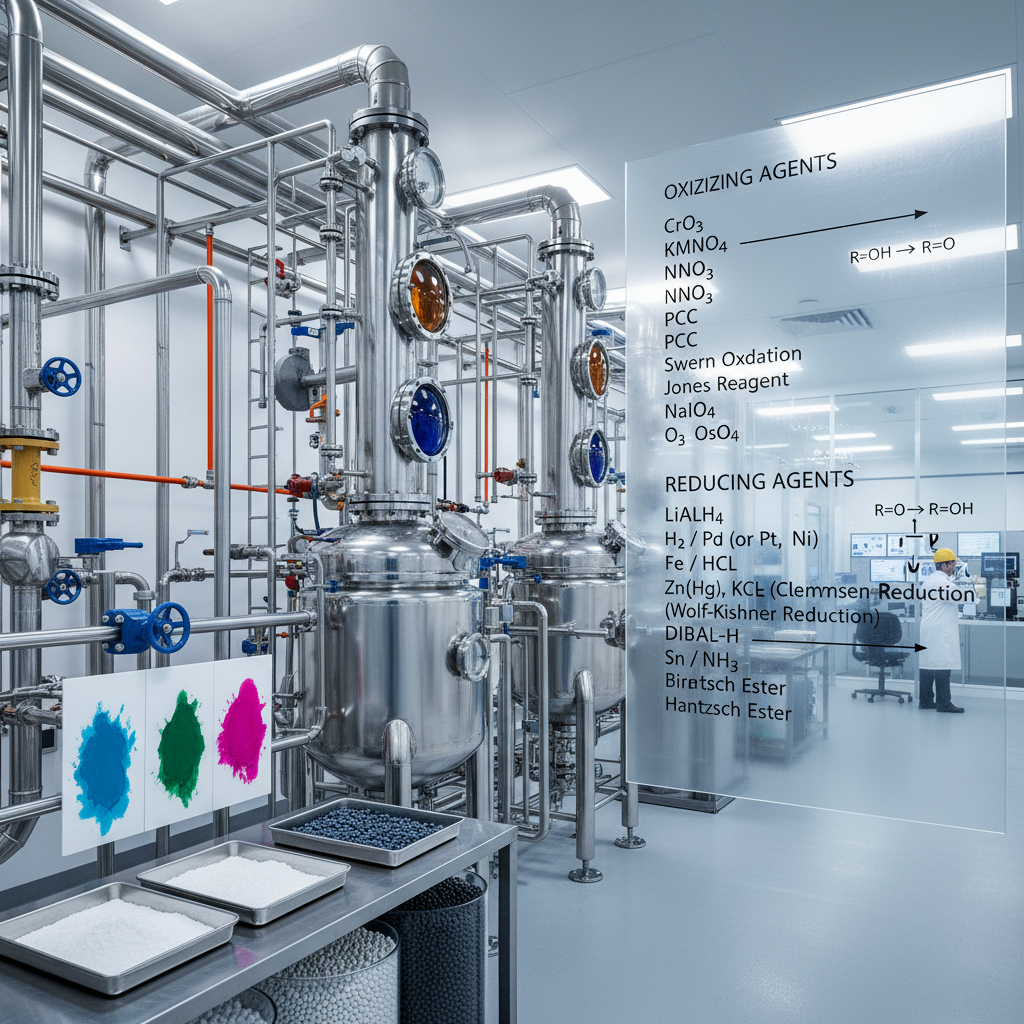
Oxidising agents accept electrons, causing the oxidation of another species. They are vital for converting alcohols to aldehydes/ketones, alkenes to epoxides, and effecting numerous other transformations. The strength of an oxidising agent is determined by its reduction potential – a higher potential indicates a stronger agent. Here's a breakdown of frequently used oxidising agents:
A Detailed Look at Reducing Agents and Their Applications
Reducing agents donate electrons, causing the reduction of another species. They are extensively used for converting carbonyls to alcohols, reducing nitro groups to amines, and performing dehalogenations. Like oxidising agents, the effectiveness of a reducing agent is dictated by its reduction potential; a lower potential signifies a stronger reducing agent. Here are some commonly employed reducing agents:
Key Considerations: Selectivity is a crucial factor when choosing a reducing agent. Some reagents are specific to certain functional groups, while others offer broader reactivity. Steric hindrance and reaction conditions (temperature, solvent) also influence the outcome.
Comparison: Oxidising vs. Reducing Agents
The fundamental difference between oxidising and reducing agents lies in their electron transfer behavior. Oxidising agents 'steal' electrons, increasing the oxidation state of the target molecule, while reducing agents 'donate' electrons, decreasing the oxidation state. Understanding this principle is key to predicting reaction outcomes and selecting the appropriate reagents.
Factors Influencing Agent Selection
Choosing the appropriate oxidising or reducing agent isn't always straightforward. Several factors come into play. Functional group compatibility is paramount – some reagents may react with unintended parts of the molecule. Stereoselectivity, the preferential formation of one stereoisomer over another, is also crucial in asymmetric synthesis. Finally, environmental considerations and cost-effectiveness often influence the final decision. Dyeingchem provides a range of these essential chemicals.

Safety Considerations When Handling These Agents
Many oxidising and reducing agents are corrosive, flammable, or toxic. Proper handling procedures are essential. Always wear appropriate personal protective equipment (PPE), including gloves, safety glasses, and a lab coat. Work in a well-ventilated area, and be mindful of potential hazards such as exothermic reactions. Dispose of chemical waste responsibly, following established laboratory protocols. Consult Safety Data Sheets (SDS) for detailed hazard information and handling instructions.
Conclusion: Mastering Oxidation and Reduction
A thorough understanding of oxidising and reducing agents is a cornerstone of organic chemistry. By carefully considering the reactivity, selectivity, and safety aspects of these reagents, chemists can perform complex transformations with precision and efficiency. Continual learning and attention to detail are key to mastering this critical aspect of the field.
Frequently Asked Questions (FAQs)
What is the difference between a strong and weak oxidising agent?
The strength of an oxidising agent is determined by its reduction potential (E°). A stronger oxidising agent has a higher (more positive) reduction potential, indicating a greater tendency to accept electrons. Strong oxidising agents like KMnO₄ or CrO₃ can oxidise a wide range of substrates, while weaker agents like PCC are more selective and typically oxidise alcohols to aldehydes without further oxidation to carboxylic acids. The choice depends on the desired outcome and the substrate's reactivity.
Are there any environmentally friendly reducing agents?
Yes, there is growing interest in developing environmentally friendly reducing agents. Sodium borohydride (NaBH₄) is generally considered less hazardous than lithium aluminum hydride (LiAlH₄). Catalytic hydrogenation (H₂ with a metal catalyst) is also a cleaner alternative, producing water as the only byproduct. Furthermore, research into biocatalytic reduction using enzymes is gaining traction as a sustainable approach.
How do I choose the right reducing agent for carbonyl reduction?
The choice depends on the carbonyl compound and desired product. LiAlH₄ is a powerful reducing agent capable of reducing aldehydes, ketones, carboxylic acids, and esters to alcohols. However, it's highly reactive and requires anhydrous conditions. NaBH₄ is milder and selectively reduces aldehydes and ketones without affecting esters or carboxylic acids. For specific situations, such as asymmetric reduction, chiral reducing agents like CBS reagents are used to achieve enantioselectivity.