Understanding Oxidizing Agent vs Reducing Agent in Chemical Processes
Understanding Oxidizing Agent vs Reducing Agent in Chemical Processes
Oxidizing Agent vs Reducing Agent: A Comprehensive Guide
Understanding the concepts of oxidizing and reducing agents is fundamental in chemistry, particularly within industrial processes like dyeing and chemical manufacturing. These agents play critical roles in a wide variety of reactions. At DyeingChem.com, we frequently work with chemicals involving these processes. This article aims to clarify the difference between an oxidizing agent and a reducing agent, explore their functions, and provide examples relevant to industrial applications. Knowing these concepts is essential for safe and efficient chemical handling and reaction control.
What is an Oxidizing Agent?
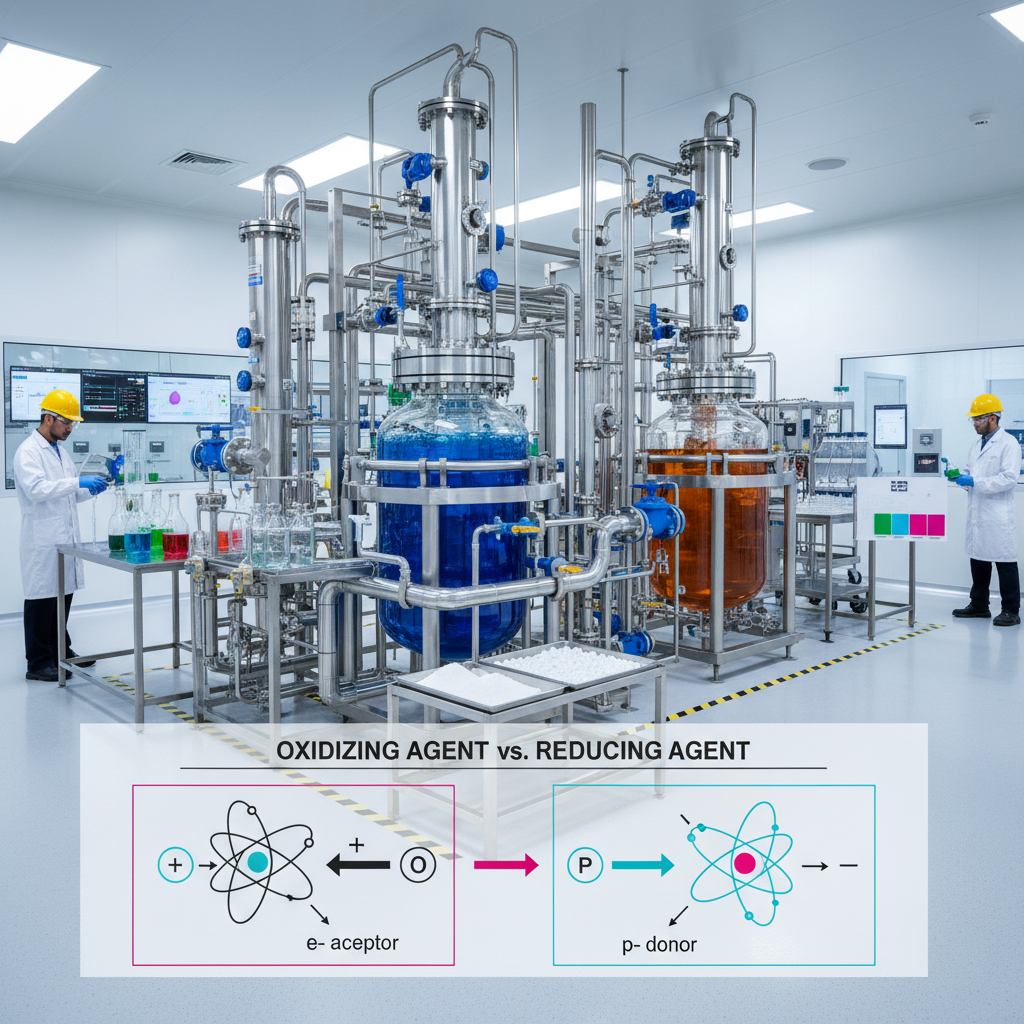
An oxidizing agent is a substance that gains electrons during a chemical reaction, causing another substance to be oxidized. In simpler terms, it accepts electrons from another species. This process results in the oxidizing agent being reduced. Common oxidizing agents include oxygen, halogens (like chlorine and bromine), and compounds like potassium permanganate (KMnO₄). They are vital in processes like bleaching, combustion, and the synthesis of many chemicals. For example, in the dyeing industry, hydrogen peroxide (H₂O₂) is frequently used as an oxidizing agent to develop certain dyes and remove color impurities.
Key Characteristics: Accepts electrons, causes oxidation of another substance, is itself reduced in the process.
What is a Reducing Agent?
Conversely, a reducing agent is a substance that donates electrons during a chemical reaction, causing another substance to be reduced. In doing so, the reducing agent itself is oxidized. Common reducing agents include metals (like sodium and zinc), and compounds like sodium borohydride (NaBH₄). They are used in processes like metal refining, the production of plastics, and as antioxidants. In dyeing, reducing agents like sodium hydrosulfite (Na₂S₂O₄) are used to reduce insoluble dyes into a soluble leuco form, enabling them to penetrate the fabric effectively.
Reducing Agent Benefits:
• Donates electrons to another substance
• Causes reduction of another substance
• Is itself oxidized in the process
Oxidizing Agent vs Reducing Agent: A Side-by-Side Comparison
The key difference lies in their electron interactions. One accepts (oxidizing agent), and the other donates (reducing agent). This interplay is the basis of redox (reduction-oxidation) reactions, which are ubiquitous in chemistry and essential for countless industrial processes. Understanding their roles can significantly improve the efficiency and safety of chemical operations. DyeingChem.com offers a range of both oxidizing and reducing agents for various applications.
Applications in the Dyeing Industry
The dyeing process heavily relies on both oxidizing and reducing agents. As mentioned previously, oxidizing agents like hydrogen peroxide are used to prepare fabrics or develop specific dye types. Conversely, reducing agents like sodium hydrosulfite enable the application of vat dyes and sulfur dyes, crucial for achieving durable and vibrant colors on cellulosic fibers. The correct balance and controlled use of these agents are critical for achieving optimal dye uptake, colorfastness, and fabric quality. DyeingChem.com supplies high-quality dyeing auxiliaries, including precisely formulated oxidizing and reducing agents for these applications.
Safety Considerations When Handling Oxidizing & Reducing Agents
Both oxidizing and reducing agents can be hazardous if not handled correctly. Oxidizing agents can react violently with combustible materials, causing fires or explosions. Reducing agents may generate flammable gases upon contact with water or acids. Always refer to the Material Safety Data Sheet (MSDS) for specific handling instructions and safety precautions. Key safety measures include wearing appropriate personal protective equipment (PPE), working in well-ventilated areas, and storing chemicals in designated containers away from incompatible substances.
Conclusion: Mastering Redox Chemistry
Understanding the difference between oxidizing agents and reducing agents is essential for professionals in chemistry-related fields. Their interplay drives many vital industrial processes, including dyeing, manufacturing, and materials science. Prioritizing safety and adhering to proper handling procedures are paramount when working with these powerful substances.
Frequently Asked Questions (FAQs)
Can a substance act as both an oxidizing and reducing agent?
Yes, certain substances can exhibit both oxidizing and reducing properties, depending on the reaction conditions and the other reactants involved. These are called disproportionation reactions. For example, hydrogen peroxide (H₂O₂) can act as an oxidizing agent in some reactions and as a reducing agent in others. This dual behavior is related to the oxidation state of the central atom and its ability to both gain and lose electrons.
How do I determine which substance is the oxidizing agent and which is the reducing agent in a reaction?
The best way to determine this is by tracking the changes in oxidation states. The substance whose oxidation state increases is the reducing agent (it's being oxidized), and the substance whose oxidation state decreases is the oxidizing agent (it's being reduced). Understanding oxidation state rules is fundamental to this process.
What are some practical applications of redox reactions beyond the dyeing industry?
Redox reactions are critical in numerous applications, including corrosion prevention (sacrificial anodes), batteries (electron flow generates electricity), respiration (energy production in living organisms), and metallurgy (extraction of metals from ores). They are also fundamental to environmental processes like the ozone layer formation and the cycling of nutrients.
Where can I find high-quality oxidizing and reducing agents for my industrial needs?
DyeingChem.com is a trusted supplier of a wide range of chemical products, including high-purity oxidizing and reducing agents suitable for various industrial applications. We provide detailed specifications and expert technical support to ensure you select the optimal products for your specific requirements.