Understanding Oxidizing vs Reducing Agent Functionality and Applications
Understanding Oxidizing vs Reducing Agent Functionality and Applications
Oxidizing vs Reducing Agent: A Comprehensive Guide
Understanding the difference between oxidizing and reducing agents is fundamental in many scientific fields, particularly in chemistry and industrial processes like dyeing and textile finishing. These agents play crucial roles in chemical reactions, influencing the outcome and efficiency of various applications. This article will delve into the definitions, characteristics, and examples of both, providing a clear understanding of their functionalities. Whether you're a student, researcher, or professional in the chemical industry, this guide will offer valuable insights into these essential chemical concepts.
What is an Oxidizing Agent?
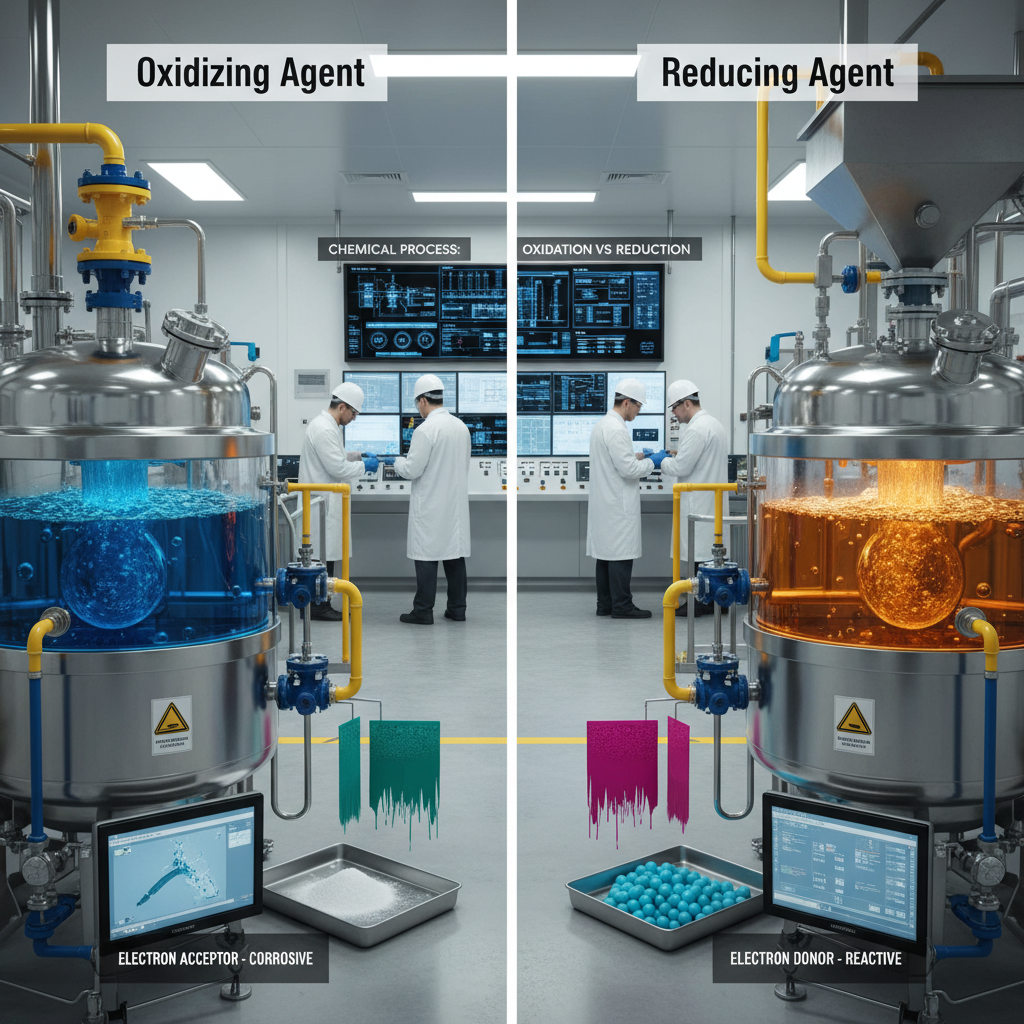
An oxidizing agent is a substance that gains electrons during a chemical reaction, causing another substance to be oxidized. In simpler terms, it accepts electrons from other compounds. This results in the reduction of the oxidizing agent itself. Common oxidizing agents include oxygen, chlorine, and potassium permanganate. They are often used in bleaching, disinfection, and various industrial processes. It's important to note that oxidizing agents often exhibit strong reactivity and should be handled with care. Dyeingchem.com offers a range of oxidizing agents tailored for diverse applications.
Key Characteristics: Accepts electrons, causes oxidation in other substances, undergoes reduction itself, often highly reactive.
What is a Reducing Agent?
Conversely, a reducing agent is a substance that donates electrons during a chemical reaction, causing another substance to be reduced. This leads to the oxidation of the reducing agent itself. Common reducing agents include sodium borohydride, lithium aluminum hydride, and metals like zinc and iron. They are frequently used in organic synthesis, metal refining, and various analytical chemistry applications. Like oxidizing agents, reducing agents require careful handling due to their reactivity.
Reducing Agent Benefits:
• Donates electrons to other substances.
• Causes reduction in other substances.
• Undergoes oxidation itself.
• Essential for various chemical syntheses.
Oxidizing vs Reducing Agent: A Direct Comparison
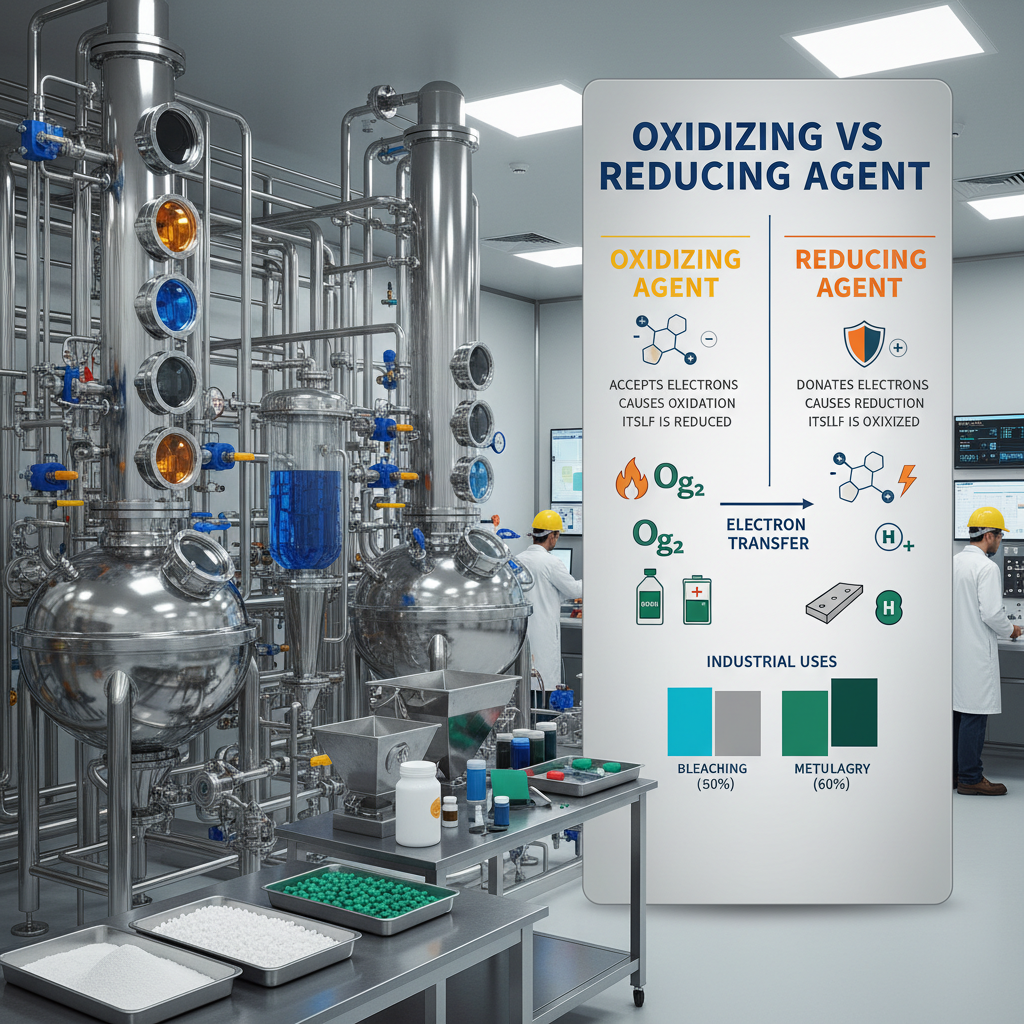
The key difference between oxidizing and reducing agents lies in their electron transfer behavior. Oxidizing agents accept electrons, while reducing agents donate electrons. This seemingly simple difference has profound implications for the types of reactions they participate in and the products they form. Understanding this fundamental distinction is critical for predicting reaction outcomes and controlling chemical processes. The effectiveness of these agents can also be influenced by factors such as concentration, temperature, and pH. At Dyeingchem, we prioritize providing high-quality agents that deliver consistent and predictable results.
Applications in the Dyeing and Textile Industry
In the dyeing industry, both oxidizing and reducing agents play vital roles. Oxidizing agents, like hydrogen peroxide, are used for bleaching fabrics to prepare them for dyeing, and also in certain dye classes to achieve color fixation. Reducing agents, such as sodium dithionite, are crucial for vat dyeing, converting insoluble dyes into a soluble leuco form that can penetrate the fabric. The careful selection and application of these agents are critical for achieving optimal colorfastness and quality in textile products. Dyeingchem.com provides specialized chemicals designed for these precise applications.
Safety Considerations When Handling Oxidizing and Reducing Agents
Both oxidizing and reducing agents can be hazardous if not handled correctly. Oxidizing agents can cause fires or explosions when in contact with combustible materials. Reducing agents can generate flammable gases when reacting with water or acids. Therefore, it's crucial to follow strict safety protocols, including wearing appropriate personal protective equipment (PPE) such as gloves, goggles, and respirators. Always consult the Material Safety Data Sheet (MSDS) for specific handling instructions and storage requirements. Dyeingchem.com provides detailed safety information with all our products.
Conclusion: Mastering the Fundamentals of Oxidation and Reduction
Understanding the roles of oxidizing and reducing agents is essential for success in a wide range of scientific and industrial applications. By recognizing their distinct characteristics and proper handling procedures, professionals can harness their power safely and effectively. Dyeingchem.com is your trusted partner for high-quality chemicals and expert guidance in this field.
Frequently Asked Questions (FAQs)
Can a substance act as both an oxidizing and reducing agent?
Yes, a substance can act as both an oxidizing and reducing agent in different reactions. This is known as disproportionation. In these cases, the same element undergoes both oxidation and reduction. A classic example is chlorine, which can both oxidize and reduce other substances depending on the reaction conditions. This dual behavior is possible due to the element's variable oxidation states.
What factors influence the strength of an oxidizing or reducing agent?
Several factors influence the strength of these agents, including electronegativity (for oxidizing agents), ionization energy (for reducing agents), and the stability of the resulting ions. More electronegative elements tend to be stronger oxidizing agents. Also, the concentration, temperature, and pH of the reaction medium can significantly affect their strength. The presence of catalysts can also impact their reactivity.
Are there environmentally friendly alternatives to traditional oxidizing and reducing agents?
Yes, there's growing research and development focused on environmentally friendly alternatives. For oxidizing agents, hydrogen peroxide (H2O2) is a popular choice as it decomposes into water and oxygen. For reducing agents, alternatives like ascorbic acid (vitamin C) and certain enzymes are gaining traction. Dyeingchem.com is committed to offering sustainable chemical solutions and is continuously exploring greener alternatives.