Comprehensive Guide to Enzyme Used in Detergent Formulation and its Applications
Comprehensive Guide to Enzyme Used in Detergent Formulation and its Applications
Enzyme Used in Detergent Formulation: A Comprehensive Guide
Enzymes are increasingly vital components in modern detergent formulations, offering enhanced cleaning power and sustainability benefits. These biological catalysts break down complex stains – proteins, fats, starches, and more – that traditional detergents struggle with. This article explores the different types of enzymes used in detergent formulation, their specific functions, advantages, and the latest advancements in enzyme technology. Understanding these enzymes is key to formulating effective and eco-friendly detergents for both household and industrial applications.
Types of Enzymes Employed in Detergent Formulations
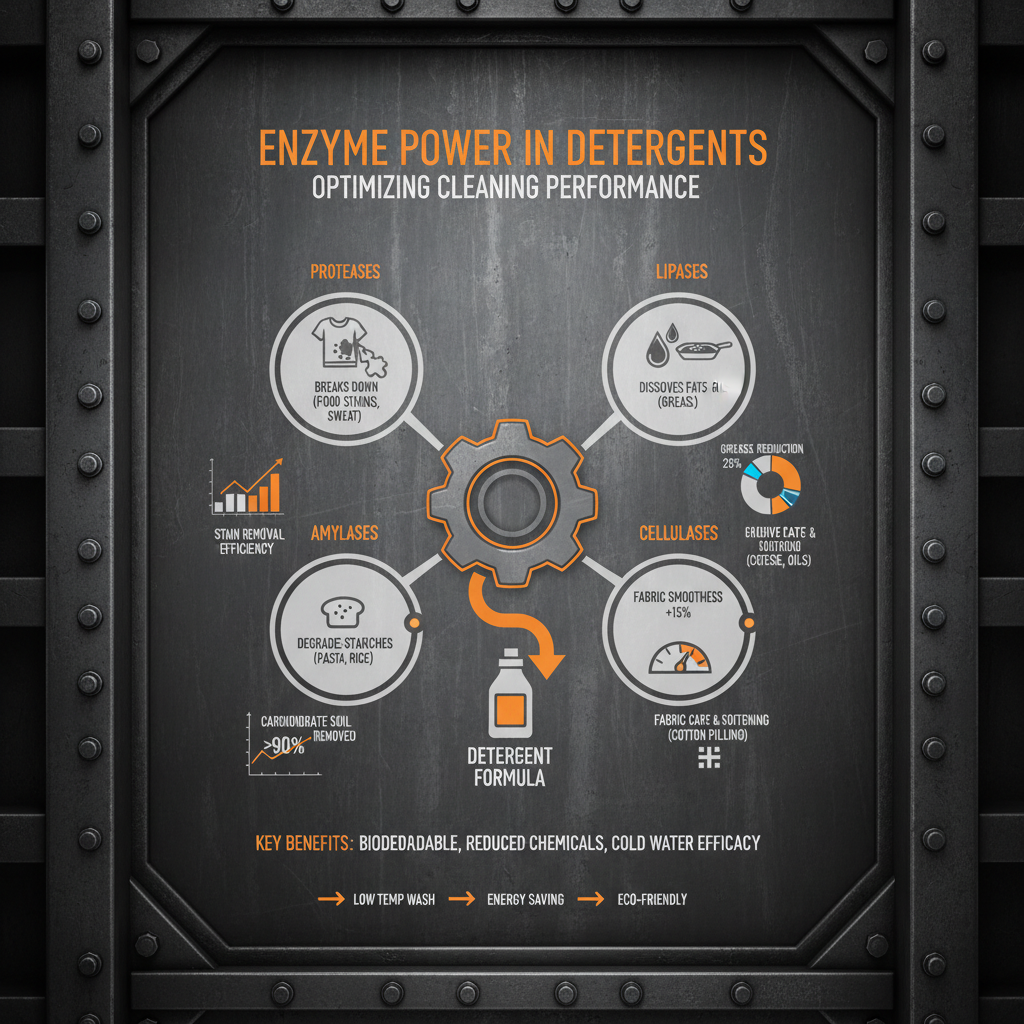
Several enzyme classes find application in detergents, each targeting specific stain types. The most commonly used include Proteases, Amylases, Lipases, Cellulases, and Mannanases. Proteases break down protein-based stains like blood, grass, and food residues. Amylases target starch-based stains, such as pasta sauce or gravy. Lipases are effective against fats and oils, while Cellulases work on cotton fabrics, removing fuzz and restoring brightness. Mannanases tackle stains from plant-based materials like gums and fruit juices. The synergistic effect of combining multiple enzymes in a single formulation leads to superior cleaning performance.
Key Highlights: Combining multiple enzymes creates a synergistic effect, resulting in significantly improved cleaning power across a wider range of stain types.
The Role of Proteases in Detergent Performance
Proteases are arguably the most important enzymes in laundry detergents, responsible for removing a significant portion of everyday stains. They hydrolyze peptide bonds in proteins, breaking them down into smaller, water-soluble fragments. Modern protease formulations often utilize genetically engineered enzymes with enhanced stability and activity at varying temperatures and pH levels. This allows them to perform effectively in both hot and cold water washes. Selecting the right protease is critical for optimal stain removal and fabric care. Dyeingchem provides a range of high-performance proteases tailored for diverse detergent applications.
Protease Benefits:
• Effectively removes protein-based stains (blood, grass, food).
• Functions well in both hot and cold water.
• Enhanced activity through genetic engineering.
• Improves fabric appearance and feel.
Enzyme Used in Detergent Formulation: A Comparative Analysis
Choosing the right enzyme blend is vital for maximizing detergent effectiveness. The following table compares the key characteristics and applications of the most common detergent enzymes:
Sustainability and the Future of Detergent Enzymes
Enzymes offer a sustainable alternative to traditional harsh chemicals used in detergents. They are biodegradable, require lower wash temperatures (reducing energy consumption), and effectively remove stains with lower dosages. Ongoing research focuses on developing even more robust and efficient enzymes, as well as exploring novel enzyme combinations for specialized cleaning applications. Furthermore, advancements in enzyme immobilization techniques are increasing their stability and reusability, further enhancing their environmental profile. The trend towards eco-friendly cleaning solutions will continue to drive innovation in the field of detergent enzymes.
Product Specifications: Protease P1000 (Example)
Here's a typical specification sheet for a high-activity protease used in detergent formulations:
Conclusion: Embracing Enzyme Technology for Superior Detergents
Enzymes are no longer just an additive in detergents; they are fundamental components driving performance and sustainability. As technology advances, their role will only become more critical in meeting the evolving demands of consumers and environmental regulations. Dyeingchem is committed to providing high-quality enzymes and expertise to help detergent manufacturers create innovative and effective cleaning solutions.
Frequently Asked Questions (FAQs)
What is the optimal dosage of enzymes in a detergent formulation?
The optimal dosage depends on the specific enzyme blend, the target stains, and the detergent's overall formulation. Typically, enzyme concentrations range from 1% to 5% by weight. Higher dosages don't necessarily equate to better cleaning, and can even lead to issues like fabric damage or residue buildup. Careful optimization through laboratory testing is crucial. Factors like water hardness, wash temperature, and wash time also influence the required enzyme dosage. Consulting with enzyme suppliers like Dyeingchem can provide valuable guidance.
Are enzymes safe for all types of fabrics?
While enzymes are generally safe for most fabrics, some delicate materials like silk and wool may be susceptible to damage, especially from protease and cellulase. Always check the fabric care label before using enzyme-containing detergents. Formulations designed for delicate fabrics typically use lower enzyme concentrations or omit potentially damaging enzymes. The use of enzyme inhibitors can also help protect sensitive fabrics.
How do enzymes contribute to the sustainability of detergents?
Enzymes promote sustainability by enabling detergents to perform effectively at lower temperatures, reducing energy consumption during washing. They are biodegradable, minimizing environmental impact after use. Moreover, enzymes often allow for lower detergent dosages, reducing the overall chemical load released into the environment. The use of enzymes also reduces the need for harsh chemicals like phosphates and bleach, further enhancing their eco-friendliness.
What is the impact of water hardness on enzyme activity?
Water hardness, caused by calcium and magnesium ions, can negatively impact enzyme activity. These ions can bind to the enzymes, reducing their ability to interact with and break down stains. Detergents often contain water softeners, such as chelating agents, to mitigate this effect. Using appropriate builder systems and optimizing enzyme formulations for hard water conditions is crucial for maintaining cleaning performance.