Proteolytic Enzymes Revolutionizing Meat and Leather Industry Applications
Proteolytic Enzymes Revolutionizing Meat and Leather Industry Applications
Proteolytic Enzymes in Meat and Leather Industry
The meat and leather industries rely heavily on biochemical processes, and proteolytic enzymes play a crucial role in numerous applications. These enzymes, capable of breaking down proteins, are vital for tenderizing meat, improving leather quality, and optimizing production efficiency. This article will delve into the various applications of proteolytic enzymes in these industries, exploring their mechanisms, benefits, and the types commonly used. Understanding these enzymes is key to enhancing product quality and streamlining manufacturing processes.
Applications of Proteolytic Enzymes in the Meat Industry
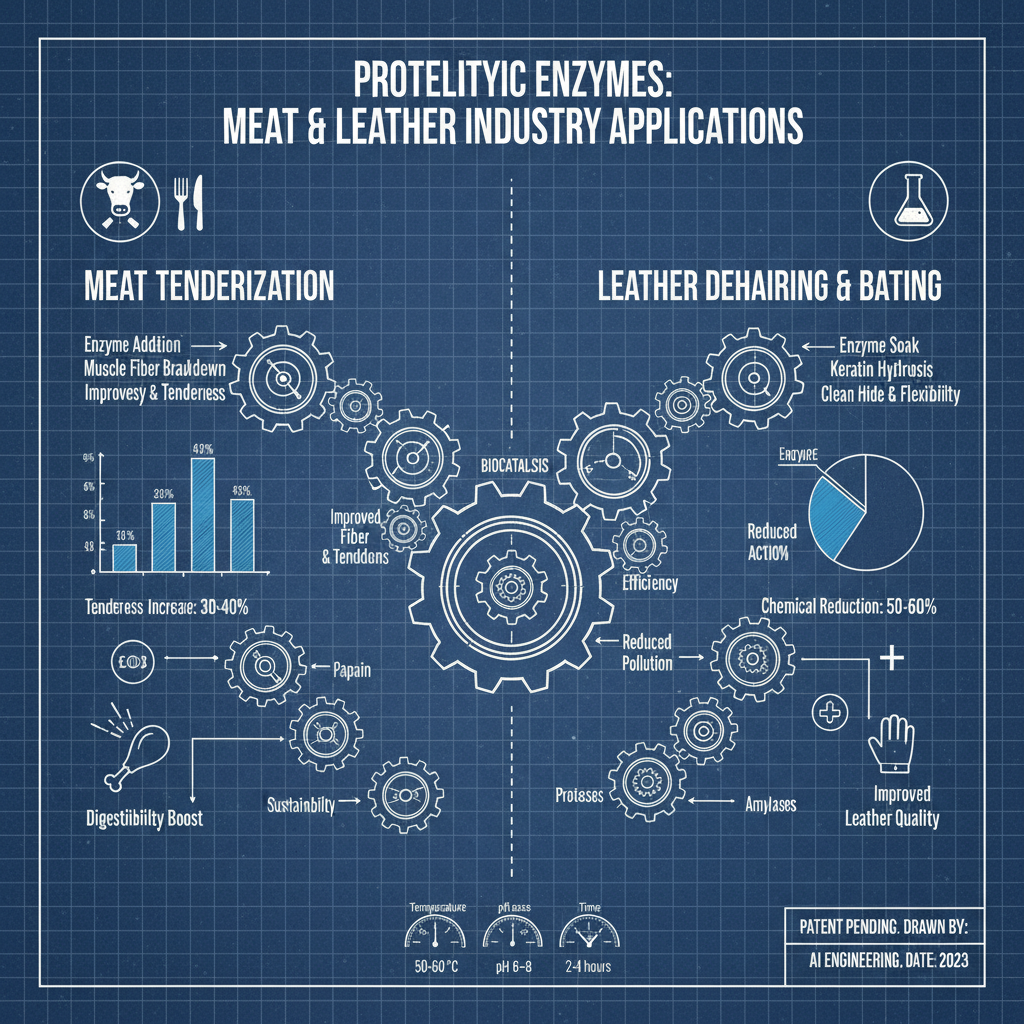
In the meat industry, proteolytic enzymes are primarily used for meat tenderization. As animals age, meat becomes tougher due to increased cross-linking of muscle proteins. Enzymes like papain (from papaya), bromelain (from pineapple), and ficin (from figs) are employed to break these protein bonds, resulting in more tender and palatable meat. Beyond tenderization, these enzymes can also improve meat marbling, enhance flavor, and reduce cooking time. Controlled enzymatic treatment ensures consistent product quality and reduces waste. The application of proteolytic enzymes contributes to a superior consumer experience.
Key Benefits in Meat Processing: Improved tenderness, enhanced flavor, reduced cooking time, and optimized meat quality.
Proteolytic Enzymes in Leather Processing: Beamhouse Operations
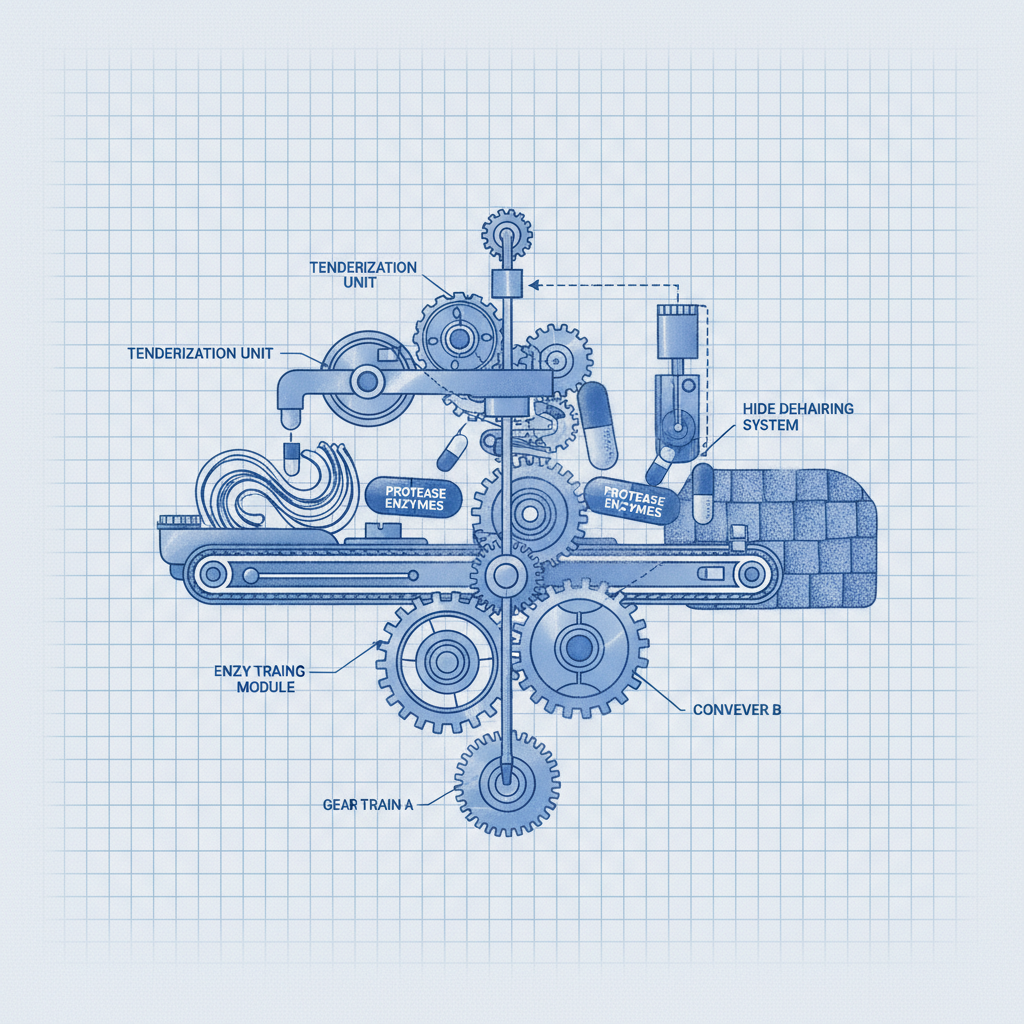
The leather industry utilizes proteolytic enzymes extensively during the "beamhouse" operations – the initial stages of leather making. These enzymes are crucial for removing hair, epidermis, and subcutaneous tissue from raw hides and skins. Traditional methods involved harsh chemicals like lime and sulfides, which had significant environmental drawbacks. Enzymatic dehairing offers a more sustainable and environmentally friendly alternative. Enzymes selectively break down proteins in the hair root and skin layers, facilitating easy removal without damaging the collagen fibers essential for leather strength. Proteolytic enzymes contribute to a softer, finer-grained leather product.
Enzymatic Dehairing Benefits:
• Reduces chemical usage and environmental impact
• Improves leather softness and grain quality
• Decreases processing time and costs
• Enhances leather properties like suppleness and dyeability
Comparison of Traditional vs. Enzymatic Leather Processing
The shift from traditional chemical methods to enzymatic processing in leather manufacturing represents a significant advancement. Traditional methods, while effective, generate substantial wastewater containing harmful chemicals. Enzymatic processes, on the other hand, are biodegradable and significantly reduce the environmental footprint. While the initial cost of enzymes might be higher, the long-term benefits – reduced chemical expenses, lower wastewater treatment costs, and improved leather quality – make enzymatic processing economically viable. The resulting leather is often more supple, with a finer grain structure, and exhibits better dye uptake.
Types of Proteolytic Enzymes Commonly Used
Several types of proteolytic enzymes are employed in the meat and leather industries. Papain, sourced from papaya, is renowned for its tenderizing capabilities in meat. Bromelain, from pineapple, offers similar benefits but can sometimes be more aggressive. Ficin, derived from figs, is another effective meat tenderizer. In leather processing, alkaline proteases (produced by bacteria) are particularly important for dehairing. These enzymes are chosen based on their pH optimum, temperature stability, and specificity for breaking down target proteins. Dyeingchem provides a range of high-quality proteolytic enzymes tailored to various industrial applications.
Future Trends and Innovations
The use of proteolytic enzymes in both the meat and leather industries is expected to grow as sustainability concerns increase. Research is focused on developing more efficient and specific enzymes through genetic engineering and directed evolution. Immobilized enzymes – enzymes bound to a solid support – are gaining popularity as they can be reused multiple times, reducing costs and waste. Furthermore, the integration of enzyme technology with other innovative processes, like membrane filtration, promises to further optimize production and enhance product quality.
Conclusion
Proteolytic enzymes represent a vital component of modern meat and leather processing. Their ability to enhance product quality, reduce environmental impact, and optimize production efficiency makes them indispensable tools for these industries. As research continues and new innovations emerge, we can expect even more sophisticated applications of these powerful enzymes in the future. Dyeingchem is committed to providing innovative enzymatic solutions to meet the evolving needs of our clients.
Frequently Asked Questions (FAQs)
What are the safety concerns associated with using proteolytic enzymes in food processing?
While generally regarded as safe (GRAS), proteolytic enzymes can cause allergic reactions in sensitive individuals. Proper handling and adherence to recommended concentrations are essential. Enzyme suppliers like Dyeingchem provide detailed safety data sheets (SDS) outlining potential hazards and handling precautions. It's crucial to ensure enzymes are sourced from reputable suppliers and meet food-grade standards. Thorough washing and cooking of meat treated with enzymes are also recommended.
How do temperature and pH affect the activity of proteolytic enzymes?
Proteolytic enzymes have optimal temperature and pH ranges for maximum activity. Outside these ranges, their activity decreases. For instance, many enzymes used in leather processing function optimally at alkaline pH levels. Temperature extremes can cause denaturation, leading to irreversible loss of enzyme function. Controlling temperature and pH is vital for efficient and consistent enzymatic processes. Enzyme suppliers typically provide information on optimal conditions for their specific products.
Are there any ethical considerations surrounding the use of enzymes sourced from plant or animal origins?
Ethical concerns regarding the sourcing of enzymes are valid and increasingly important. For plant-derived enzymes, sustainable harvesting practices are essential. For animal-derived enzymes, humane sourcing and minimizing waste are crucial considerations. Many companies are now exploring microbial enzyme production through fermentation as a more sustainable and ethically responsible alternative. Dyeingchem is committed to responsible sourcing and sustainable practices.
What is the role of enzyme inhibitors in controlling proteolytic activity?
Enzyme inhibitors are substances that reduce or prevent enzyme activity. In certain applications, controlling proteolytic activity is crucial to avoid excessive breakdown of proteins. Enzyme inhibitors can be added to stop the enzymatic reaction at the desired point, preventing over-tenderization in meat or unwanted degradation of collagen in leather. These inhibitors play a key role in optimizing process control and achieving consistent product quality.