Exploring Sulphur Dyes Examples Applications and Dyeing Techniques
Exploring Sulphur Dyes Examples Applications and Dyeing Techniques
Sulphur Dyes Examples: A Comprehensive Guide
Sulphur dyes are a class of water-soluble dyes historically used for coloring cotton, viscose, and other cellulosic fibers. Known for their excellent wash fastness and relatively low cost, they continue to be a popular choice for dyeing textiles. Understanding sulphur dyes examples is crucial for textile professionals aiming for durable and economical coloration. This article will explore various examples of sulphur dyes, their applications, properties, and considerations for successful dyeing. We will also discuss the benefits of sourcing these dyes from a reliable supplier like Dyeingchem.com.

What are Sulphur Dyes and Their Key Characteristics?
Sulphur dyes are complex, insoluble polymeric compounds formed by reacting organic compounds with sodium polysulphide and sulphur. They are applied to textiles in a reduced, soluble form (leuco form) and then oxidized to their insoluble form within the fiber, resulting in excellent wash fastness. Their primary characteristics include: good lightfastness (though varies with shade), excellent washfastness, relatively low cost, and suitability for dark shades – particularly blacks, browns, blues, and greens. They typically require a reduction vatting process and are not generally suitable for delicate fibers. They're favored for workwear and denim where durability is paramount.
Key Highlights: Excellent wash fastness, economical, ideal for dark shades, primarily for cellulosic fibers.
Common Sulphur Dyes Examples and Their Applications
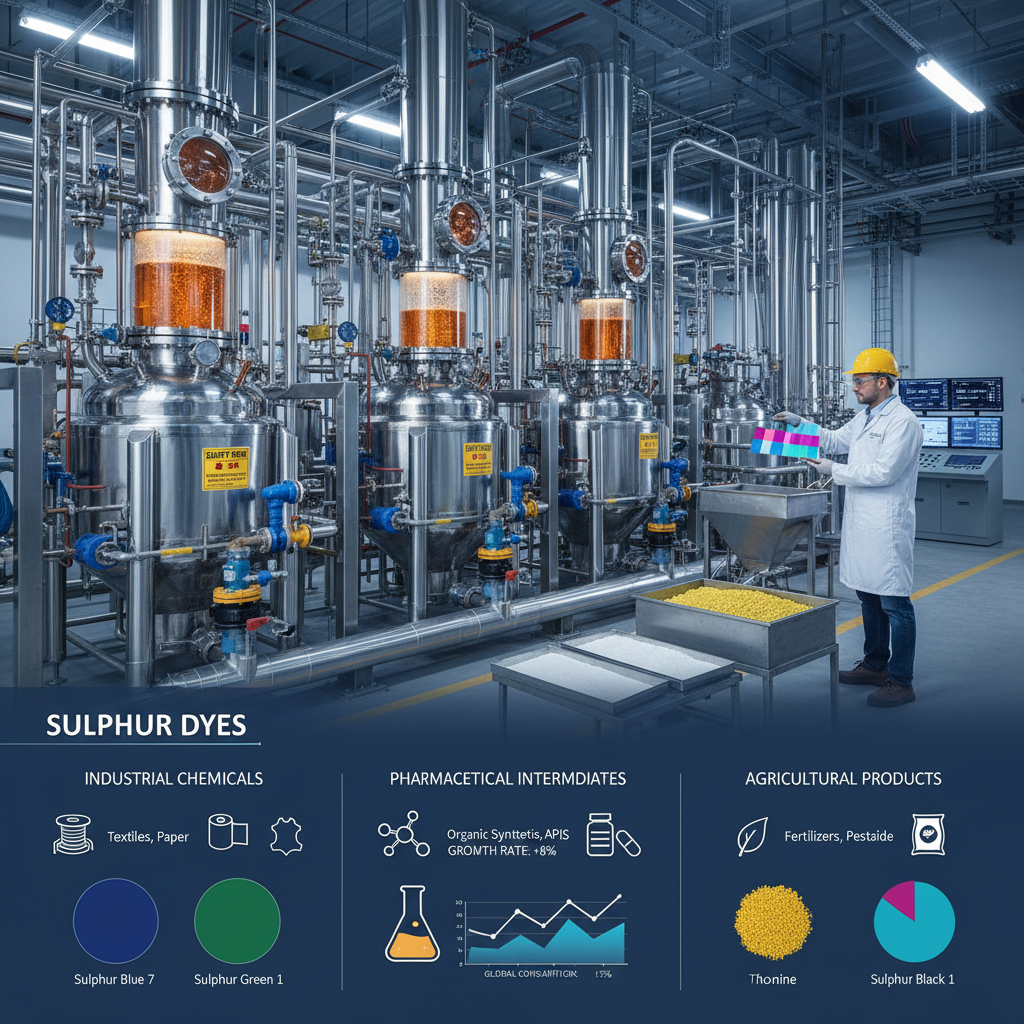
Several sulphur dyes are widely used in the textile industry. Here are some prominent examples:
The Dyeing Process: A Step-by-Step Overview
The dyeing process with sulphur dyes involves several key steps:
- Preparation: Thoroughly wash and prepare the fabric to remove impurities.
- Reduction Vatting: The dye is dissolved in a hot alkaline solution with a reducing agent (typically sodium sulphide) to convert it to its soluble leuco form.
- Dyeing: The fabric is immersed in the vat and heated, allowing the dye to exhaust onto the fibers.
- Oxidation: The fabric is removed from the vat and exposed to air (or an oxidizing agent) to re-oxidize the dye, making it insoluble within the fiber.
- Washing & Finishing: The dyed fabric is thoroughly washed to remove excess dye and chemicals, then finished as needed.
Sulphur Dyes vs. Reactive Dyes: A Comparative Analysis
While both sulphur and reactive dyes are used for cellulosic fibers, they differ significantly. Reactive dyes offer brighter shades and a wider color range but are generally more expensive. Sulphur dyes excel in wash fastness and cost-effectiveness, making them suitable for applications where durability is prioritized over vibrant color. Reactive dyes are generally easier to apply and offer better light fastness, but their wash fastness can be lower compared to sulphur dyes. Here’s a quick comparison:
Sourcing High-Quality Sulphur Dyes: Why Choose Dyeingchem.com?
The quality of sulphur dyes significantly impacts the final product. Dyeingchem.com offers a comprehensive range of high-quality sulphur dyes, backed by rigorous quality control and reliable supply chain management. We prioritize consistency, purity, and adherence to industry standards. We also provide technical support and expert guidance to ensure optimal dyeing results. Partnering with a trusted supplier like us ensures you receive dyes that meet your specific requirements and deliver consistent, vibrant, and durable coloration.
Conclusion: Mastering Sulphur Dyeing for Optimal Results
Understanding sulphur dyes examples and their properties is crucial for achieving high-quality, durable textile coloration. By selecting the right dye and employing a precise dyeing process, you can maximize the benefits of this cost-effective and reliable dye class. Dyeingchem.com is your trusted partner for sourcing premium sulphur dyes and expert technical support.
Frequently Asked Questions (FAQs)
What are the environmental considerations when using sulphur dyes?
Sulphur dyeing processes can generate wastewater containing sulfides and other pollutants. Proper wastewater treatment is essential to minimize environmental impact. This includes sulfide oxidation, pH adjustment, and biological treatment. Modern dyeing facilities utilize advanced treatment technologies to comply with environmental regulations. Selecting dyes from reputable suppliers like Dyeingchem.com who prioritize responsible manufacturing practices is also crucial.
What fabrics are best suited for sulphur dyeing?
Sulphur dyes are primarily used on cellulosic fibers such as cotton, viscose, linen, and rayon. They are not generally suitable for synthetic fibers like polyester or nylon. The fiber needs to have sufficient affinity for the dye to achieve a good color yield and fastness. Heavily sized or treated cotton may require pre-treatment to ensure proper dye penetration.
How can I improve the light fastness of sulphur dyes?
While sulphur dyes generally have moderate light fastness, it can be improved through several methods. Careful control of the oxidation process is crucial. Adding certain after-treatments, such as copper salt treatments, can enhance light fastness. Selecting higher-quality dyes and optimizing the dyeing parameters (temperature, pH, and dye concentration) also play a significant role.
What safety precautions should be taken when handling sulphur dyes?
Sulphur dyes and the chemicals used in the dyeing process can be hazardous. Always wear appropriate personal protective equipment (PPE), including gloves, safety glasses, and a respirator. Work in a well-ventilated area to avoid inhaling fumes. Handle chemicals according to the manufacturer's safety data sheets (SDS). Proper waste disposal is essential to protect the environment and human health.