Exploring the Chemistry and Applications of Vat Dye in Textile Industry
Exploring the Chemistry and Applications of Vat Dye in Textile Industry
Understanding Vat Dye in Textile: A Comprehensive Guide
Vat dyes represent a significant class of colorants crucial to the textile industry, renowned for their exceptional wash and light fastness properties. These dyes are particularly valuable for cellulosic fibers like cotton, linen, and viscose rayon, providing vibrant, long-lasting color. This article will delve into the chemistry, application, advantages, and challenges associated with vat dyes, offering insights for textile professionals and enthusiasts alike. Understanding the nuances of vat dyeing is essential for achieving high-quality, durable textiles.
The Chemistry Behind Vat Dyes
Vat dyes are insoluble in water and require reduction to a soluble leuco form (a colorless, reduced form) before application to the fabric. This reduction is typically achieved using a reducing agent such as sodium hydrosulfite (sodium dithionite). Once applied to the textile and exposed to air, the leuco form oxidizes, reverting to the original insoluble colored pigment, trapping the dye within the fiber. This process contributes to the exceptional fastness characteristics of vat dyes. The molecular structure of vat dyes often contains anthraquinone or indanthrone moieties, which contribute to their stability and resistance to degradation.
The Vat Dyeing Process: A Step-by-Step Overview
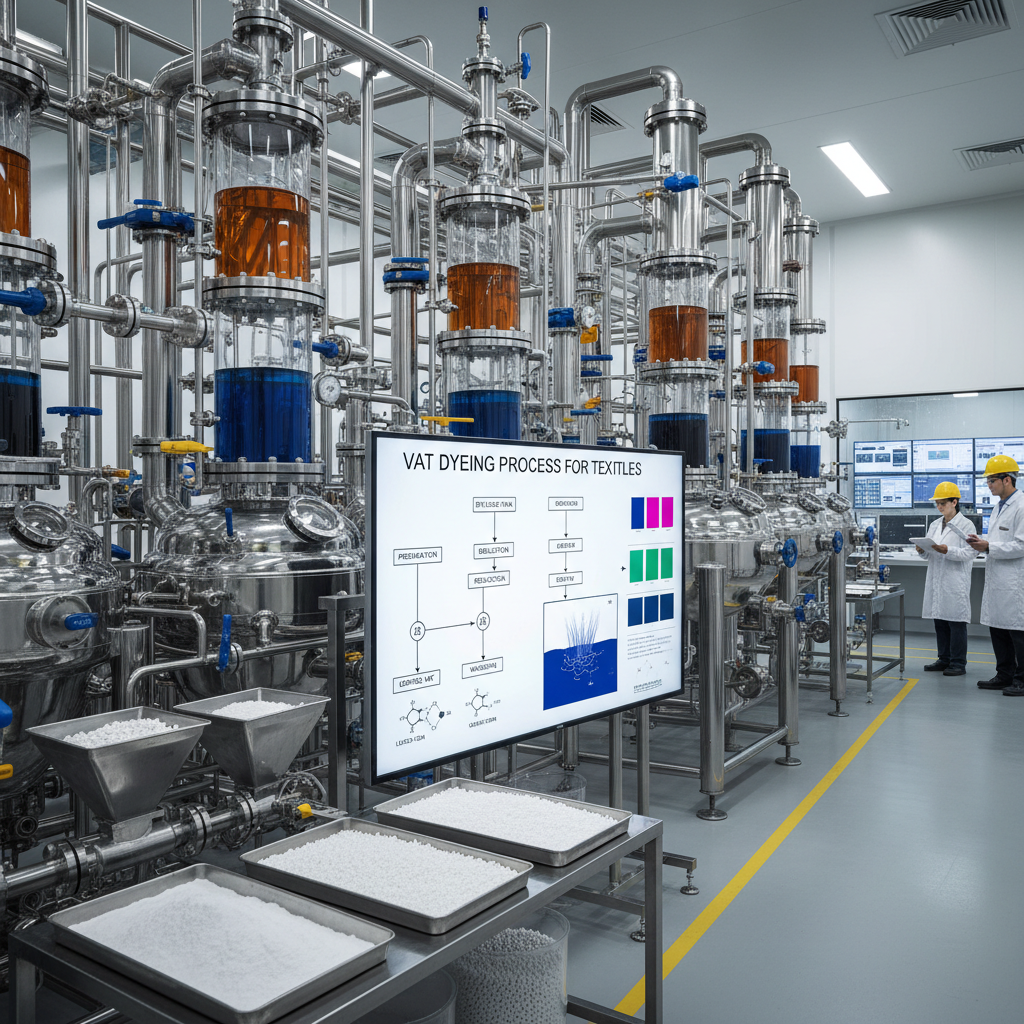
The vat dyeing process is multi-stage and requires careful control to achieve optimal results. It typically involves the following steps: 1) Dye preparation: The vat dye is initially insoluble. 2) Reduction: The dye is reduced to its soluble leuco form using a reducing agent. 3) Application: The fabric is immersed in the leuco dye solution. 4) Oxidation: The fabric is exposed to air or an oxidizing agent to convert the leuco form back to the insoluble colored pigment. 5) Aftertreatment: Washing and finishing processes to remove excess dye and improve the fabric's properties. Proper control of temperature, pH, and reducing agent concentration are crucial throughout the process.
Key Process Considerations: Maintaining optimal pH levels is critical for effective dye reduction and oxidation. Temperature control influences the rate of reduction and oxidation. Thorough washing is essential to remove unfixed dye and prevent staining.
Vat Dye vs. Other Dye Classes
Compared to other dye classes like reactive dyes or direct dyes, vat dyes offer superior wash and light fastness. However, they generally require more complex application processes and can be more environmentally challenging due to the use of reducing agents. Reactive dyes, while easier to apply, often exhibit lower fastness properties. Direct dyes are simpler to use but have poor wash fastness. The choice of dye class depends on the specific requirements of the textile product and the desired performance characteristics.
Applications of Vat Dyes in Textiles
Vat dyes are widely used in applications requiring high colorfastness, such as workwear, military uniforms, home textiles (curtains, upholstery), and high-end apparel. They are particularly well-suited for dyeing denim due to their ability to create deep, durable indigo shades. The robust nature of vat-dyed fabrics ensures that colors remain vibrant even after repeated washing and exposure to sunlight. The durability makes them ideal for textiles that will be subject to heavy use and frequent cleaning.

Environmental Considerations and Sustainable Practices
Traditional vat dyeing processes can generate significant wastewater containing reducing agents and residual dyes. However, ongoing research focuses on developing more sustainable alternatives, including enzymatic reduction and the use of less harmful reducing agents. Optimizing dye utilization, implementing efficient wastewater treatment systems, and exploring closed-loop dyeing processes are crucial steps toward minimizing the environmental impact of vat dyeing. Dyeingchem is committed to providing eco-friendly dyeing solutions.
Conclusion: The Enduring Importance of Vat Dyes
Vat dyes remain a cornerstone of the textile industry, offering unparalleled colorfastness and durability. While challenges related to environmental impact exist, ongoing innovation is driving the development of more sustainable dyeing practices. By understanding the chemistry, application, and evolving landscape of vat dyeing, textile professionals can continue to leverage the benefits of this versatile and reliable dye class.
Frequently Asked Questions (FAQs)
What fabrics are best suited for vat dyeing?
Vat dyes excel on cellulosic fibers – cotton, linen, rayon, and their blends. These fibers have a natural affinity for the dye molecules, resulting in strong, lasting color. While vat dyes can technically be used on other fibers with mordanting, the results are often less satisfactory and less cost-effective. The key is the fiber’s ability to swell and allow dye penetration during the reduction and oxidation process.
What are the primary safety concerns when working with vat dyes?
The primary safety concerns stem from the reducing agents used, such as sodium hydrosulfite. These chemicals can release sulfur dioxide gas, which is irritating to the respiratory system. Proper ventilation is crucial. Direct contact with reducing agents can cause skin and eye irritation. Always wear appropriate personal protective equipment (PPE), including gloves, eye protection, and a respirator if necessary. Handling vat dyes also requires awareness of the dye's specific material safety data sheet (MSDS).
How can I minimize the environmental impact of vat dyeing?
Several strategies can minimize environmental impact. Utilize low-liquor ratio dyeing techniques to reduce water consumption. Employ enzymes instead of harsh reducing agents where possible. Implement effective wastewater treatment systems to remove residual dyes and chemicals. Optimize dye recipes to minimize dye waste. Consider using dyes with lower environmental profiles, and explore closed-loop dyeing systems for water recycling.
What are the common defects encountered in vat dyeing?
Common defects include uneven dyeing, speckiness, poor fastness, and staining. Uneven dyeing can result from inadequate mixing or improper dye migration. Speckiness can occur due to insufficient dye reduction or the presence of impurities in the water. Poor fastness can be caused by incomplete oxidation or inadequate aftertreatment. Staining can result from unfixed dye remaining on the fabric. Careful process control and thorough washing can minimize these defects.