Exploring Reducing Agent and Oxidizing Agent Examples in Chemistry
Exploring Reducing Agent and Oxidizing Agent Examples in Chemistry
Understanding Reducing Agent and Oxidizing Agent Examples
In the realm of chemistry, oxidation-reduction (redox) reactions are fundamental processes involving the transfer of electrons. Central to these reactions are reducing agents and oxidizing agents. A reducing agent donates electrons, while an oxidizing agent accepts them. Understanding these concepts is crucial in various fields, including industrial chemistry, environmental science, and analytical chemistry. This article will delve into examples of both, providing a clear understanding of their roles and applications. We will explore common reducing and oxidizing agents, their properties, and practical uses.
What are Reducing Agents?
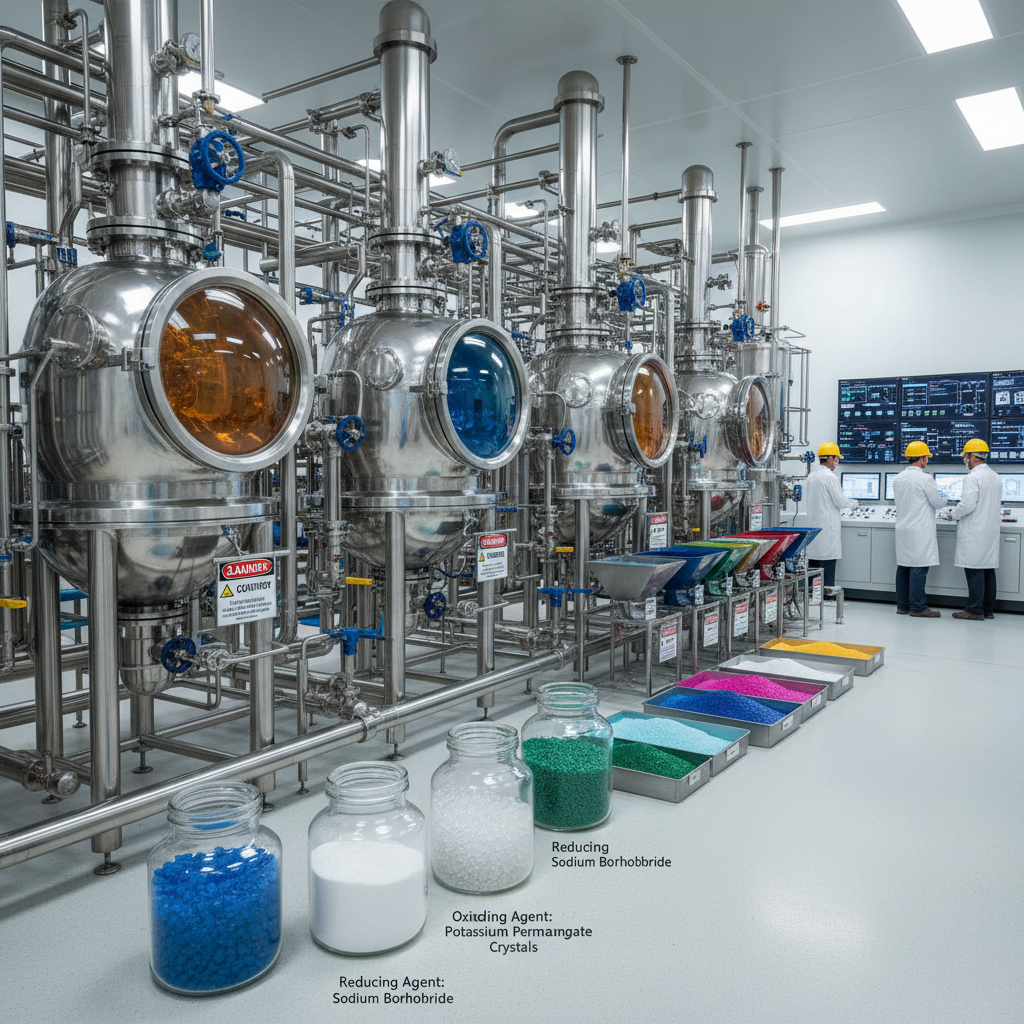
A reducing agent, also known as a reductant, is a substance that donates electrons to another substance in a redox reaction. In doing so, the reducing agent itself gets oxidized. Common examples include metals like sodium, magnesium, and zinc, as well as compounds like hydrogen sulfide (H₂S) and carbon monoxide (CO). The strength of a reducing agent is determined by its tendency to lose electrons, often measured by its reduction potential. Reducing agents are vital in various processes, such as metal refining and the synthesis of organic compounds. For instance, sodium is used in the reduction of sodium chloride to metallic sodium, a critical step in several chemical processes.
Examples of Common Reducing Agents
Numerous substances function as reducing agents, each with varying strengths and applications. Here's a look at some common examples:
What are Oxidizing Agents?
Conversely, an oxidizing agent, or oxidant, is a substance that accepts electrons from another substance in a redox reaction, causing the oxidant to be reduced. Common oxidizing agents include oxygen (O₂), fluorine (F₂), and potassium permanganate (KMnO₄). The strength of an oxidizing agent is determined by its affinity for electrons, measured by its reduction potential. Oxidizing agents are used in processes like combustion, bleaching, and disinfection. Oxygen, for example, is essential for combustion, reacting with fuels to release energy.
Examples of Common Oxidizing Agents
Several substances act as oxidizing agents, each with unique characteristics and applications:
Key Oxidizing Agents: Oxygen (O₂), Fluorine (F₂), Potassium Permanganate (KMnO₄), Hydrogen Peroxide (H₂O₂), Chlorine (Cl₂).

Reducing and Oxidizing Agents: A Comparative Look
Understanding the differences between reducing and oxidizing agents is paramount. While reducing agents donate electrons, oxidizing agents accept them. This seemingly simple distinction is crucial for comprehending a wide range of chemical reactions. Dyeingchem provides high-quality chemicals for various redox reactions. Here’s a comparative overview:
Conclusion: The Importance of Redox Reactions
Understanding reducing agents and oxidizing agents is fundamental to grasping the principles of chemistry. These agents play critical roles in a vast array of chemical reactions, influencing processes from energy production to material synthesis. By comprehending their properties and applications, we gain a deeper appreciation for the intricate chemical world around us.
Frequently Asked Questions (FAQs)
What determines the strength of a reducing agent?
The strength of a reducing agent is determined by its tendency to lose electrons. This tendency is quantitatively measured by its reduction potential. A more negative reduction potential indicates a stronger reducing agent, as it more readily donates electrons. The standard reduction potential is typically measured against the standard hydrogen electrode (SHE). Factors like atomic size, ionization energy, and electron affinity also influence a reducing agent’s strength. Metals with lower ionization energies, for instance, tend to be stronger reducing agents.
Can a substance act as both a reducing and oxidizing agent?
Yes, some substances can act as both reducing and oxidizing agents, depending on the reaction conditions. These substances are known as disproportionation agents. A prime example is hydrogen peroxide (H₂O₂). In some reactions, it oxidizes another substance while simultaneously being reduced itself. This happens when the same element is present in multiple oxidation states and can undergo both reduction and oxidation within the same reaction.
What are some real-world applications of redox reactions?
Redox reactions are ubiquitous in everyday life and industrial processes. They power batteries, enabling portable electronics. Combustion, the process of burning fuels, is a redox reaction. Corrosion, like rusting, is also a redox process. In biology, photosynthesis and cellular respiration are crucial redox reactions. Industrially, redox reactions are used in metal refining, bleaching processes, and the production of various chemicals.
How does temperature affect redox reactions?
Temperature generally increases the rate of redox reactions, as with most chemical reactions. Higher temperatures provide more kinetic energy to the reacting molecules, increasing the frequency of collisions and the likelihood of successful electron transfer. However, the effect of temperature on the equilibrium of a redox reaction depends on the change in enthalpy (ΔH) of the reaction. If the reaction is endothermic (ΔH > 0), increasing the temperature will favor the forward reaction, while if it's exothermic (ΔH