
In textile wet processing, fabric penetration performance is affected by multiple operational variables. Bath pH, caustic soda concentration, feed water hardness, fabric weave density, production line speed, and paired auxiliary chemicals all influence the effectiveness of wetting and penetrating agents during manufacturing.
Surfactants that perform consistently under neutral laboratory conditions often exhibit reduced efficiency in high‑alkali, high‑shear dye house environments. Improper penetrant selection can contribute to common processing defects including uneven luster, inconsistent dye uptake, white‑core yarn formation, and increased rework rates.
This article outlines six mainstream penetrating agent families used in textile wet processing. It provides mill technicians, dyeing and finishing engineers, and chemical distributors with structured performance data, operational limits, field verification methods, and troubleshooting protocols for accurate surfactant selection.
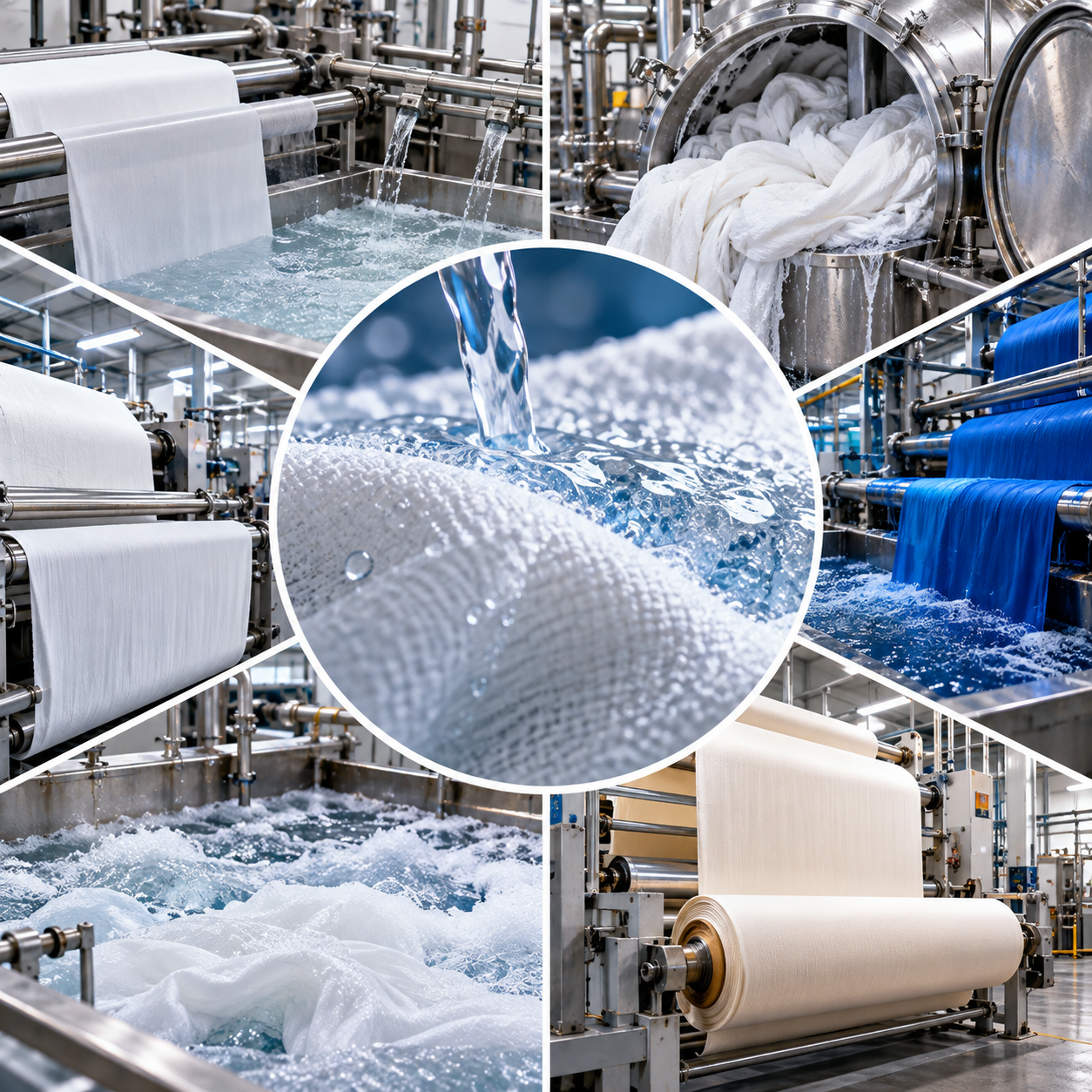
Quick Comparison: Six Penetrating Agent Platforms at a Glance
The following side-by-side comparison outlines core performance attributes of common textile penetrant platforms, based on verified formulation properties and mill application data.
| Platform | Ionic type | Best for | Key strength | Key limitation |
| Rapid Penetrating Agent | Anionic | pH 5–8 short‑run padding and jet‑dyeing lines | Fast dynamic wetting response suited for high-speed processing equipment with limited fabric contact time | Limited alkali stability; unsuitable for mercerizing and high-caustic processing |
| Alkali-Resistant Penetrating Agent | Anionic | High‑alkali pretreatment, alkaline scouring, peroxide bleaching | Achieves full fabric wetting within 3 seconds at 5 g/L dosage in 300 g/L NaOH solutions | On‑site mill validation is required to confirm performance under specific production conditions |
| Mercerizing Penetrant | High‑alkali‑stable anionic | Continuous mercerizing lines (200–300 g/L NaOH) | Low‑foam formulation inhibits redeposition of wax and pectin impurities on fabric surfaces | Formulated exclusively for high‑caustic mercerizing bath conditions |
| Penetrating Agent 1073 | High‑alkali‑resistant anionic | Mercerizing, denim indigo dyeing, desizing, industrial metal cleaning | Maintains ≥95% surface activity after 30 minutes exposure in 280 g/L NaOH; conforms to ZDHC MRSL requirements with no detected NPE/OPE content | Higher unit cost compared to standard commodity penetrating agents |
| Refined Low-Foam Penetrating Agent | Alkali‑resistant anionic | Scouring, bleaching, textile dyeing, leather and metal treatment processes | Controllable foam output supports stable operation across multiple industrial applications | Performance optimized for standard alkaline and temperature operating ranges |
| Nonionic Penetrating Agent TK-980 | Pretreatment, dyeing, fabric finishing, auxiliary formulation blending | Broad chemical compatibility; 80% active ingredient content | Jar compatibility testing is mandatory when cationic chemicals are present in process baths |
Selection Guide by Process Condition
This section matches penetrant grades to specific production parameters for targeted process-based selection, avoiding generic product overviews.
| Process condition | Recommended platform | Practical reasoning |
| pH 5–8, high‑speed padding or jet‑dyeing with limited fabric‑to‑bath contact time | DOSS Rapid Penetrating Agent [INTERNAL LINK] | Rapid surface adsorption accommodates short liquor exposure periods with moderate, manageable foam levels |
| Mercerizing with 200–300 g/L caustic soda concentration | Mercerizing Penetrant Penetrating Agent 1073 | Consistent wetting performance under extreme caustic conditions; low‑foam properties prevent operational issues on continuous padding equipment |
| Alkaline scouring or hydrogen‑peroxide bleaching | Alkali-Resistant Penetrating Agent Refined Low-Foam Penetrating Agent | Stable in alkaline and peroxide‑containing baths, maintaining controlled foam volumes during high‑temperature pretreatment |
| Process baths combining anionic, cationic, and nonionic auxiliaries | Nonionic Penetrating Agent TK-980 | Wider compatibility spectrum than anionic alternatives; pre‑production jar testing remains required for all mixed formulations |
| Export fabric production requiring ZDHC MRSL compliance and retail brand restricted substance audits | Penetrating Agent 1073 | NPE/OPE-free formulation meets ZDHC MRSL specifications to satisfy standard retail brand audit requirements |
| In‑house formulation of custom scouring or mercerizing auxiliaries | Alkali-Resistant Penetrating Agent Nonionic Penetrating Agent TK-980 | Flexible inclusion rates of 5–50% o.w.f support custom auxiliary compounding for diverse pretreatment workflows |
Chemistry Matters: DOSS, Alkali-Resistant and Nonionic Penetrants
Surfactant molecular structure directly dictates wetting dynamics, alkali tolerance, and compatibility. Performance differences across penetrant families stem from core chemical properties, rather than surface tension values alone.
DOSS Rapid Penetrating Agent
Dioctyl sodium sulfosuccinate (DOSS) delivers fast dynamic surface tension reduction, prioritizing performance in high-speed continuous processing with very short fabric-to-bath contact time. It excels at dynamic wetting, which governs real-time penetration during rapid padding and jet dyeing, while static equilibrium surface tension is less relevant to these workflows.
Its diester molecular structure is vulnerable to hydrolysis under strong alkaline conditions. DOSS maintains stable performance only within pH 5–8 ranges and deactivates rapidly in high-caustic environments. This chemical limitation makes DOSS-based penetrants unsuitable for mercerizing and heavy alkaline scouring processes, regardless of dosage adjustment.
Alkali-Resistant Penetrants
Alkali-resistant penetrants feature chemically modified surfactant structures engineered to resist hydrolysis and precipitation in high-caustic, high-temperature, and peroxide-containing baths. These formulations retain stable wetting and penetrating activity in 200–300 g/L NaOH solutions, making them compatible with rigorous pretreatment, scouring, bleaching, and mercerizing workflows.
Nonionic Penetrating Agent TK-980
Nonionic surfactants carry no ionic charge in aqueous solution. TK-980 integrates wetting, penetration, emulsification, and dispersion properties for use across textile pretreatment, dyeing, finishing and auxiliary formulation. While its nonionic structure delivers broad theoretical compatibility, practical performance can shift under high salinity or near-cloud-point temperatures. Jar testing is required to verify compatibility with mixed auxiliary systems before full production use.
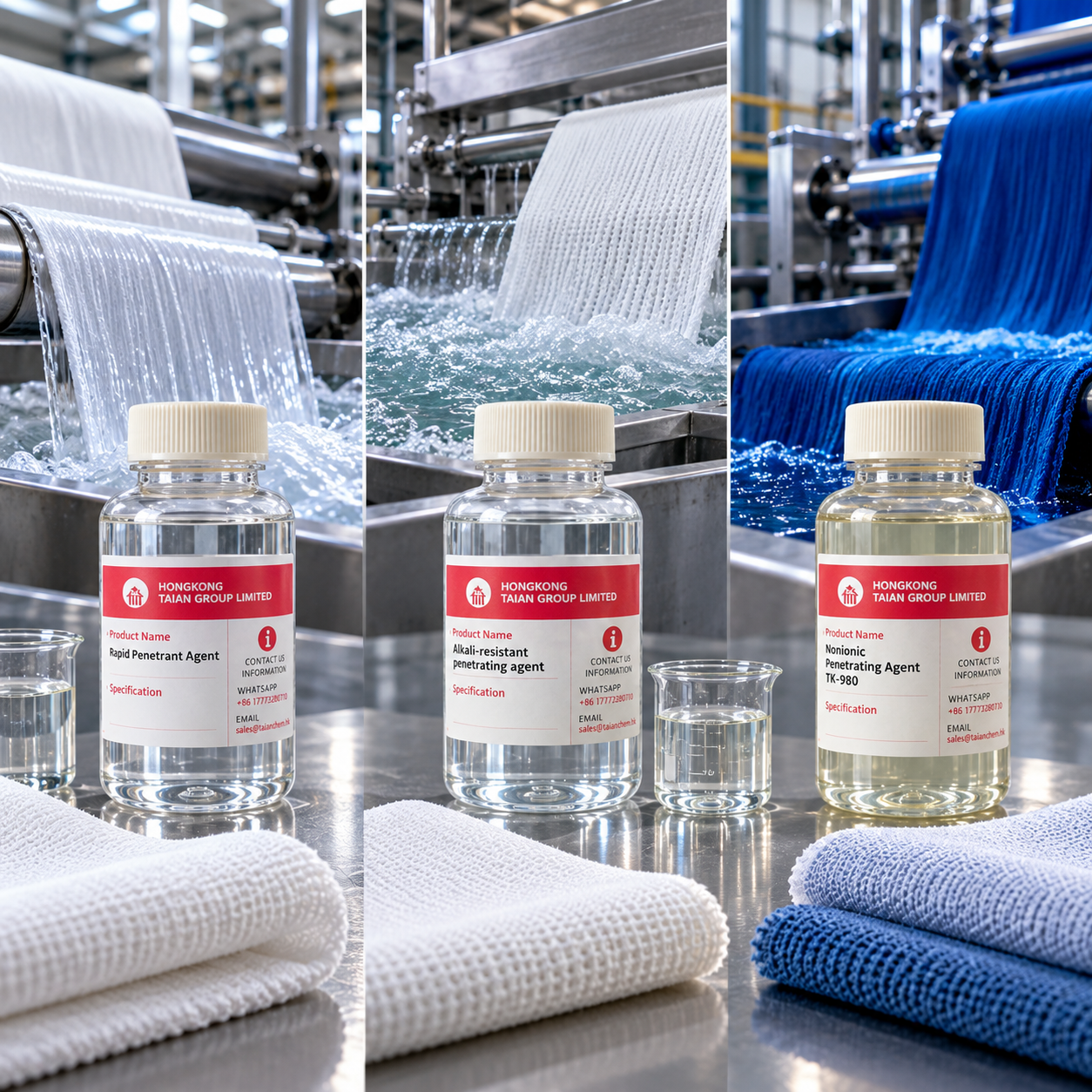
Typical Dosage Reference
All dosage values are starting references rather than universal production specifications. Actual dosage should be confirmed through laboratory and machine trials under the mill’s own fabric, water and bath conditions.
| Product | Direct‑use dosage | Formulation addition | Key operating limits |
| DOSS Rapid Penetrating Agent | Pretreatment padding: 0.5–2 g/L; Dyeing: 0.2–1% owf; Printing paste: 0.1–0.5% | — | Operational pH 5–8; not applicable for mercerizing |
| Alkali-Resistant Penetrating Agent | 5–10 g/L | 5–50% o.w.f | Stable in high‑caustic and peroxide‑rich process environments |
| Mercerizing Penetrant | Mercerizing bath: 5–10 g/L; Pretreatment / dyeing: 0.2–1% owf | — | Engineered for 200–300 g/L NaOH mercerizing bath systems |
| Penetrating Agent 1073 | 1–5 g/L; Mercerizing: 2–3 g/L; Denim dyeing: 1.5–2 g/L; Desizing: 1.5–2.5 g/L; Metal cleaning: 3–5 g/L | — | ZDHC MRSL compliant; retains ≥95% activity after 30 minutes at 280 g/L NaOH; NPE/OPE free |
| Refined Low-Foam Penetrating Agent | Textile scouring & bleaching: 5–10 g/L; Dyeing: 1–3 g/L; Leather soaking/degreasing: 1–3 g/L; Tanning: 0.5–2 g/L; Metal cleaning/rust removal: 2–5 g/L; Phosphating: 1–3 g/L | — | Suitable for standard alkaline high‑temperature pretreatment processes |
| Nonionic Penetrating Agent TK-980 | 1–5 g/L | 5–50% o.w.f | Compatibility jar testing required for baths containing cationic auxiliaries |
High-Alkali Warning: Common Processing Mistakes
Deployment of DOSS penetrants in mercerizing or high-caustic baths: DOSS ester bonds hydrolyse under high caustic conditions. This deactivates surfactant performance and can contribute to surface‑only mercerization, inconsistent fabric luster, and uneven dye absorption. Dedicated mercerizing penetrants or Penetrating Agent 1073 are recommended for high‑caustic mercerizing lines.
Co-application of anionic penetrants with concentrated cationic auxiliaries: Oppositely charged surfactants react in concentrated process solutions, which may result in flocculation, sediment formation, and reduced bath stability. Jar mixing validation should be completed before combined usage in production.
Reliance on neutral-water laboratory test results for production forecasting: Controlled neutral lab conditions do not replicate on-site bath variables including dissolved salts, high caustic levels, dyestuff content, and water hardness. Lab performance data may not reflect actual processing outcomes under factory conditions.
Excessive penetrant dosage application: Penetration performance plateaus once fabric fiber surfaces are fully saturated. Overdosing may result in increased chemical costs, elevated foam generation, and auxiliary compatibility issues without improving penetration efficiency.
3-Step Mill Verification Before Switching Penetrants
Three standardized on-site tests validate penetrant performance for specific production lines without specialized laboratory equipment. All assessments rely on controlled, comparative evaluation rather than universal pass/fail thresholds.
Alkali Crash Stability Test: Prepare a 280 g/L NaOH solution and incorporate the test penetrant. Allow the solution to stand for 10 minutes. Cloudiness, layer separation, or floating oil indicates insufficient alkali stability for high‑caustic processing environments.
Fabric Sinking or Wetting Comparison: Substitute identical fabric swatches, bath concentration, chemistry, and temperature conditions to conduct comparative wetting and sinking tests between the incumbent and trial penetrant. Acceptable wetting speed is determined by matching performance to the mill’s existing line speed and process contact time requirements, rather than a fixed universal time standard.
Yarn Cross-Section Inspection: Examine cross-sections of processed yarn under magnification. A lighter yarn core may indicate insufficient penetration and should be investigated together with other process variables, including bath chemistry, line speed, and dosage, to identify root causes.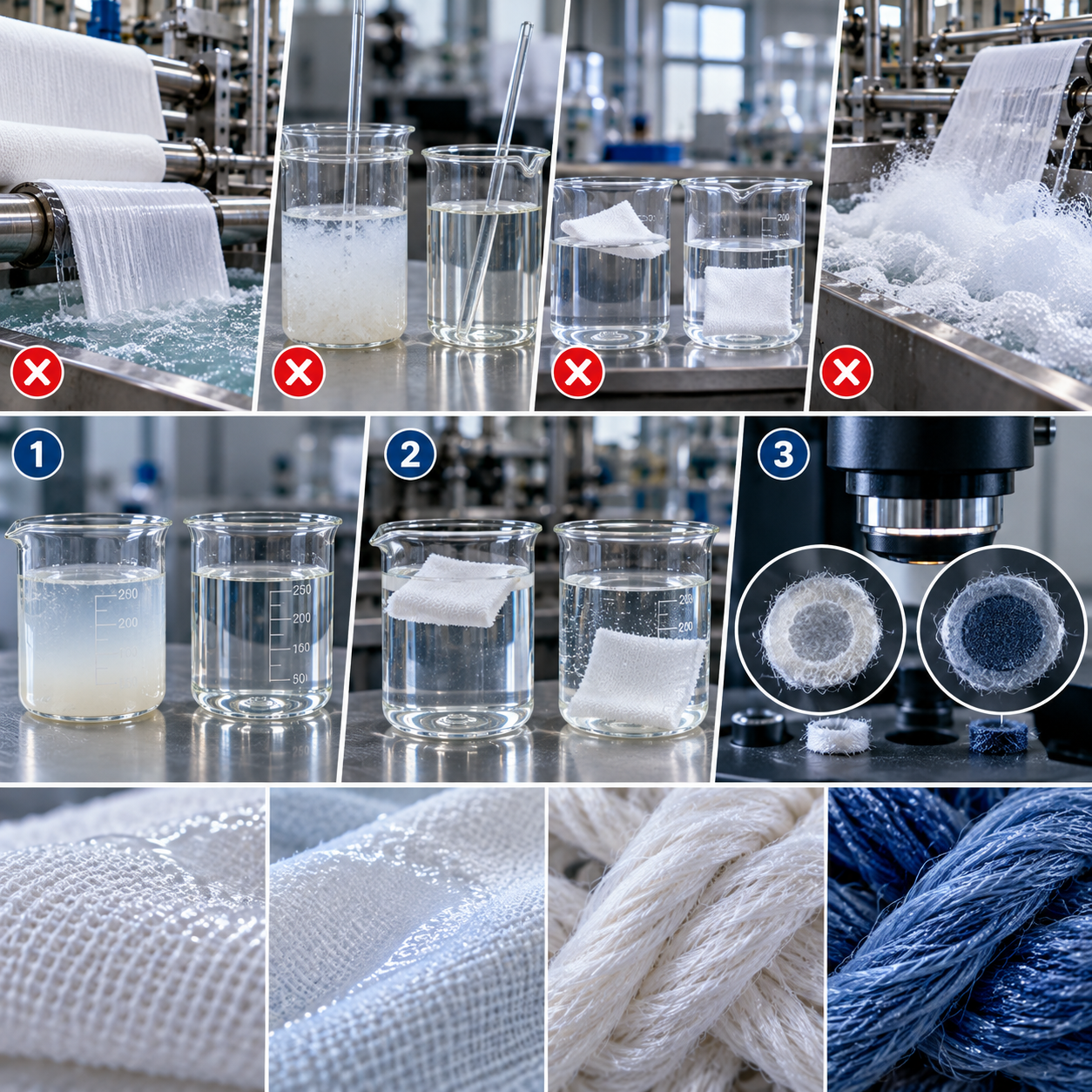
Troubleshooting Common Field Failures
| Problem | What to Check First | What to Avoid | Recommended Action |
| Insufficient penetration after penetrant dosage increases | Bath pH, water hardness, greige fabric condition, coexisting auxiliaries | Blind incremental dosage increases | Run gradient dosage lab simulations; audit and adjust unbalanced bath chemistry variables |
| Unexpected excessive foam generation | Mechanical agitation intensity, auxiliary composition, penetrant overdosing | Additional penetrant addition to resolve processing issues | Reduce penetrant dosage; test compatible defoamer solutions; adjust tank circulation rates if applicable |
| Cloudy bath or floc/sediment formation | Potential ionic incompatibility with cationic auxiliaries | Continued full-scale production with unstable liquor | Pause chemical feeding; conduct isolated jar tests to identify conflicting auxiliary components |
| Product thickening after low-temperature warehouse storage | Low-temperature physical viscosity alteration | Disposal of viable product misclassified as spoiled | Warm material to 15–35°C and homogenize thoroughly; verify penetration performance before machine application |
| Performance degradation under high-alkali conditions | Actual in-bath NaOH concentration and penetrant grade type | Use of DOSS-grade penetrants in high-caustic systems | Replace with dedicated high-alkali-resistant penetrant grades matched to process caustic levels |
Frequently Asked Questions
Q: How do I choose the right textile penetrating agent?
A: Select based on core process parameters including bath pH, caustic concentration, fabric contact time, foam limitations, auxiliary compatibility, and compliance requirements. Cross-reference process conditions with the selection guide and complete on-site mill verification before full production adoption.
Q: Can DOSS-based penetrants be used for mercerizing?
A: No. DOSS molecular ester structures hydrolyse in strong caustic mercerizing baths, causing rapid performance degradation. Mercerizing processes require specialized high-alkali-stable penetrant grades.
Q: What starting dosage should I use for penetrant trials?
A: Use the published baseline dosage ranges for initial laboratory and machine testing. Optimize concentrations through gradient trials to match individual mill water quality, fabric construction, and process conditions.
Q: Can anionic penetrants be used with cationic auxiliaries?
A: Direct co-application is not recommended. Oppositely charged ionic surfactants react to form insoluble sediment and unstable bath conditions. Jar compatibility testing is mandatory for all mixed auxiliary formulations.
Need Help Selecting the Right Penetrating Agent?
Penetrant performance cannot be fully determined from datasheet specifications alone. On-site processing results depend on unique mill bath chemistry, fabric specifications, and production equipment configurations.
Share your operational details including fabric type, bath pH, NaOH concentration, operating temperature, equipment type, foam requirements, and current chemical dosage. Tai An Chemical’s textile technical team can provide customized process recommendations, complete TDS and SDS documentation, and product samples for laboratory and machine evaluation trials.
Related Posts
-
Exploring Diverse Types of Textile Auxiliaries for Enhanced Fabric Performance
-

Navigating the Complexities of textile auxiliary chemicals manufacturer and Application
-

Optimizing Yarn Sizing for Quality Sulphur Black BR 220 Dyeing
-
Understanding Oxygen Reducing Agent Applications and Future Advancements