Why penetration problems keep showing up in the dyehouse
Uneven wetting is easy to overlook when troubleshooting a dyeing problem. When the processing liquor does not penetrate the yarn or fabric evenly, the result may appear as pale areas, uneven treatment or inconsistent dyeing—even when the dye recipe itself looks normal.
We see wetting problems in desizing, bleaching and dyeing, particularly when contact time is short. A wetting agent may perform well in a static lab test but behave differently on a padding or jet-dyeing line, where fresh fabric surfaces are continuously entering the bath. This document summarizes practical application experience of DOSS-grade Rapid Penetrating Agent for common textile wet processing scenarios.
What is DOSS Rapid Penetrating Agent?
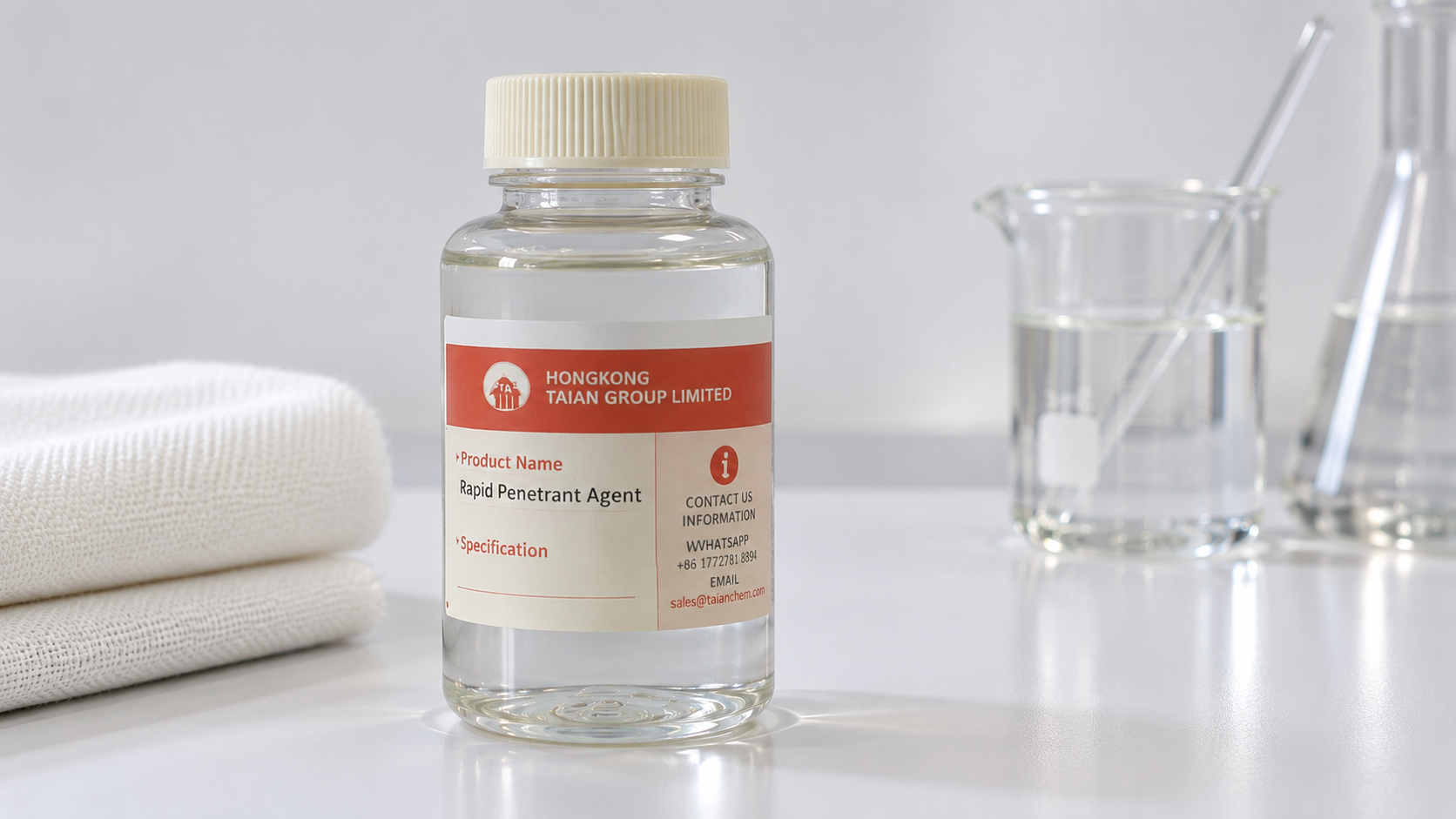
Our Rapid Penetrating Agent is an anionic penetrating agent based on dioctyl sodium sulfosuccinate (DOSS), comparable to Aerosol OT
Chemical name: Dioctyl sodium sulfosuccinate
CAS: 577-11-7
Molecular formula: C20H37NaO7S
Ionic type: Anionic
Active content: ≥50%
Appearance: Pale-yellow transparent liquid
Solubility: Readily soluble in cold water; diluted baths form a milky dispersion
The molecule features one hydrophilic sulfosuccinate head and two branched dioctyl ester tails. This molecular structure gives DOSS strong interfacial activity and makes it suitable for applications where rapid wetting is required.
How it works
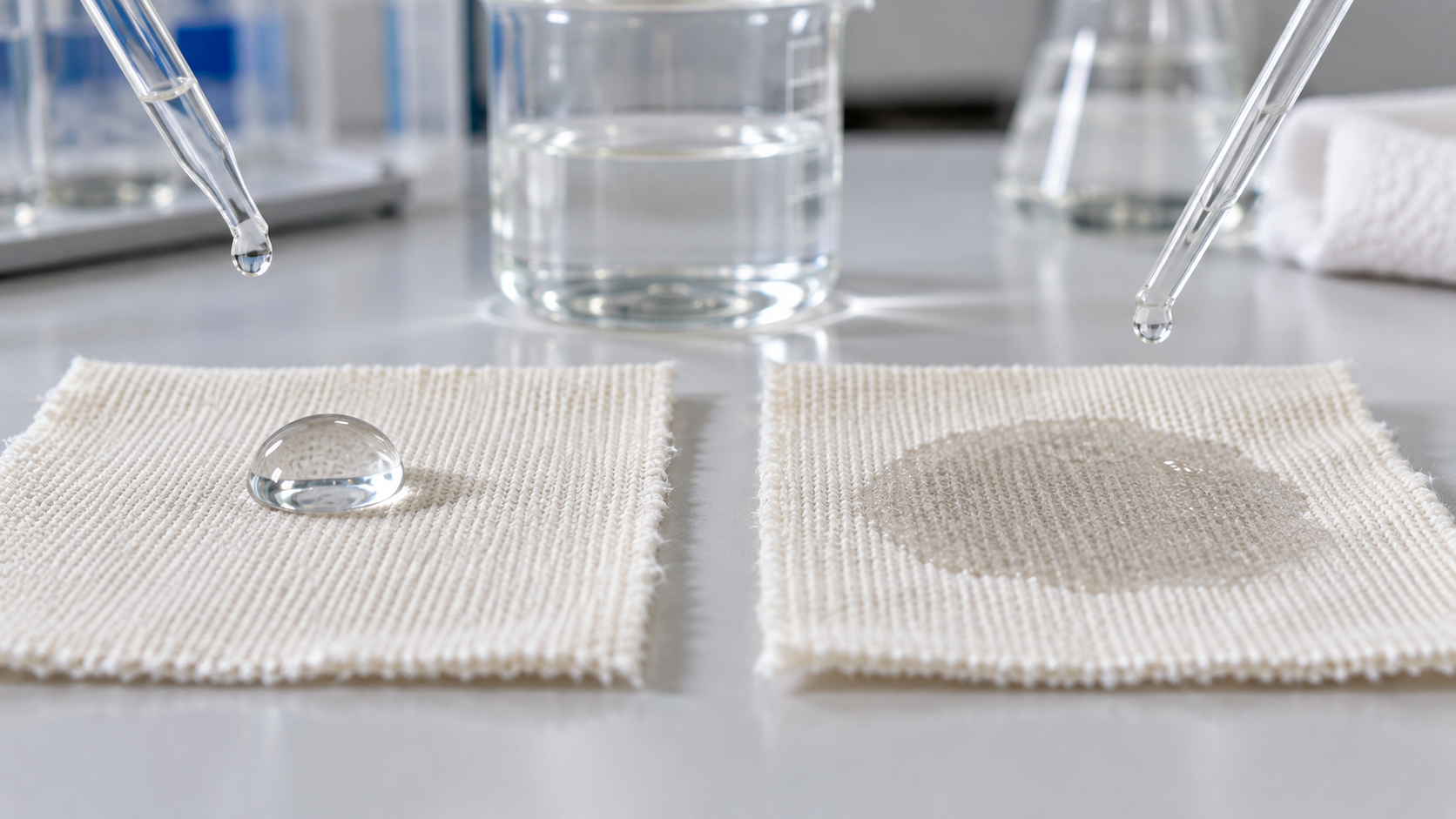
Untreated water exhibits high surface tension, causing it to bead up on semi-hydrophobic grey cotton, linen and viscose fabrics rather than spreading evenly into inter-fiber capillary voids. This limits uniform contact between processing liquor and textile substrates.
As DOSS molecules adsorb at air-liquid and liquid-fiber interfaces, they reduce the surface tension of the bath and improve spreading over the fiber surface. This allows the liquor to enter yarn and fabric capillaries more readily.
This capillary infiltration mechanism supports more uniform delivery of desizing agents, bleaching auxiliaries and dyestuffs across the fabric. The product is well suited for continuous production lines with limited contact time between fabric and processing liquor.
Dynamic Surface Tension and CMC: Why More Penetrant Is Not Always Better
Static surface tension alone cannot reflect real on-site mill performance. Many common surfactants achieve low static surface tension in lab tests but fail to adapt to rapidly updated fabric surfaces under high-speed production conditions.
DOSS is known for rapid interfacial adsorption, which makes DOSS-based penetrants useful in processes where the liquor has limited time to spread and penetrate the textile substrate.
All surfactants reach a critical micelle concentration (CMC) in aqueous solution, beyond which interfacial adsorption plateaus and surface tension reduction slows significantly. In practical textile processing, the CMC should not be treated as a fixed dosage limit. Production baths contain salts, alkalis, dyestuffs and other auxiliaries that alter surfactant behavior, while fabric density, yarn twist and machine speed also influence actual wetting demand.
Mill observation: A common on-site practice is to increase penetrant dosage blindly to resolve poor wetting. Minor dosage adjustments may improve results when the initial concentration is insufficient, but once adequate wetting has been achieved, further dosage increases may provide limited additional benefit. Excessive dosing may increase chemical costs and can also raise the risk of foam or compatibility problems.
The goal is not to use more penetrant. It is to use enough penetrant to achieve stable wetting under actual production conditions.
Technical specifications
| Parameter | Value |
| Appearance | Pale-yellow transparent liquid |
| Odor | Odorless |
| Active content | ≥50% |
| pH (1% aqueous solution) | 6.5–7.5 |
| Ionic type | Anionic |
| Solubility | Readily soluble in cold water |
| Chemical name | Dioctyl sodium sulfosuccinate (DOSS) |
| CAS number | 577-11-7 |
| Molecular formula | C20H37NaO7S |
Lab data obtained under controlled conditions. Field results shift with water hardness, co-existing auxiliaries and bath temperature.
Critical limitation: alkaline stability and mercerization
DOSS molecular structure contains ester linkages that are susceptible to hydrolytic degradation under strongly alkaline conditions.
DOSS contains ester linkages and therefore has limited stability under strongly alkaline conditions. It is not recommended for mercerization or other high-caustic processes. Short-term or sustained exposure to high-alkali environments can impair surfactant activity and reduce wetting and penetrating performance.
If your production process runs at a persistent high pH or high caustic concentration, please select alkali-resistant penetrant grades.
Performance advantages in textile processing
This DOSS penetrant is formulated to meet the practical wetting and penetration demands of textile wet processing, with balanced performance for continuous and high-speed production lines.
Rapid wetting capacity: The product is designed for processes where short wetting time is required. Actual penetration speed depends on dosage, fabric construction, bath temperature and test conditions. It adapts well to high-throughput continuous equipment that allows minimal liquor-fabric contact time.
Low-foam characteristics: Foam generation is relatively low under normal working conditions, but it should still be checked under the actual mechanical agitation of the machine. Extreme agitation or incompatible auxiliary combinations may cause foam accumulation, so pre-production lab trials are necessary for process validation.
Reduction of wetting-related defects: Improved liquor penetration can help reduce wetting-related uneven treatment and pale spot issues on cotton and viscose grey fabrics. Other process factors and material defects should be evaluated separately during troubleshooting.
Moderate emulsifying performance: It assists in dispersing natural wax and pectin impurities during fabric pretreatment, helping stabilize consistent water absorption and supporting uniform downstream processing.
Application guidelines
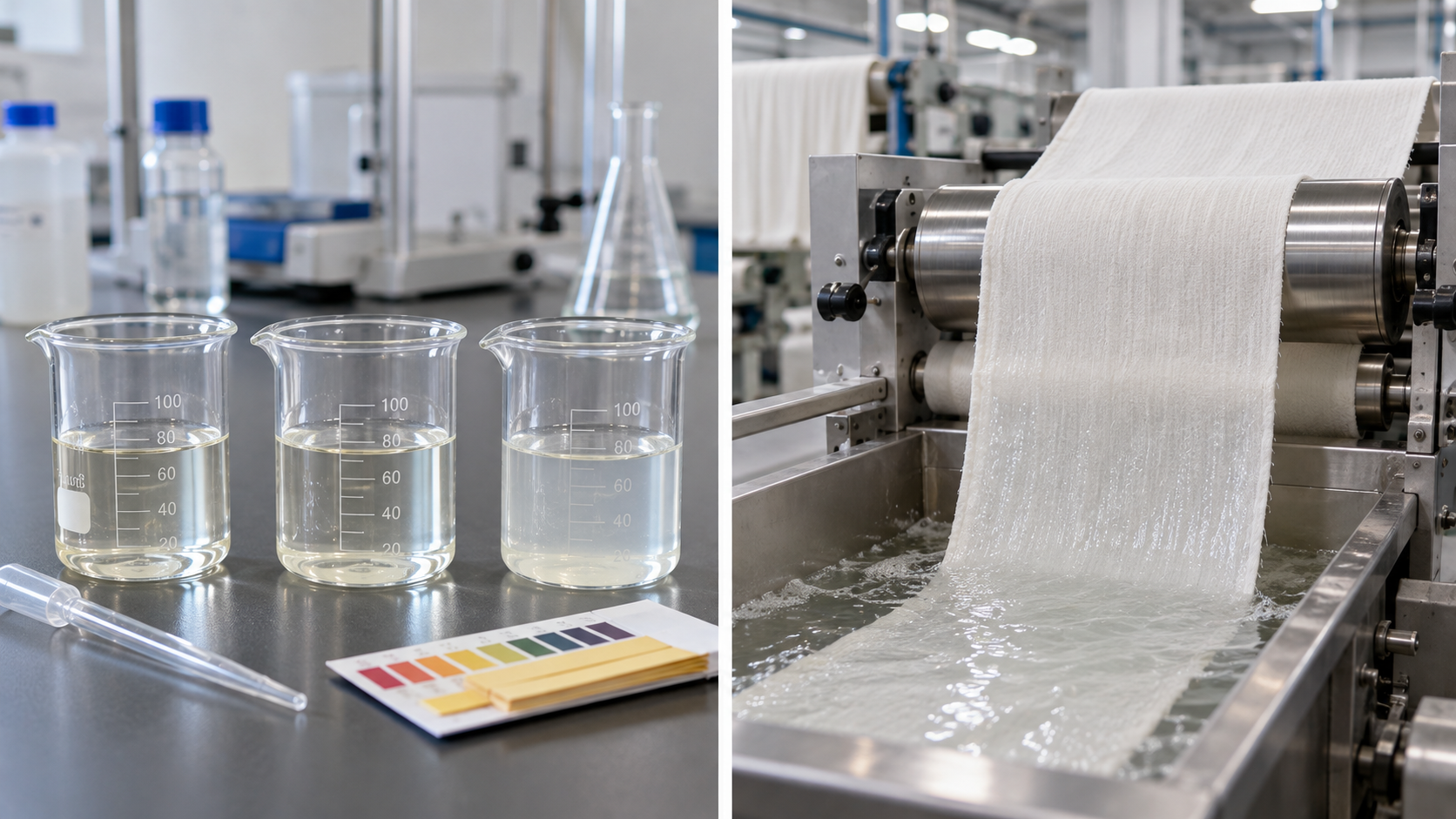
The general applicable dosage range is 0.1%–2%. All production environments require gradient small-batch trials to confirm the optimal working concentration. Direct copying of reference parameters for mass production is not recommended.
| Application | Recommended starting dosage |
| Textile pretreatment: desizing / scouring / bleaching (padding) | 0.5–2.0 g/L |
| Exhaust and continuous dyeing | 0.2–1.0% owf |
| Printing paste penetration aid | 0.1–0.5% |
Bath preparation
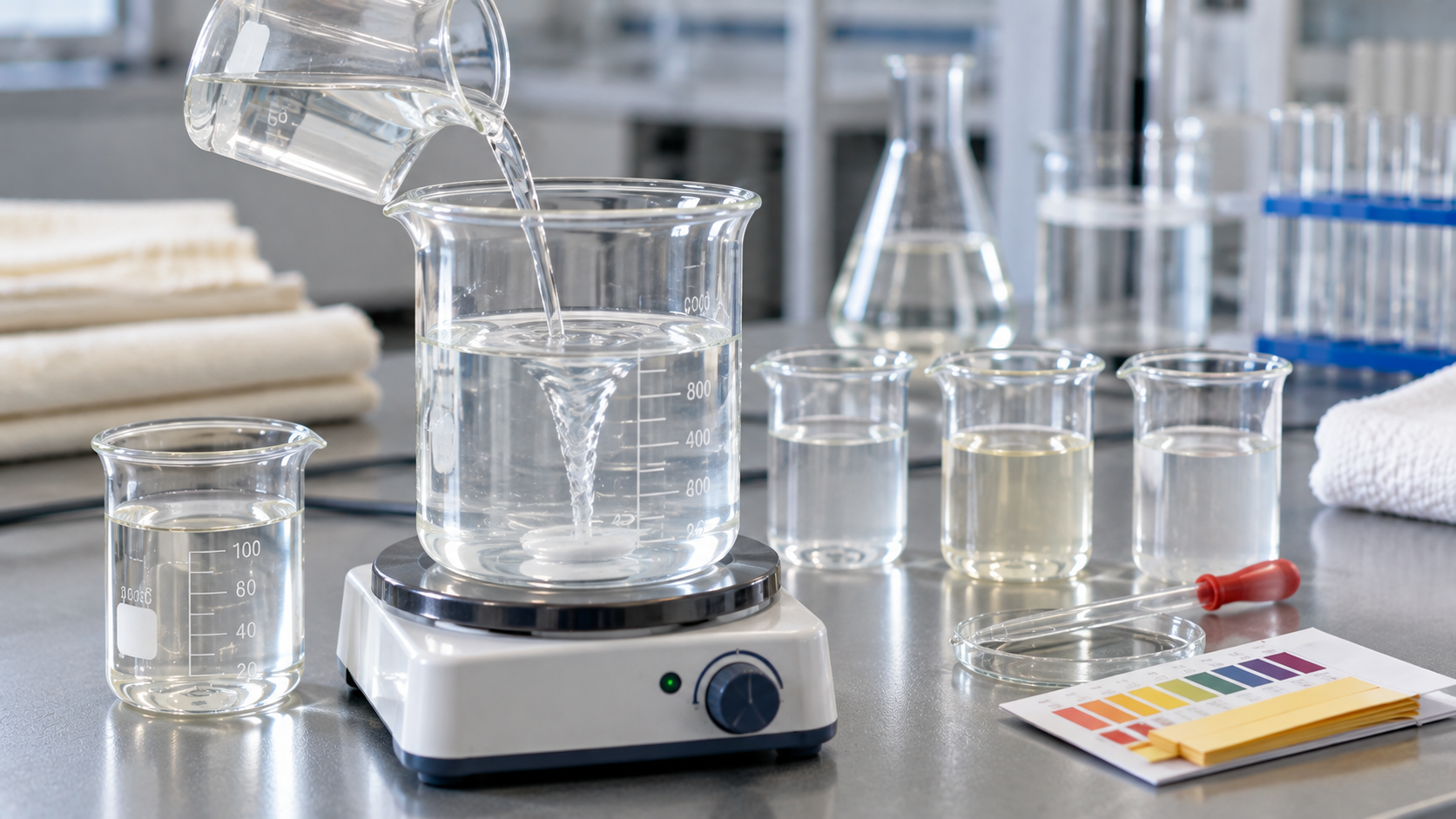
This penetrant dissolves easily in cold water. Pre-dilute the product with a portion of process water before adding it to the main tank. Direct pouring of concentrated neat product will cause local high-concentration accumulation, resulting in irregular fabric wetting. Add slowly under normal tank agitation.
Process boundaries
pH: Optimal performance at pH 5–8. Avoid use in high-caustic bath environments.
Temperature: Works stably at ambient temperature. Moderate heating of the padding bath to 40–60°C reduces liquid viscosity and can accelerate liquor infiltration.
Water hardness: Tolerates moderate hard water. Conduct compatibility tests before mass production if the factory source water is extremely hard.
Auxiliary compatibility: Compatible with most anionic and non-ionic textile auxiliaries. Never mix neat product with high-concentration cationic surfactants directly, as charge reaction will form insoluble precipitation. A jar compatibility test is mandatory if cationic additives need to be used in the same bath.
Surfactant comparison
| Performance item | Rapid Penetrating Agent (DOSS-50) | Alcohol-ethoxylate penetrant (JFC-type) | Alkaline-stable penetrant |
| Chemistry | Dioctyl sodium sulfosuccinate (anionic) | Fatty alcohol ethoxylate (non-ionic) | Modified phosphate / sulfonate blend |
| Wetting speed | Fast for short-contact processes | Moderate | Moderate |
| Foam tendency
Low–moderate under typical processing conditions Variable, formulation-dependent Variable |
Low–moderate | Medium–high | Variable |
| Stability under strong alkali | Limited stability, not for mercerization | Stable | Stable |
| Mercerization suitability | Not recommended | Conditionally suitable | Recommended |
Note: Performance varies by formulation, active content and bath conditions. The comparison above is intended as a general selection reference rather than a product performance ranking.
Selection decision guide
| Process condition | Recommend DOSS-based Rapid Penetrating Agent? | Notes |
| Neutral / mild acid-alkali pretreatment (pH 5–8) | Yes | Best-fit scenario |
| Jet dyeing / high-speed padding, minimal foam desired | Yes | Monitor foam under real agitation conditions |
| Mercerization / high-caustic bath | No | Choose an alkaline-stable wetting agent |
| Co-addition with cationic softener / fixative | Conditional | Run jar compatibility test first |
| Heavy hard-water incoming water | Conditional | Validate wetting performance onsite |
| Substrate: cotton, linen, viscose blends | Yes | Suitable for grey fabric pretreatment |
Lab and mill trial reference
Suggested lab evaluation items:
Canvas sedimentation penetration test across gradient dosages to identify optimal concentration
Ross-Miles foam height testing at actual working bath temperature
Comparative evaluation of dyeing levelness and wetting defects between treated and untreated fabric
Bath stability testing matched to local mill water hardness conditions
A practical mill pre-trial plan:
In padding applications, start with a moderate baseline dosage under standard conditions (pH 6.5–7.5, ambient temperature)
Run parallel tests with a blank control group and two different penetrant dosage levels using identical fabric and bath parameters
Record penetration status, foam generation, dye levelness and fabric hand-feel for each group
For mills using hard process water, include a hard-water compatibility test before scaling up full production
If increasing the dosage no longer improves wetting performance, stop over-dosing and check bath condition variables first
Troubleshooting common field failures
Penetration remains slow after dosage increase
If penetration remains slow after increasing the dosage, multiple factors should be evaluated together, including bath pH, water hardness, fabric greige condition, and compatibility with other auxiliaries, before adding more product. Plateaued wetting performance may also indicate that the effective interfacial adsorption limit has been reached under current bath conditions.
Unexpected excessive foam
Though formulated for low foam output, extreme mechanical agitation or incompatible combinations with other surfactants may lead to foam accumulation. Avoid blind dosage increases; adjust bath formulation, add a small amount of defoamer or reduce tank circulation speed to resolve foam issues.
Precipitate or flocculate in the bath
One possible cause is incompatibility with cationic auxiliaries. Stop mixed chemical feeding immediately and conduct independent jar tests to identify conflicting components and adjust the formula accordingly.
Performance drops after cold storage
Low-temperature thickening is a reversible physical change rather than chemical deterioration. Warm the product to 15–35°C and stir thoroughly to restore fluidity. Verify penetration performance again before production application.
Other industrial applications
DOSS chemistry is also used in other industrial wetting and dispersing applications. For this product, however, our recommended applications are textile pretreatment and dyeing, and suitability should be confirmed by trial before use in other processes.
Safety, storage and handling
Concentrated product may cause moderate eye irritation. Aerosol mist generated by high-pressure spraying can irritate the respiratory tract.
Operational best practice:
Wear chemical splash goggles and resistant gloves when handling neat product
Maintain adequate ventilation and minimize mist inhalation
In case of eye contact: flush continuously with clean water for at least 15 minutes. Seek medical support if irritation persists
Read the complete SDS before handling, storage and waste disposal
This product is classified as a general industrial chemical and transported as non-hazardous goods under conventional conditions.
Storage requirements: Keep drums tightly sealed and stored in a ventilated warehouse at room temperature. The nominal shelf life is 12 months from the manufacturing date.
For expired products, test core indicators including active content, pH value and penetration performance before reuse.

Packaging specifications:
- 200 g sample container for lab evaluation
- 125 kg plastic drum
- 1000 kg IBC tote tank
FAQ
Q: What makes DOSS-based Rapid Penetrating Agent different from conventional alcohol-ethoxylate wetting agents?
A: Its unique diester molecular structure delivers fast interfacial migration and low dynamic surface tension, suited for high-speed short-contact textile processes. It generates moderate foam levels, with the main limitation of poor high-alkali stability.
Q: Can it fully replace the scouring step for cotton grey fabric?
A: Partial process optimization is possible under specific conditions, but full scouring replacement is not recommended. It improves liquor penetration but cannot completely remove heavy natural impurities on grey fabrics. Pre-production trials are required for any process adjustment.
Q: Can I use this penetrant in a mercerization bath?
A: No. The ester linkages in DOSS are prone to hydrolysis under strong alkaline conditions, leading to reduced or lost penetration performance. Alkali-stable penetrants are required for mercerization processes.
Q: Why does penetration not improve after I increase dosing?
A: Wetting performance plateaus once sufficient surfactant occupies interfacial positions. Further dosage increases provide limited benefit. Poor penetration may also stem from inappropriate bath pH, high water hardness or auxiliary incompatibility.
Q: The product turns thick in cold winter storage. Is it spoiled?
A: No. Cold thickening is a reversible physical change. Warm and stir the product to restore its original state, then test performance before use.
Q: Can I mix it with a cationic dye-fixing agent in the same bath?
A: Direct mixing is not recommended. Anionic-cationic charge incompatibility may cause flocculation. Always conduct jar compatibility tests before combined use.
Conclusion
DOSS-based penetrating agents are useful where fast and consistent wetting is required in textile pretreatment and dyeing. In practice, dosage is only one part of the equation. Bath composition, alkalinity, water quality, fabric construction and machine conditions all affect the final result.
For a new recipe, we recommend starting with a small lab comparison and then confirming the dosage on the production machine. If increasing the dosage stops improving wetting, check the bath conditions before adding more product.