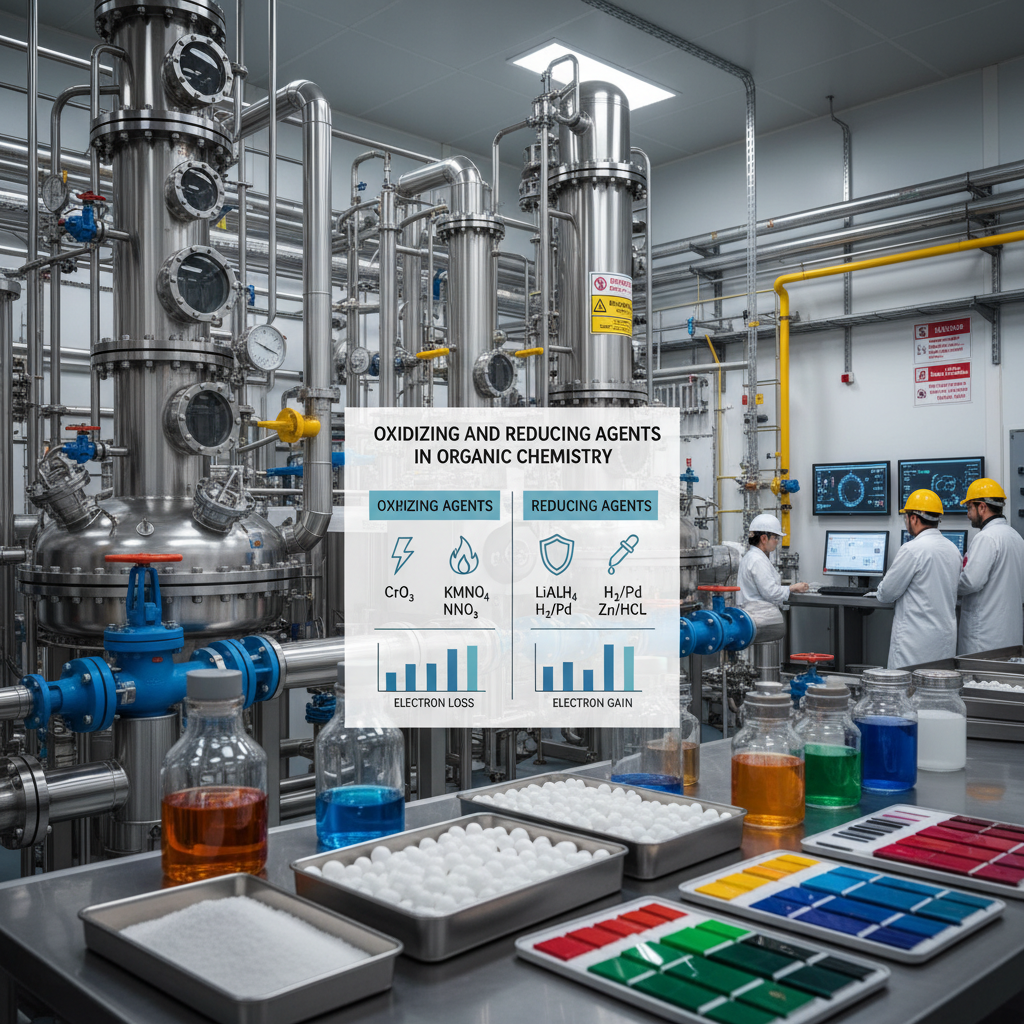
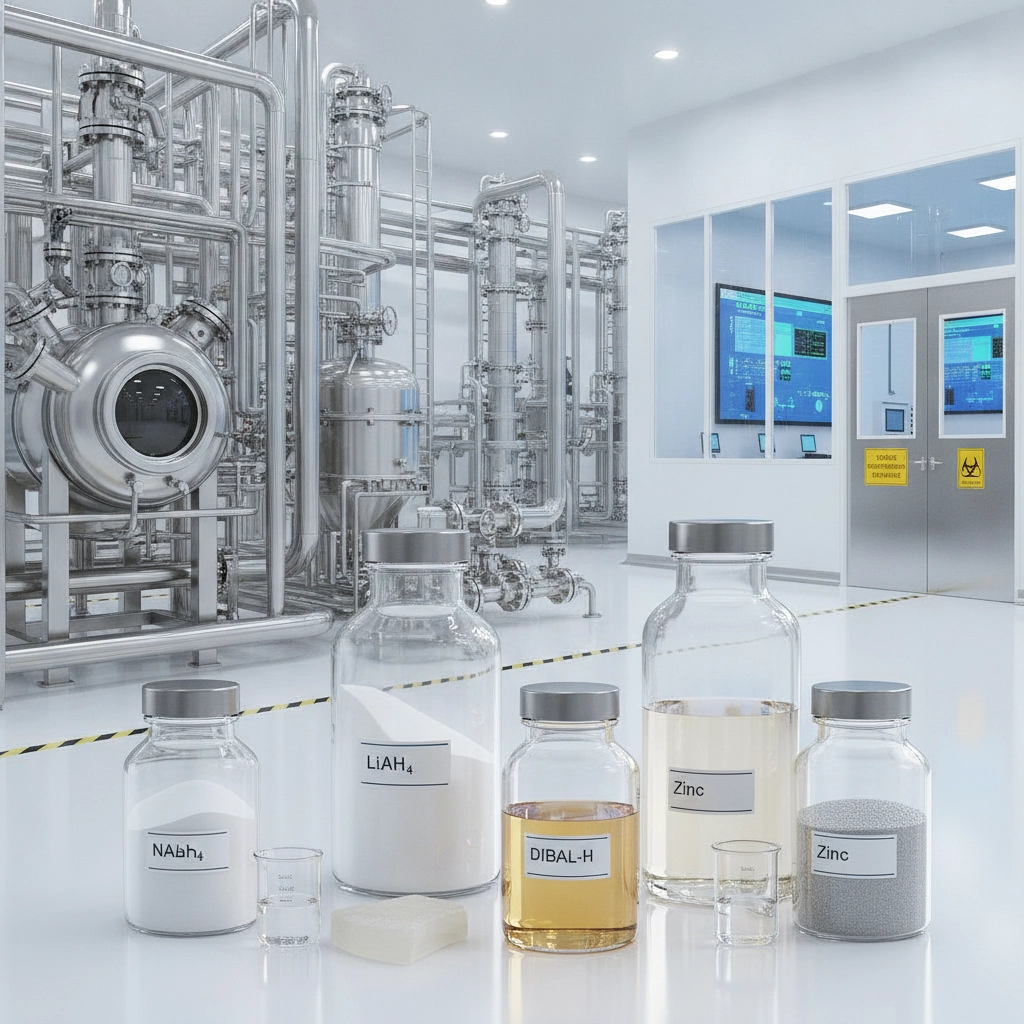
Oxidizing and reducing agents are the workhorses of organic chemistry, fundamental to everything from synthesizing life-saving pharmaceuticals to creating the plastics that shape our modern world. It's not just about lab coats and beakers; understanding these agents impacts industries globally, influencing production costs, reaction efficiency, and even environmental sustainability. In a world increasingly focused on green chemistry and efficient manufacturing processes, mastery of oxidizing and reducing principles is no longer a niche skill—it’s a necessity. These concepts underpin countless industrial processes and are critical for innovation in fields ranging from materials science to energy storage.
The sheer scale of applications is staggering. Consider the petrochemical industry, where oxidation and reduction reactions are central to refining crude oil and producing essential fuels and chemicals. Or look at the pharmaceutical sector, where precise control of redox reactions is crucial for synthesizing complex drug molecules. Even in environmental remediation, oxidizing and reducing agents play a vital role in breaking down pollutants and cleaning up contaminated sites. According to the UN Environment Programme, sustainable chemical management, reliant on understanding these principles, is a key component of achieving the Sustainable Development Goals.
Ultimately, a solid grasp of oxidizing and reducing agents isn’t just an academic exercise. It’s about building a more efficient, sustainable, and innovative future. The ability to predict and control these reactions allows us to design better processes, create new materials, and address some of the world’s most pressing challenges. It’s a foundational knowledge base for anyone involved in chemical engineering, materials science, or related fields.
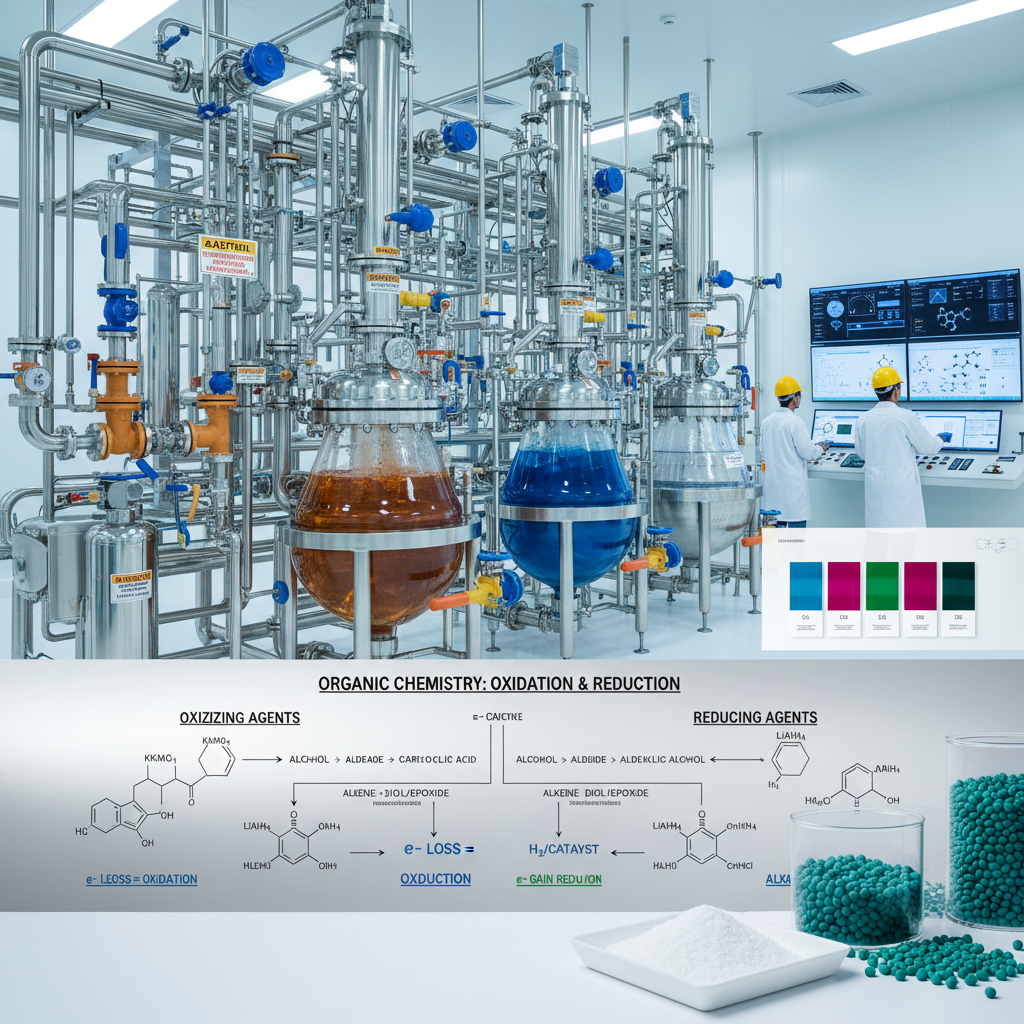
The Core Principles of oxidizing and reducing agents in organic chemistry
At their heart, oxidizing and reducing agents are all about electron transfer. An oxidizing agent accepts electrons, while a reducing agent donates them. It’s a fundamental dance of electrons that drives countless chemical reactions. You can’t have one without the other; oxidation always occurs alongside reduction – it’s a coupled process. Understanding this principle is like knowing the difference between pushing and pulling – both are necessary for movement.
What makes these agents so versatile is the vast array of substances that can act as either oxidizers or reducers. From common household bleach (an oxidizer) to metallic sodium (a reducer), the possibilities are extensive. The strength of an agent is measured by its reduction potential – essentially, how readily it accepts electrons. Higher reduction potential means a stronger oxidizer, and vice versa for reducers.
Global Impact and Industrial Relevance
The global chemical industry, valued at over $5 trillion USD, relies heavily on mastering oxidizing and reducing agents. Consider the production of ammonia, a critical component of fertilizers—the Haber-Bosch process, a cornerstone of modern agriculture, fundamentally hinges on redox chemistry. Similarly, the manufacturing of polymers, plastics, and synthetic fibers wouldn’t be possible without precise control over oxidation and reduction reactions. According to the World Bank, increasing agricultural efficiency – aided by these chemical processes – is crucial for addressing global food security.
Beyond large-scale industries, these agents are crucial in specialized applications like battery technology. Lithium-ion batteries, powering everything from smartphones to electric vehicles, function based on redox reactions. Improvements in battery performance, driven by advances in redox chemistry, are essential for the widespread adoption of renewable energy sources. The International Organization for Standardization (ISO) sets rigorous standards for battery safety and performance, reflecting the criticality of understanding these fundamental principles.
Even in emerging fields like carbon capture and storage, redox reactions are being explored as potential solutions. Utilizing reducing agents to convert carbon dioxide into valuable products could offer a pathway to mitigating climate change. This highlights the continuous relevance and expanding applications of these foundational concepts.
Defining Oxidizing and Reducing Agents
Simply put, an oxidizing agent is a substance that causes another substance to be oxidized – meaning it gains electrons. Think of it like taking something from another molecule. Common examples include oxygen, chlorine, and potassium permanganate. They’re frequently used for disinfection, bleaching, and in various industrial processes. Understanding their reactivity is paramount for safe handling and effective application.
Conversely, a reducing agent causes another substance to be reduced – meaning it loses electrons. These agents give electrons to other molecules. Common examples include hydrogen, metals like sodium and zinc, and various organic compounds. They’re used in metal refining, organic synthesis, and as antioxidants.
The connection to modern industry and humanitarian needs is profound. Consider the development of new antibiotics, often involving complex redox reactions. Or the purification of drinking water, where oxidation processes are used to eliminate harmful contaminants. Even in disaster relief, understanding these agents is vital for sterilizing equipment and providing safe water sources. oxidizing and reducing agents in organic chemistry play a silent but crucial role in safeguarding public health.
Key Factors Influencing Redox Reactions
Several factors can significantly influence the rate and outcome of redox reactions. First, the strength of the oxidizing and reducing agents is paramount, as determined by their reduction potentials. Stronger agents will drive reactions more forcefully. Second, temperature plays a role – generally, higher temperatures increase reaction rates.
The concentration of reactants is also critical; higher concentrations typically lead to faster reactions. The presence of catalysts can dramatically accelerate the process without being consumed themselves. Finally, the pH of the solution can influence the redox potential and affect reaction pathways. Controlling these factors allows chemists and engineers to fine-tune reactions for optimal results.
Redox Reaction Influencing Factors
Real-World Applications Across Industries
In the pharmaceutical industry, oxidizing and reducing agents are indispensable for synthesizing complex drug molecules. Many drugs require multiple redox steps to achieve the desired structure and biological activity. For instance, the production of corticosteroids relies heavily on controlled oxidation reactions.
The food industry utilizes these agents for preservation, flavor enhancement, and bleaching. Ascorbic acid (Vitamin C) is a common reducing agent added to foods to prevent oxidation and maintain freshness. The pulp and paper industry uses chlorine-based oxidizers for bleaching wood pulp, although increasingly sustainable alternatives are being explored.
Advantages and Long-Term Value Proposition
Mastering oxidizing and reducing agents leads to significant cost savings through optimized reaction efficiency and reduced waste. Sustainable practices, like employing greener oxidizers and reducers, minimize environmental impact and enhance corporate social responsibility. Increased process reliability translates to reduced downtime and improved product quality.
From a societal standpoint, advancements in redox chemistry contribute to innovations in healthcare, energy storage, and environmental remediation, ultimately improving quality of life. The development of more efficient batteries, for example, supports the transition to renewable energy sources, promoting a more sustainable future.
Future Trends and Innovation in Redox Chemistry
The future of redox chemistry lies in developing more selective, efficient, and environmentally friendly processes. Research is focused on utilizing biocatalysts – enzymes – to perform redox reactions under mild conditions, minimizing the need for harsh chemicals. Electrocatalysis, employing electricity to drive redox reactions, is gaining traction as a sustainable alternative.
Digital transformation and automation are also playing a key role. Machine learning algorithms can be used to predict reaction outcomes and optimize reaction conditions, leading to faster and more efficient process development. The integration of these technologies promises to revolutionize the field, paving the way for cleaner, more sustainable, and more efficient chemical processes.
Furthermore, the exploration of novel redox-active materials, such as metal-organic frameworks (MOFs) and nanomaterials, is opening up new possibilities for energy storage, catalysis, and sensing applications.
Summary of Redox Chemistry Challenges & Solutions
| Challenge |
Impact Area |
Current Solutions |
Emerging Approaches |
| Selectivity in Redox Reactions |
Product Purity & Yield |
Optimizing Reaction Conditions |
Biocatalysis & Enzyme Engineering |
| Environmental Impact of Oxidizers |
Sustainability & Waste Management |
Switching to 'Greener' Oxidants |
Electrocatalysis & Photocatalysis |
| Reaction Rate Limitations |
Process Efficiency & Throughput |
Increasing Temperature & Concentration |
Nanocatalysts & Microreactors |
| Safety Concerns with Strong Agents |
Workplace Safety & Handling |
Strict Safety Protocols & PPE |
Flow Chemistry & Microfluidics |
| Cost of Specialized Reagents |
Economic Viability & Scalability |
Reagent Recycling & Recovery |
Developing Cost-Effective Alternatives |
| Difficulty in Process Monitoring |
Quality Control & Optimization |
Traditional Analytical Techniques |
Real-Time Spectroscopy & Sensors |
FAQS
Strong oxidizing agents can cause severe burns, ignite flammable materials, and react violently with reducing agents. Proper personal protective equipment (PPE) – including gloves, eye protection, and lab coats – is essential. Always handle these agents in a well-ventilated area and avoid contact with organic materials. Understanding the specific hazards of each agent through safety data sheets (SDS) is crucial.
Selecting the right reducing agent depends on the functional group you’re targeting and the desired level of reduction. Factors to consider include the reagent’s reduction potential, selectivity, and compatibility with other functional groups in the molecule. Consult chemical literature and reaction databases for guidance. It’s often helpful to start with milder reagents and gradually increase the strength if needed.
Yes, absolutely. The field of "green chemistry" actively promotes the use of environmentally benign oxidizing and reducing agents. This includes using catalysts, employing renewable reagents (like hydrogen peroxide or oxygen), and minimizing waste generation. Electrocatalytic methods offer a particularly promising approach to sustainable redox chemistry.
Catalysts speed up redox reactions without being consumed themselves. They lower the activation energy required for the reaction to proceed, allowing it to occur faster and at lower temperatures. Catalysts can be homogeneous (dissolved in the reaction mixture) or heterogeneous (solid catalysts). They play a critical role in making many industrial redox processes economically viable.
Reduction potential is measured using a standard hydrogen electrode (SHE) as a reference. A more positive reduction potential indicates a stronger oxidizing agent, meaning it has a greater tendency to gain electrons. Conversely, a more negative reduction potential indicates a stronger reducing agent. This value helps predict the spontaneity and direction of redox reactions.
Emerging trends include the development of bio-inspired redox catalysts, the use of electrochemistry for sustainable synthesis, and the application of machine learning to optimize redox reaction conditions. There’s also growing interest in redox flow batteries for large-scale energy storage and using redox chemistry for carbon capture and conversion technologies.
Conclusion
In conclusion, understanding oxidizing and reducing agents is not merely a foundational element of organic chemistry; it’s a cornerstone of modern industry and technological innovation. From pharmaceutical synthesis and materials science to energy storage and environmental remediation, these principles underpin countless processes that shape our world. A thorough grasp of redox chemistry empowers us to design more efficient, sustainable, and cost-effective solutions to critical global challenges.
Looking ahead, the future of redox chemistry promises even greater advancements through the integration of cutting-edge technologies like biocatalysis, electrochemistry, and artificial intelligence. Investing in research and education in this area is vital for fostering innovation and building a more sustainable future. To learn more about practical applications and the latest advancements, visit our website: www.dyeingchem.com