Advanced dye auxiliaries Solutions for Angola's Textile Growth

Empowering Angolan textile manufacturers with high-performance chemical agents to optimize fabric quality and production efficiency.

Advanced dye auxiliaries Solutions for Angola's Textile Growth

Providing the Angolan manufacturing sector with specialized chemical components to ensure superior color fastness and structural integrity in textile production.

Current Landscape of Textile Chemicals in Angola

Analyzing the intersection of Angolan industrialization and specialty chemical needs.

In Angola, the textile industry is currently navigating a transition from basic fabric production to value-added garment manufacturing. However, the humid tropical climate and varying water hardness in regions like Luanda and Benguela often complicate the efficacy of standard textile auxiliaries chemicals, leading to inconsistencies in dye uptake.

Many local factories still rely on generic imports that lack the precision required for high-end finishes. The demand for high-stability penetrating agent formulations has surged as manufacturers seek to reduce water consumption and energy costs in their dyeing vats.

Furthermore, the growth of the local apparel market has increased the reliance on specialized pigments. Specifically, the use of sulfur black remains critical for the production of durable, dark-shaded industrial uniforms and traditional wear, though environmental regulation is pushing for cleaner application methods.
Evolution and Trajectory of Textile Chemistry in Angola

From traditional dyeing methods to precision chemical engineering.

Market Development History

Between 1990 and 2010, the Angolan textile sector focused primarily on basic cotton processing using rudimentary salts and soaps, with very little intervention from specialized dye auxiliaries.

From 2011 to 2020, the introduction of semi-automated machinery led to the adoption of standardized oxidizing agent reducing agent systems to manage the redox potentials during the dyeing of vat and sulfur dyes, significantly improving color consistency.

Since 2021, there has been a strategic shift toward "Green Chemistry." Factories are now integrating biodegradable surfactants and low-temperature auxiliaries to align with global sustainability standards and reduce the chemical footprint in Angolan waterways.

Future Development Trends

Digital Chemical Dosing

The integration of IoT-enabled dosing systems will allow Angolan mills to apply textile auxiliaries chemicals with micro-precision, reducing waste by an estimated 15%.

Eco-friendly Reduction Processes

Transitioning from harsh sodium hydrosulfites to organic-based oxidizing agent reducing agent alternatives to minimize effluent toxicity.

High-Penetration Nano-emulsions

The adoption of nano-scale penetrating agent technology to ensure deep fiber saturation even in hard-water conditions common in regional provinces.

Future Trends and Strategic Outlook for Angola

Predicting the next 5 years of chemical application in the textile sector.

Sustainability Shift
Increased demand for ZDHC-compliant chemicals to replace traditional toxic agents.
Water-Saving Tech
Adoption of low-liquor ratio auxiliaries to protect Angola's water resources.
High-Fastness Dyes
Shift towards high-performance sulfur and reactive dyes for extreme weather durability.
Supply Chain Localism
Development of local blending hubs to reduce lead times for textile chemicals.

Industry Outlook

Based on Google search trends in the region, there is a growing interest in "industrial effluent treatment" and "high-efficiency textile agents." This indicates that the Angolan market is moving toward a more sophisticated understanding of the relationship between chemical inputs and environmental output.

Over the next 3-5 years, the integration of high-performance textile auxiliaries chemicals will be the primary driver for Angola to compete in the SADC (Southern African Development Community) textile market, shifting from low-cost production to high-quality specialty fabrics.

Localized Application Scenarios in Angola

Real-world implementation of textile chemicals for Angolan industrial needs.

01. Industrial Workwear Production in Luanda

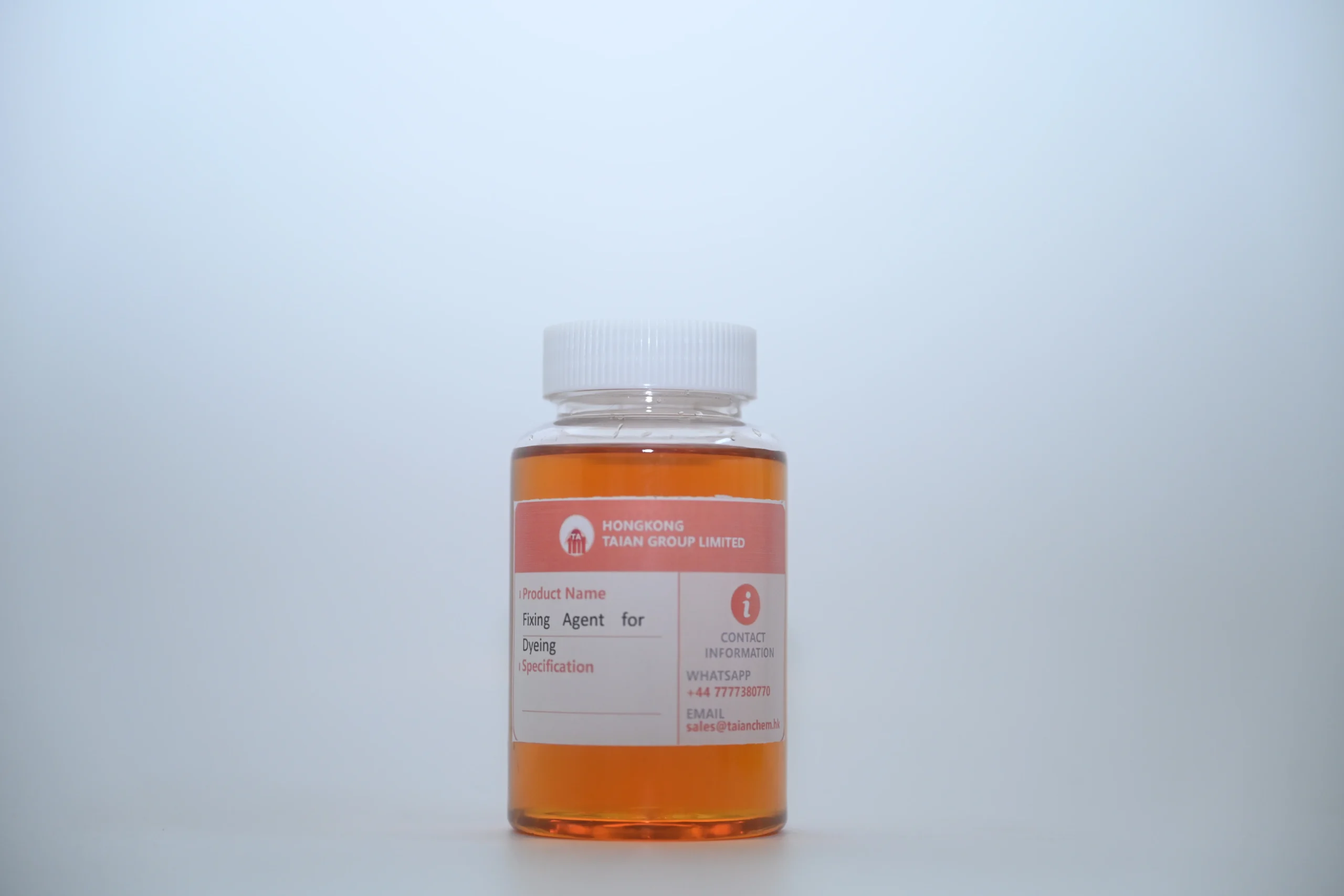
Using sulfur black combined with high-stability fixing agents to produce heavy-duty uniforms for the oil and gas sector, ensuring resistance to fading under intense UV exposure.

02. Traditional Fabric Dyeing in Benguela

Implementing high-efficiency penetrating agent solutions to ensure uniform color distribution on locally sourced cotton fabrics, reducing the number of rinse cycles required.

03. High-Fashion Apparel Manufacturing

Utilizing precision dye auxiliaries to achieve vibrant, consistent hues for the growing urban fashion market, minimizing batch-to-batch variation.

04. Home Textile Processing

Applying specialized oxidizing agent reducing agent systems to optimize the bleaching and dyeing of linens, ensuring high whiteness and soft hand-feel.

05. Sustainable Textile Pilots

Testing bio-based textile auxiliaries chemicals in small-scale cooperatives to reduce water pollution in coastal regions while maintaining commercial quality.

Brand Story

Global Development Journey of Shijiazhuang Taikun Chemical Co., Ltd.

Foundational Excellence

Established as a specialist in dyeing chemistry, focusing on solving the core stability issues of industrial textile auxiliaries.

Technological Breakthrough

Developed a proprietary line of high-penetration agents that revolutionized the efficiency of deep-dyeing processes.

Global Expansion

Expanded operations into the African market, tailoring chemical formulations to meet the specific water and climate conditions of Angola.

Sustainability Commitment

Launched a series of eco-friendly auxiliaries to help global clients meet strict international environmental standards.

Future Vision

Aiming to be the leading partner for Angolan textile mills by providing a complete ecosystem of chemical solutions and technical support.

Comprehensive Chemical Portfolio for Angola

A curated selection of high-performance agents designed for the Angolan manufacturing environment.

Angola Textile Chemicals FAQ

Expert answers to common technical challenges in the region.

How to improve dye penetration in hard water areas of Angola?

We recommend using a specialized penetrating agent that is specifically formulated to sequester calcium and magnesium ions, ensuring a uniform dye bath.

What is the best way to stabilize sulfur black for industrial uniforms?

Combining high-purity sulfur black with an optimized reducing agent prevents oxidation during the process, resulting in a deeper, more stable black.

Can you provide eco-friendly textile auxiliaries chemicals for export compliance?

Yes, our range of textile auxiliaries chemicals includes APEO-free and formaldehyde-free options that meet EU and US import standards.

How to choose the right oxidizing agent reducing agent for vat dyes?

The choice depends on the fabric type and desired shade; we provide a balanced oxidizing agent reducing agent kit that ensures complete reduction and efficient oxidation.

Do dye auxiliaries affect the hand-feel of Angolan cotton fabrics?

Properly balanced dye auxiliaries actually improve hand-feel by preventing the fiber from becoming stiff during the chemical treatment process.

How to reduce water waste in the dyeing process?

By utilizing high-concentration penetrating agent and low-temperature auxiliaries, mills can reduce the number of required rinse cycles significantly.

Contact Our Technical Experts

Ready to optimize your textile production in Angola? Our team is here to provide customized chemical solutions for your specific needs.

Contact Us Now

If you are interested in our products, you can choose to leave your information here, and we will be in touch with you shortly.