Why Penetration Fails in High-Alkali Textile Pretreatment
In high-alkali pretreatment baths, many conventional wetting agents can lose penetration efficiency under actual production conditions. Mills may experience excessive foam, slow and uneven liquor penetration, and pretreatment defects such as patchy whiteness or inconsistent dye shade in subsequent dyeing. Even when the chemical dosage appears correct, residual size, wax and other natural impurities may remain on the fabric.
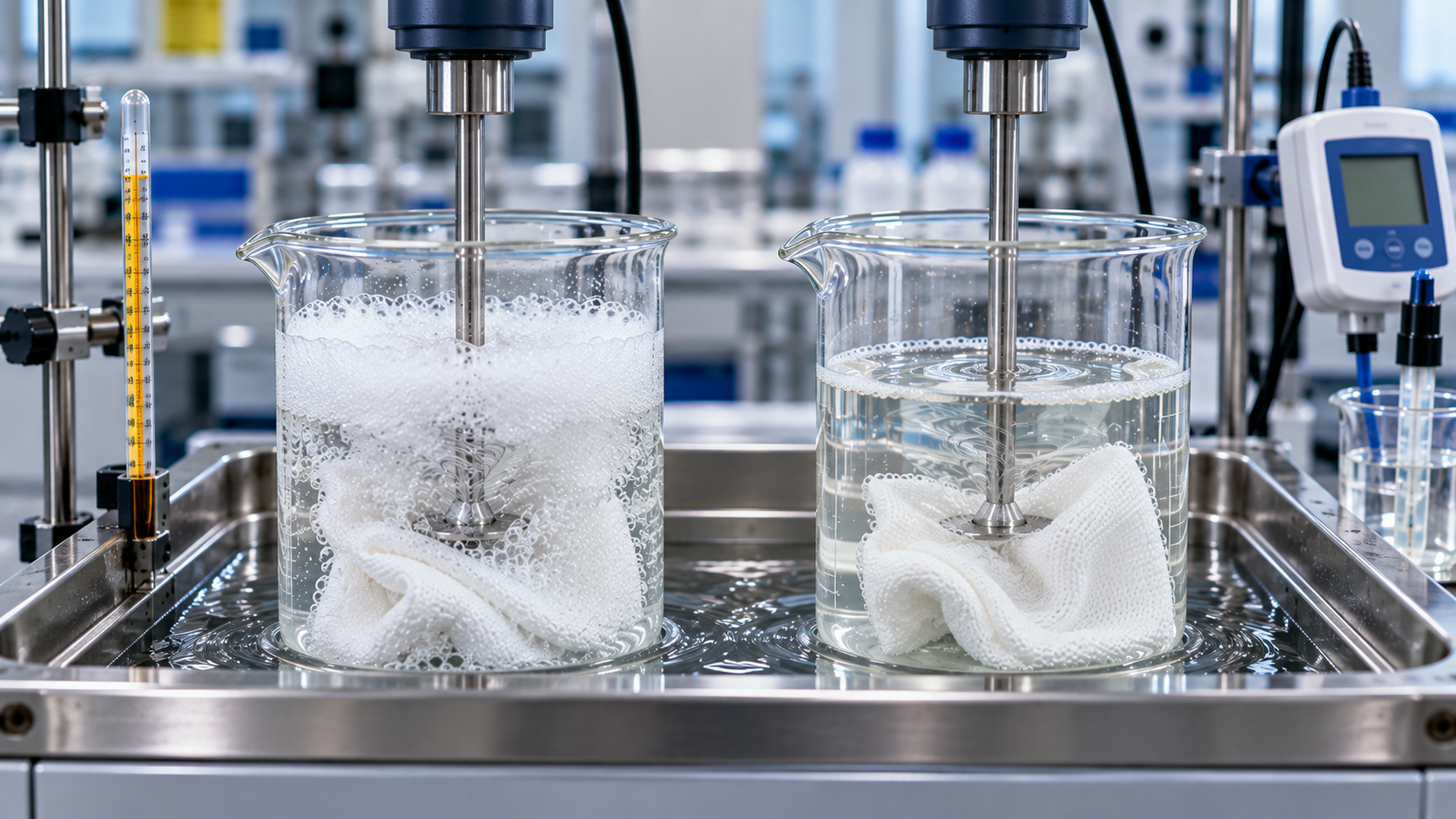
In our laboratory simulations, we have tested different wetting systems under conditions designed to reflect mill pretreatment baths. We found that some conventional surfactants lose wetting and penetration efficiency as the caustic concentration increases. Excessive foam can further interfere with uniform liquor-to-fabric contact, making it more difficult for the working liquor to penetrate evenly through the yarn and fabric structure.
When penetration is insufficient, increasing the bath temperature or adding more auxiliary is sometimes used as a quick adjustment. However, this can increase energy and chemical consumption without addressing the actual cause of uneven scouring. In practice, bath formulation, chemical dosage, mechanical agitation, fabric construction and operating conditions can all influence the final pretreatment result.
What sourcing agent 88 Does in the Bath
sourcing agent 88 is an anionic surfactant composite designed for textile pretreatment under high-alkali conditions. It helps reduce the surface tension of the working bath, promoting faster and more uniform wetting and penetration through the yarn and fabric structure. This supports the removal of size, wax and other impurities during desizing, scouring and bleaching.
The product has a pH of 6–7 and is readily soluble in both cold and hot water, making it convenient to prepare and add to the working bath. It also provides wetting, emulsifying and dispersing functions while maintaining relatively low foam under recommended application conditions.
sourcing agent 88can be used with commonly applied pretreatment chemicals, including caustic soda and hydrogen peroxide. For concentrated formulations or unfamiliar auxiliary combinations, compatibility should be confirmed in the complete working bath before bulk production.
The formulation is phosphorus-free and contains no intentionally added heavy metals. Mills should verify the latest product documentation against their applicable environmental, RSL/MRSL and customer requirements.
Where sourcing agent 88 Fits
sourcing agent 88is primarily used in textile pretreatment, particularly in desizing, scouring and bleaching processes. It is suitable for cotton, linen and other applicable textile materials and blends. A starting dosage of 5–10 g/L is recommended, with the actual dosage adjusted according to fabric construction, fabric weight, impurity level and process conditions.
For mills working with different fabric constructions or pretreatment recipes, a small-scale trial is recommended before bulk production to confirm the appropriate dosage and bath conditions.
sourcing agent 88may also be used in selected industrial wetting and cleaning applications outside textile processing. Because operating conditions vary considerably between industries, application parameters should be evaluated separately for each process.
How to Use sourcing agent 88 in Production
sourcing agent 88is readily soluble in cold or hot water and can be added directly to the working bath. For combined scouring and bleaching processes, 5–10 g/L can be used as a starting dosage. The actual dosage should be adjusted according to fabric construction, fabric weight, sizing and wax content, alkali concentration and the required pretreatment performance. Ensure thorough mixing after addition.
Prepare the working liquor shortly before use whenever possible. If excessive foam develops in the padder trough, first check the product dosage, bath composition and mechanical agitation rather than immediately adding a defoamer. Foam behaviour can also be affected by other auxiliaries and operating conditions.
Water quality and washing conditions should also be monitored during production. Insufficient washing can leave residual alkali and removed impurities on the fabric, which may affect subsequent dyeing. Check wash-water temperature, water flow and washing efficiency as part of the overall pretreatment process.
Troubleshooting Common Pretreatment Problems
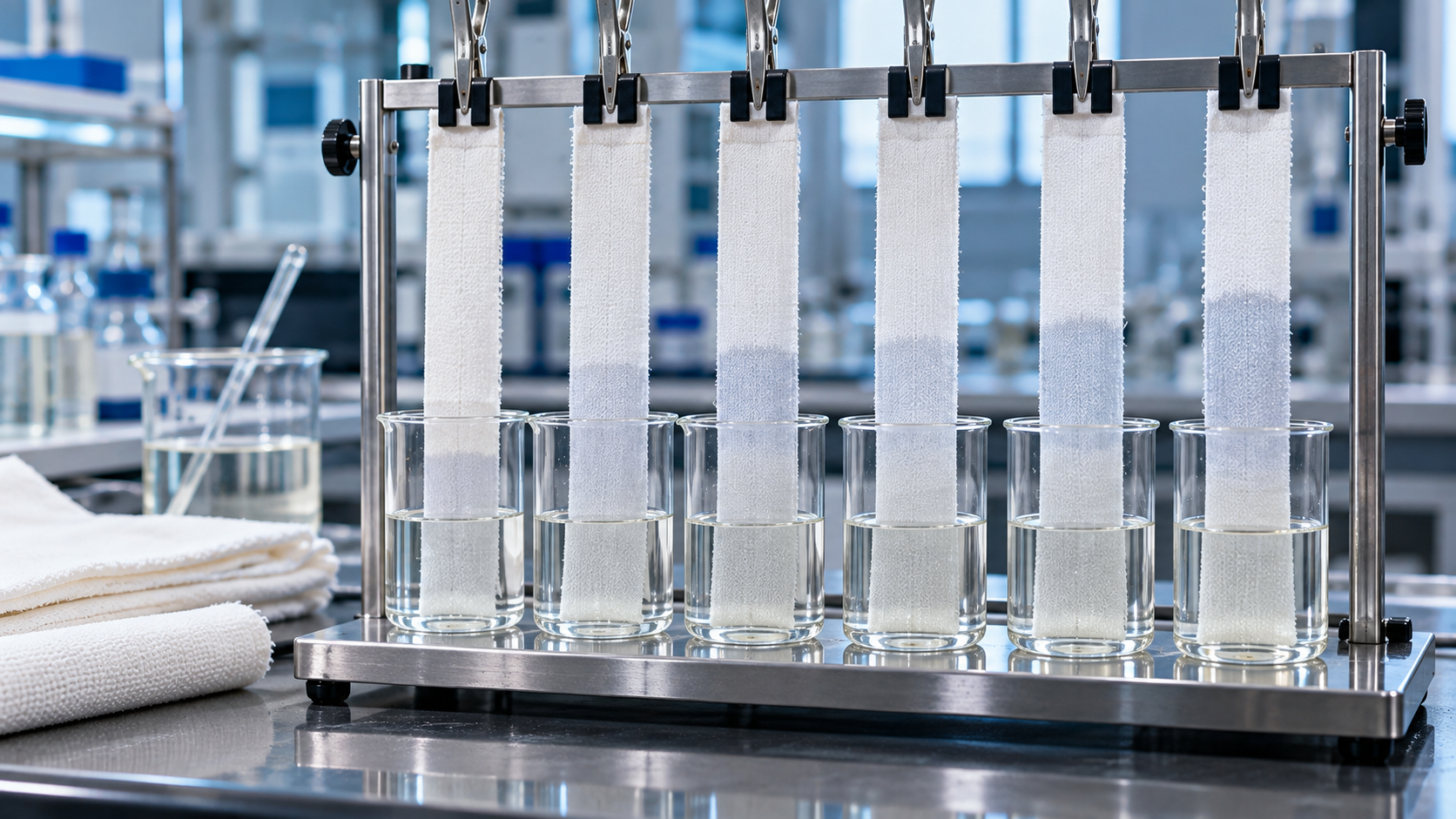
Poor penetration may appear as uneven wetting, residual waxy spots or unsatisfactory capillary-rise results. Before increasing the dosage of sourcing agent.88, check bath preparation, chemical dosage, mechanical agitation and liquor pick-up. Stock solutions that have been stored for extended periods should also be checked before use.
Excessive foam does not necessarily mean that the auxiliary itself is defective. At one woven cotton mill we supported, operators repeatedly increased the auxiliary dosage in an attempt to correct uneven pretreatment. The higher dosage increased foam in the padder trough and made stable liquor pick-up more difficult. After the dosage was corrected and the bath preparation procedure was standardised, foam control and process stability improved.
Uneven whiteness can also originate from equipment rather than chemical formulation. At another mill, the team initially adjusted the pretreatment recipe to address inconsistent whiteness. Further investigation showed that an ageing padder had pressure variation between production shifts, resulting in uneven liquor pick-up across the fabric width. Correcting the equipment condition proved more effective than continuing to adjust the chemical recipe.
Bath precipitation or phase separation may indicate incompatibility between components or an unsuitable addition sequence. Check how caustic soda, hydrogen peroxide and other auxiliaries are introduced into the bath. Avoid directly mixing concentrated stock solutions unless their compatibility has already been confirmed, and dilute individual components where required before addition.
Residual alkali after pretreatment can interfere with subsequent dyeing and contribute to shade variation or other quality problems. If residual alkali remains high, check washing temperature, water flow, counter-current washing efficiency and the number of washing stages rather than focusing only on the scouring formulation.
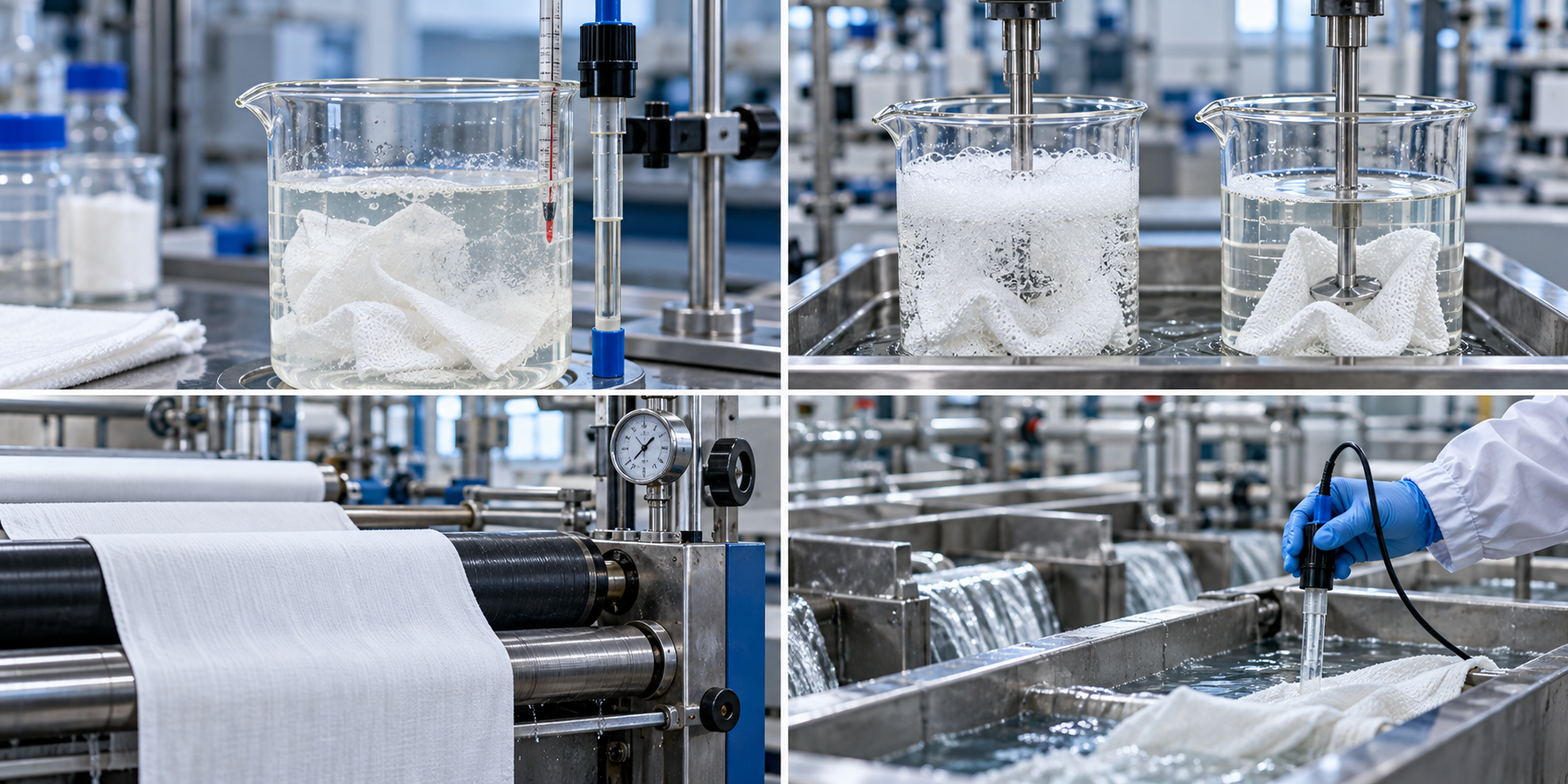
How to Choose a High-Alkali Refining Agent
Sourcing decisions should never rely solely on per-kilogram purchase price. A seemingly cheaper scouring agent often calls for higher addition rates, generates heavy foam requiring extra anti-foam, or degrades quickly under high-caustic conditions. All of these drive up your real cost per metre of finished fabric.
Prioritise real-world alkali resistance first. If a product loses wetting capacity under your operating caustic concentration, consistent pretreatment quality will never be achievable. Next look for balanced penetration plus emulsification-dispersion performance to strip away waxes, pectin and sizing compounds.
Low-foam performance carries special importance for continuous pad-steam lines; uncontrolled foam disturbs liquor pick-up and brings batch-to-batch quality fluctuation. Good compatibility with your existing auxiliary portfolio removes risks of bath sediment. Finally verify environmental specifications such as phosphorus-free and heavy-metal-free formulation to satisfy brand compliance requirements.
Case Study
A woven cotton mill in North China implemented sourcing agent 88at 5–10 g/L on its continuous scouring-bleaching production line. During the trial, the mill reported noticeable improvements in whiteness uniformity and capillary effect, along with a significant reduction in pretreatment-related defects. Foam build-up in the padder trough was also much easier to control.
"Our shift operators spent far less time managing foam inside padder troughs. Batch-to-batch fabric quality became much easier to stabilise," said the mill’s production manager.
Note: This case is based on internal trial observations. Specific performance figures are available on request. Results vary by fabric, equipment and process conditions.
FAQ
What is sourcing agent 88?
sourcing agent 88is an anionic scouring and penetrating auxiliary designed for textile pretreatment, particularly where effective wetting and penetration are required under high-alkali conditions.
What fabrics is it suitable for?
It is mainly used for cotton, linen and applicable textile blends in desizing, scouring and bleaching processes. Application conditions should be adjusted according to fibre type, fabric construction and the pretreatment process.
What is the recommended dosage?
A starting dosage of 5–10 g/L is recommended for combined scouring and bleaching processes. The actual dosage should be adjusted according to fabric construction, fabric weight, impurity level and process conditions.
Can it be used with hydrogen peroxide and caustic soda?
sourcing agent 88is suitable for use in alkaline scouring and bleaching systems containing caustic soda and hydrogen peroxide. For a new formulation, we recommend confirming compatibility and performance under the mill’s actual bath conditions before bulk production.
Is it low-foam?
Yes. sourcing agent 88is designed for low-foam operation under recommended application conditions. Actual foam behaviour can also be affected by dosage, bath composition, mechanical agitation and equipment conditions.
Can I get samples and TDS/SDS documentation?
Yes. 200 g laboratory samples are available for evaluation. Commercial packaging includes 125 kg plastic drums and 1000 kg IBC tanks, with a shelf life of 12 months under recommended storage conditions.
Can you help optimize the recipe for my mill?
Yes. Our technical team can assist with recipe adjustment based on your fabric, equipment, existing bath formulation and process conditions.