Cold pad-batch pretreatment is a low-temperature pretreatment process used for cotton, linen, viscose and applicable cellulosic blends before dyeing and printing. It combines desizing, scouring and bleaching during an extended batching stage without conventional high-temperature steaming. In Taian Chemical’s mill-scale application tests, steam consumption was reduced by 20–40% and wastewater discharge by 15–30% compared with the mills’ previous high-temperature pretreatment processes. Actual reductions vary with fabric type, equipment configuration, process recipe and washing conditions. When the process is properly controlled, it can provide the whiteness, absorbency and surface wettability required for subsequent dyeing and printing.
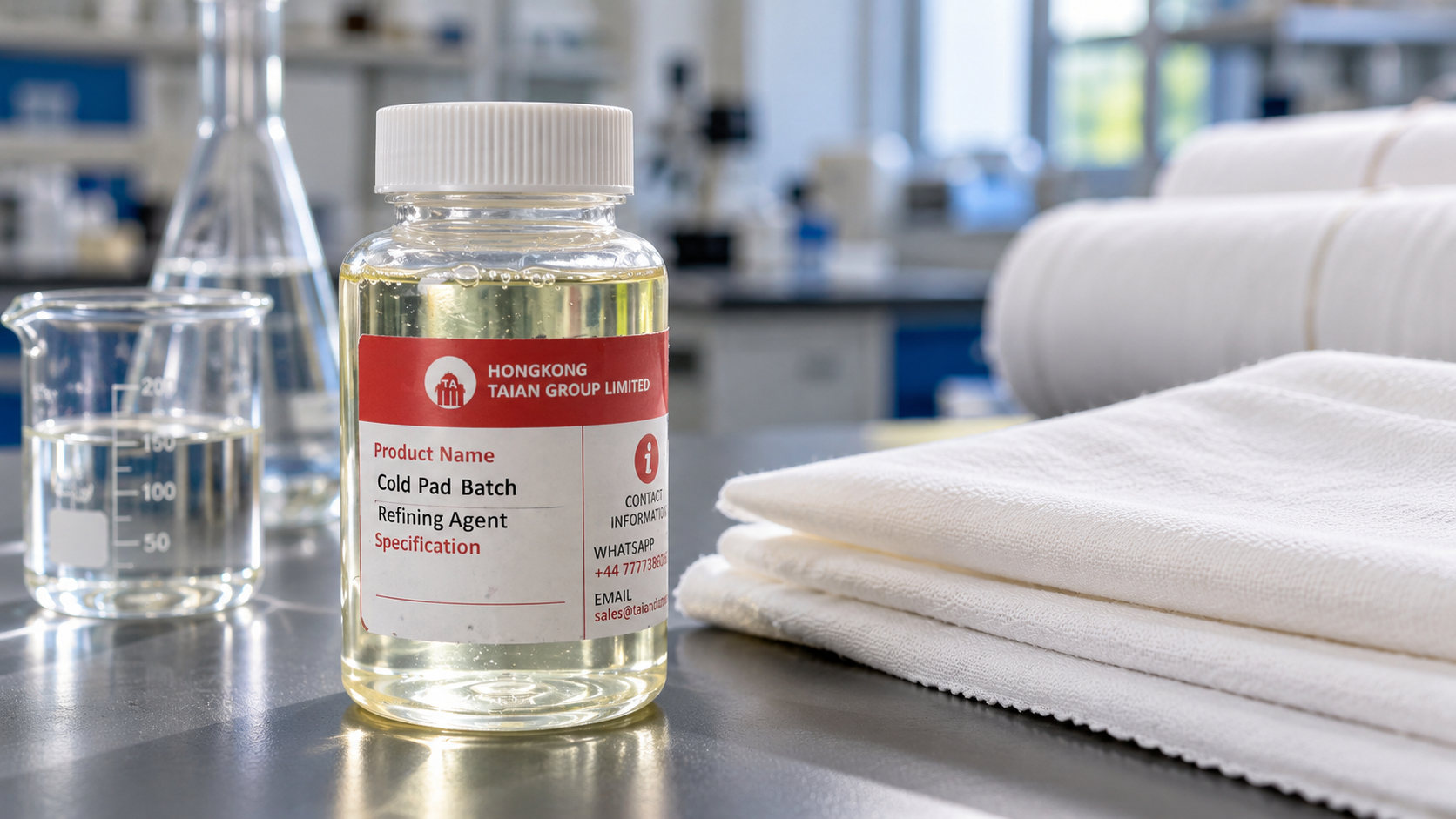
This guide covers the operating principles of cold pad-batch pretreatment, process conditions, working-liquor preparation, recommended recipe ranges, common production problems and troubleshooting methods. It also discusses the main factors affecting auxiliary selection and includes application data from mill trials to help technicians evaluate the process under their own production conditions.
What Is Cold Pad-Batch Pretreatment?
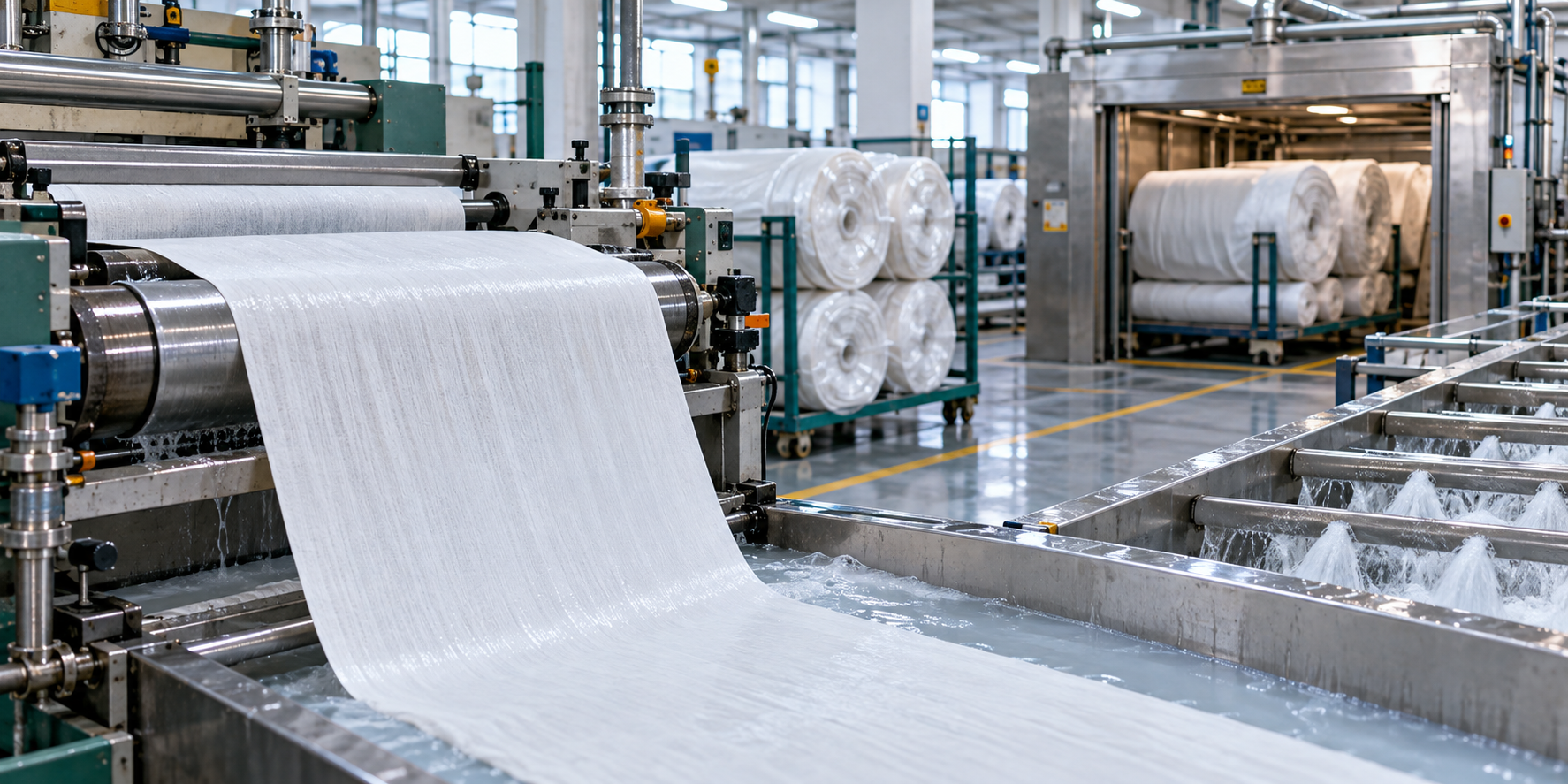
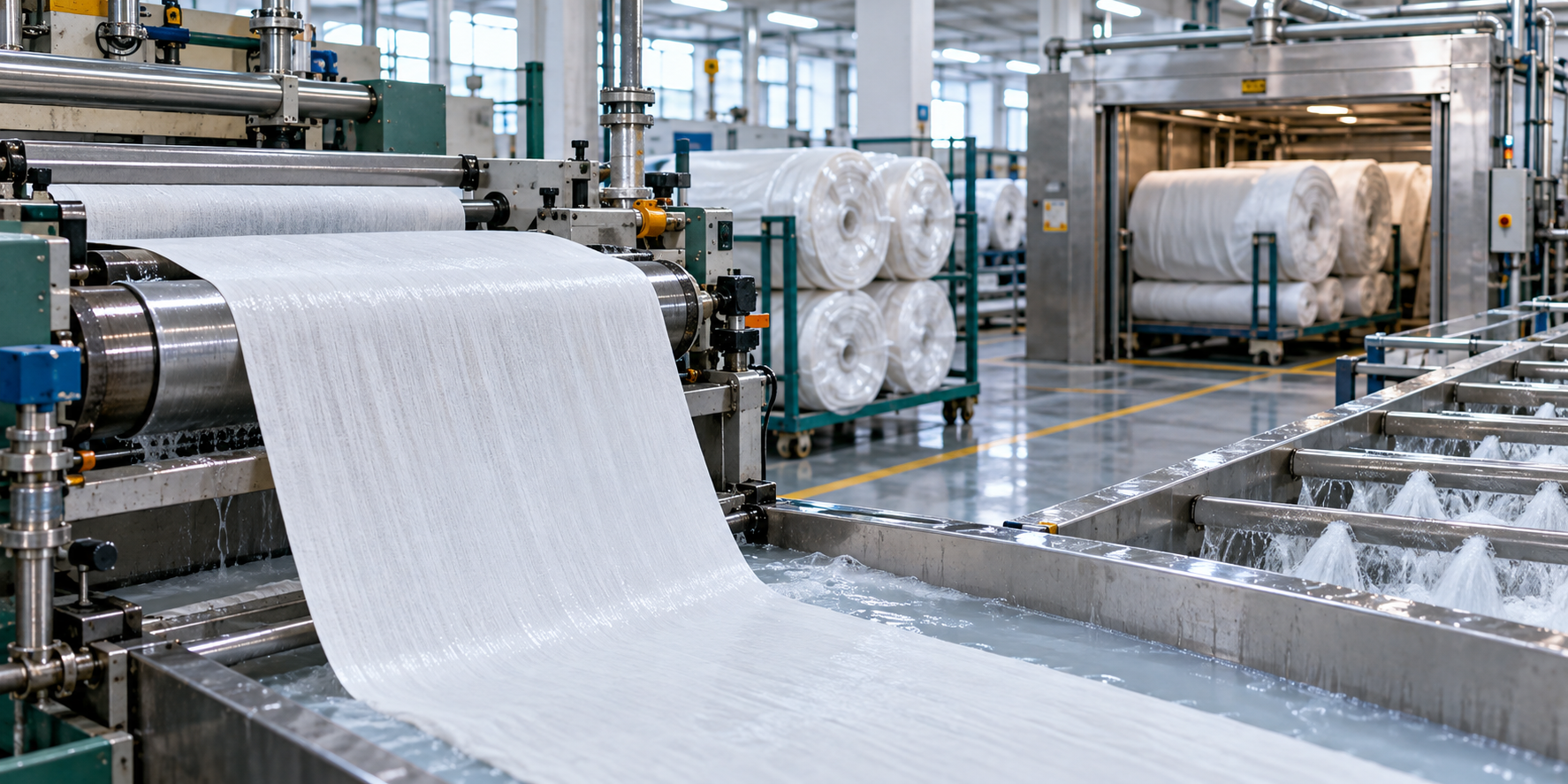
Cold pad-batch pretreatment is a low-temperature textile pretreatment process that eliminates the need for conventional high-temperature steaming. In production, grey fabric is evenly impregnated with a prepared working liquor, padded to the required wet pick-up, tightly wound into rolls, and batched under controlled temperature and moisture conditions for a specified reaction period. After batching, the fabric is thoroughly washed to remove decomposed impurities and residual chemicals before drying.
A typical production sequence is:
Fabric → Pad working liquor (wet pick-up 80–100%) → Batch at 20–30°C for 12–24 hours → Wash → Dry
For cellulosic fabrics and applicable blends, cold pad-batch processing can combine desizing, scouring and bleaching in a single pretreatment sequence while reducing dependence on high-temperature steam equipment. Process consistency depends not only on the chemical recipe but also on batching temperature, wet pick-up, roll tightness, moisture retention and washing efficiency. Lower ambient temperatures can slow the reaction and may require a longer batching period; the actual time should therefore be adjusted according to mill conditions and verified against the required pretreatment results.
Why Use a Cold Pad-Batch Scouring Agent?
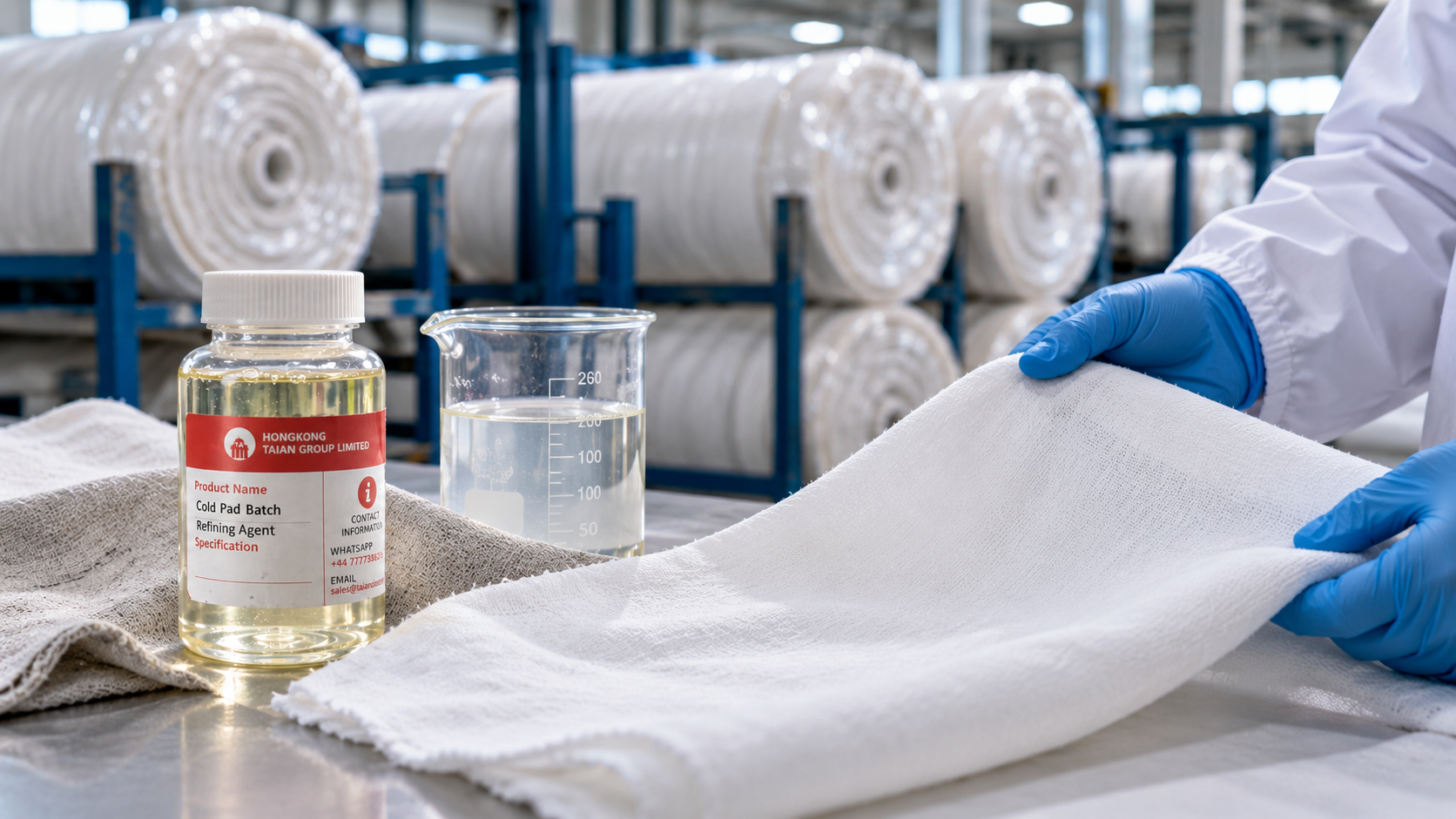
Cold pad-batch pretreatment places different demands on auxiliaries than conventional high-temperature processing. The working liquor must maintain effective wetting, impurity removal and peroxide stability during an extended low-temperature batching period, typically at 20–30°C. A dedicated cold pad-batch scouring agent is formulated to support the removal of sizing residues, natural waxes and pectin from grey fabric while assisting the bleaching process under these conditions.
Our laboratory trials also showed that batching temperature can have a significant effect on the required reaction time. Under one set of controlled test conditions, a 2°C decrease in batching temperature extended the required reaction time by nearly four hours to reach the target pretreatment performance. This result should not be treated as a universal temperature-to-time ratio, as the actual response also depends on fabric construction, working-liquor composition, chemical dosage and production conditions.
With the appropriate recipe and process control, the treatment can provide uniform whiteness, good absorbency and consistent surface wettability for subsequent dyeing and printing. Because the process operates without conventional high-temperature steaming during the batching stage, it can also reduce steam demand and associated energy consumption compared with high-temperature pretreatment; the actual savings depend on the mill’s existing process and equipment configuration.
Cold Pad-Batch vs Conventional High-Temperature Pretreatment
There are obvious gaps in energy consumption, equipment requirements and application scenarios between cold pad-batch pretreatment and traditional high-temperature continuous pretreatment. The detailed comparison is as follows:
| Item | Cold Pad-Batch | Conventional High-Temperature Pretreatment |
| Typical Process Temperature | 20–30°C during batching | Typically 95–100°C during treatment |
| Steam Requirement | No continuous steaming during batching | Continuous or substantial steam demand |
| Reaction Time | Longer batching period, typically 12–24 h | Shorter high-temperature treatment |
| Energy Demand | Lower thermal-energy requirement | Higher thermal-energy requirement |
| Equipment | Padder + batching system + washing | High-temperature treatment/steaming + washing |
| Process Control | Sensitive to wet pick-up, roll moisture and batching conditions | Sensitive to temperature, residence time and washing conditions |
Product Features
The cold pad-batch scouring agent is formulated for low-temperature pretreatment of cellulosic fabrics and applicable blends. Its combined wetting, scouring and dispersing functions help remove residual sizing agents, natural waxes and pectin from grey fabric during the extended batching stage. By reducing the need for prolonged high-temperature treatment, the process can also help limit unnecessary thermal exposure of the fabric while providing the absorbency and cleanliness required for subsequent dyeing or printing.
For continuous padding operations, the formulation is designed to provide low-foam performance and stable bath behavior, helping maintain uniform liquor pick-up during processing. The agent also provides hydrogen peroxide stabilization during the extended batching period, helping control premature peroxide decomposition and support more consistent bleaching across the fabric roll.
The formulation is phosphorus-free and heavy-metal-free. For mills producing textiles subject to specific environmental or brand requirements, compliance should be evaluated against the applicable certification, restricted-substance or customer requirements using the latest product documentation.
Typical Physical Properties
| Parameter | Typical Value |
| Appearance | Pale yellow liquid |
| Odor | Odor-free |
| Ionic type | Anionic |
| pH value | 7.0-8.0 |
| Solubility | Readily soluble in water |
Note: Always confirm the latest TDS/SDS before bulk production to ensure all technical indicators meet production requirements.
Recommended Process
In cold pad-batch pretreatment, temperature and batching time are important process variables, but they are not the only factors affecting pretreatment consistency. Padder pressure, wet pick-up uniformity, roll tension, moisture retention and subsequent washing conditions should also be controlled throughout production. Padder pressure should be checked and calibrated regularly, particularly on equipment where pressure variation may affect liquor pick-up. Washing conditions should also be sufficient to remove residual alkali and reaction by-products before subsequent dyeing or finishing.
Step 1: Pad the Fabric
Prepare the working liquor and mix thoroughly before use. Adjust the padder pressure to ensure uniform impregnation of the grey fabric and maintain a wet pick-up of 80–100%. Consistent liquor pick-up across the fabric width is important for uniform chemical distribution and subsequent pretreatment.
Step 2: Batch
Wind the padded fabric evenly into rolls and maintain sufficient roll tension to minimize differences in liquor distribution during batching. Batch at 20–30°C for 12–24 hours under controlled conditions. Keep the rolls properly covered throughout the batching period to minimize moisture loss and prevent surface drying, particularly on the outer layers of the roll.
The actual batching time should be adjusted according to fabric construction, ambient temperature, working-liquor formulation and the required pretreatment result.
Step 3: Wash
After batching, wash the fabric thoroughly using an appropriate multi-stage washing process to remove residual alkali, reaction by-products and loosened impurities. Washing temperature, water flow and washing time should be controlled according to the production line and fabric requirements. Insufficient washing may leave residual alkali or impurities on the fabric and interfere with subsequent dyeing or finishing.
Step 4: Dry
After washing, dry the fabric according to the mill’s standard drying conditions and the requirements of the subsequent process.
Process recap:
Fabric → Pad working liquor (wet pick-up 80–100%) → Batch at 20–30°C for 12–24 hours → Wash → Dry
Recommended Recipe
The following recipe can be used as a starting point for cotton, linen and applicable cellulosic blends. Dosage should be adjusted according to fabric construction, impurity and wax content, target whiteness, water quality and actual mill conditions.
| Component | Dosage |
| Cold pad-batch scouring agent | 20-40 g/L |
| Hydrogen peroxide (30%) | 30-60 g/L |
| Caustic soda (100%) | 5-15 g/L |
| Water | Balance |
Prepare the working liquor shortly before use and mix thoroughly. A laboratory trial is recommended before bulk production to confirm the recipe under the mill’s actual fabric and process conditions.
Common Problems & Solutions
Cold pad-batch pretreatment is sensitive to both chemical formulation and process control. Based on our mill application experience, variations in padder pressure, liquor preparation, batching conditions and washing efficiency are common factors behind inconsistent pretreatment results.
1. Uneven Whiteness
Phenomenon: Light and dark areas or variations in whiteness appear across the fabric width or between different sections of the same batch, which may contribute to shade variation during subsequent dyeing.
Possible Causes: Uneven padder pressure can result in inconsistent liquor pick-up; insufficient mixing may cause variations in working-liquor concentration; moisture loss from partially exposed fabric rolls can also lead to uneven reaction during batching.
Recommended Actions: Check and calibrate padder pressure before production, ensure the working liquor is thoroughly mixed, and keep fabric rolls properly covered throughout the batching period to minimize moisture loss.
2. Poor Capillary Effect
Phenomenon: The treated fabric shows insufficient wicking or water absorbency, which may affect dye penetration and shade uniformity in subsequent processing.
Possible Causes: Insufficient batching time may leave natural waxes, pectin or other hydrophobic impurities incompletely removed. Inadequate washing can also leave loosened impurities or chemical residues on the fabric. Lower batching temperatures may slow the pretreatment reaction.
Recommended Actions: Adjust the batching time according to actual temperature and fabric conditions. For grey fabrics with a higher impurity or wax content, optimize the auxiliary dosage based on laboratory trials. Ensure sufficient multi-stage washing after batching to remove residual impurities and chemicals.
3. Excessive Foam
Phenomenon: Excessive foam accumulates in the padder trough and interferes with uniform fabric impregnation and liquor pick-up.
Possible Causes: Auxiliary overdosing, excessive mechanical agitation or incompatibility with other components in the working liquor may increase foam generation.
Recommended Actions: Verify the auxiliary dosage against the actual fabric and process conditions, control unnecessary agitation, and conduct compatibility testing when additional auxiliaries are introduced into the working liquor.
4. Surface Drying of Fabric Rolls
Phenomenon: The outer layers of the fabric roll show lower whiteness or less complete pretreatment than the inner layers.
Possible Causes: Uneven or loose winding and insufficient covering during batching can allow moisture to evaporate from the outer fabric layers, resulting in differences in reaction conditions within the roll.
Recommended Actions: Maintain consistent winding tension and keep the rolls properly covered throughout the batching period to minimize moisture loss and surface drying.
5. Incomplete Washing and Residual Alkali
Phenomenon: Residual alkali or other processing chemicals remain on the fabric after washing, potentially affecting shade consistency and subsequent dyeing or finishing.
Possible Causes: Insufficient washing stages, excessive line speed, inadequate water flow or unsuitable washing temperature may reduce removal efficiency.
Recommended Actions: Optimize washing time, water flow and temperature according to the production line and fabric requirements. Where necessary, introduce additional washing stages and monitor the fabric surface pH after washing before proceeding to subsequent processing.
How to Choose a Cold Pad-Batch Scouring Agent
Selecting a cold pad-batch scouring agent should be based on its performance under the mill’s actual working-liquor and batching conditions rather than on a single product specification. The following factors are particularly important when evaluating an auxiliary for production use.
-
Alkali Stability
Cold pad-batch working liquors typically operate under alkaline conditions for an extended batching period. The auxiliary should therefore maintain adequate solubility, wetting and scouring performance at the actual caustic soda concentration used in production. Stability should preferably be evaluated in the complete working liquor rather than in water alone.
-
Hydrogen Peroxide Compatibility
When hydrogen peroxide is used for bleaching, the scouring agent should remain compatible with the peroxide-containing alkaline bath and should not promote uncontrolled peroxide decomposition. Compatibility testing under the mill’s actual peroxide and alkali concentrations is recommended before bulk production.
-
Wetting and Scouring Performance
Effective and uniform wetting is important for consistent liquor penetration across the fabric. The auxiliary should also support the removal and dispersion of sizing residues, natural waxes, pectin and other impurities during the extended batching period. Performance should be evaluated on the actual grey fabric whenever possible.
-
Low-Foam Performance
Foam should remain controlled during liquor preparation, circulation and padding. Excessive foam can interfere with fabric impregnation and wet pick-up uniformity, particularly on continuous padding lines.
-
Formulation Compatibility
Ionic type should be considered together with the complete formulation. Anionic systems can be suitable for alkaline cold pad-batch formulations, but compatibility should be verified with caustic soda, hydrogen peroxide and any additional auxiliaries used in the same bath. Ionic classification alone should not be used as the sole selection criterion.
-
Environmental and Customer Requirements
For export-oriented production, mills should verify whether the product meets the environmental, restricted-substance and certification requirements applicable to the finished textile or target customer. Claims such as phosphorus-free or heavy-metal-free should be confirmed using the latest product documentation where required.
-
Mill Trial Verification
Before changing products on a production line, compare the trial product with the existing auxiliary under the same fabric, recipe, wet pick-up, batching temperature, batching time and washing conditions. Key indicators may include whiteness, absorbency or capillary effect, residual pH, fabric strength and subsequent dyeing performance.
Case Study
A field application trial was conducted at a 30,000-spindle woven cotton mill in Vietnam producing cotton fabrics for export markets. The mill had previously used a conventional high-temperature continuous pretreatment process and was evaluating cold pad-batch pretreatment as an alternative process.
Following laboratory recipe adjustment and mill-scale verification, the cold pad-batch process was operated with 30 g/L cold pad-batch scouring agent at a batching temperature of 25°C for 18 hours.
Under the evaluated production conditions, the fabric whiteness index increased from 72 to 82, with whiteness evaluated according to ISO 105-J02. The measured capillary effect increased from 3.2 cm/30 min to 6.1 cm/30 min.
Compared with the mill’s previous pretreatment process, steam consumption during pretreatment was reduced by 32%, while the recorded defect rate decreased by more than 80% during the evaluation period. Improvements were also observed in batch-to-batch whiteness consistency and fabric surface uniformity.
Following the trial and subsequent production verification, the mill extended the cold pad-batch process and supporting scouring agent to its three main production lines.
The results above represent this mill’s specific production conditions and should not be interpreted as guaranteed performance for other mills. Results may vary with fabric construction, equipment, water quality, chemical recipe and process control.
FAQ
Q1: What is cold pad-batch pretreatment?
Cold pad-batch pretreatment is a low-temperature process used primarily for cellulosic fabrics and applicable blends. The fabric is padded with the working liquor, wound into rolls and typically batched at 20–30°C for 12–24 hours before washing and drying. Depending on the formulation and substrate, the process can combine desizing, scouring and bleaching in one pretreatment sequence.
Q2: Which fabrics are suitable for this cold pad-batch scouring agent?
The agent is intended primarily for cotton, linen, viscose and applicable cellulosic blends. The process recipe should be adjusted according to fabric construction, impurity level and the requirements of subsequent dyeing or printing.
Q3: What is the recommended recipe?
A typical starting recipe is:
Cold pad-batch scouring agent: 20–40 g/L
Hydrogen peroxide (30%): 30–60 g/L
Caustic soda (100%): 5–15 g/L
The final dosage should be adjusted according to fabric construction, impurity and wax content, target whiteness and mill conditions. A laboratory trial is recommended before bulk production.
Q4: How long should the fabric be batched?
A typical batching period is 12–24 hours at 20–30°C. Lower temperatures can slow the pretreatment reaction, so batching time may need to be adjusted according to actual mill conditions and the required pretreatment result.
Q5: Are samples and TDS/SDS documents available?
Yes. 200 g samples are available for laboratory evaluation, together with the relevant TDS and SDS documents. Contact Taikun Chemical for the latest product documentation and sample arrangements.
Q6: Can the recipe be adjusted for different mill conditions?
Yes. Recipe and process parameters can be adjusted according to fabric type, equipment, water quality, batching conditions and required pretreatment performance. Laboratory and mill trials are recommended before full-scale production.